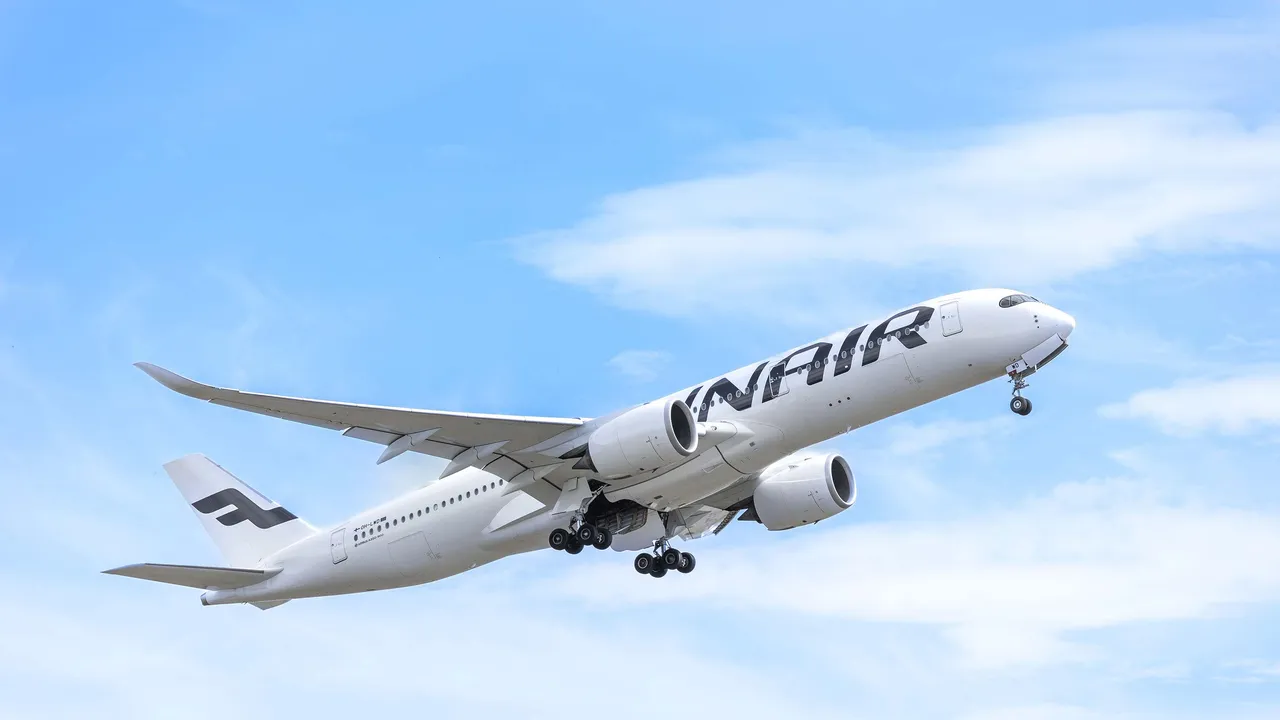
On October 25, shortly after midnight and with a bit of a delay, Finnair’s AY145 flight took off from Helsinki bound for Melbourne, inaugurating a route that, until now, had not appeared on the airline’s map: Australia. I am on board the inaugural flight and I know Finnair’s long-haul product well, but a route of this duration inevitably changes the way you look at it.
One thing, but I have enough time to check how roughly 22 hours of travel are managed between Nordic design, a Business Class seat that does not recline, an express layover in Thailand and 18,000 litres of blueberry juice. The service operates daily aboard an Airbus A350 and makes a layover in Bangkok before continuing to Victoria, in a journey that is around 22 hours long. Put like that, it might read as just another figure in a timetable; but seated in the cabin, 22 hours carry a lot more weight.
Suddenly, some details matter far less than on a shorter flight, and rather more elementary questions come to the fore: how much one can actually sleep, whether there is enough room to shift position, when meals are served, or whether the Bangkok layover is a hassle or, after so many hours, almost a blessing to stretch one’s legs. On paper, this flight seems to have something very positive: the first leg departs Helsinki just after midnight, which helps the body fairly quickly understand that it’s time to sleep.
In Business Class, the star remains AirLounge, the seat Finnair unveiled in 2022 and that continues to confound anyone who hears its main feature for the first time: it does not recline. Not even a little. The first time I tried it, on the leg between Tokyo and Helsinki, I found it hard to imagine that a Business Class seat that gave up the reclining mechanism could work. It does, because the logic is different. The seat, designed with Collins Aerospace, is based on a fixed, wide, enveloping shell, closer to a home armchair than to a traditional seat, and allows you to sit sideways, stretch your legs, or tuck yourself in in a way that feels far more natural than it sounds on paper.
When it’s time to sleep, the space transforms into a fully flat bed. On a journey like this, the concept is understood especially well. There is plenty of personal space, enough privacy despite there being no door—a recent obsession in many Business Class cabins that does not always improve the experience—and, above all, the freedom to keep changing position as the hours pass. Meanwhile, the cabin also preserves that unmistakable Finnair visual language: Marimekko textiles, Iittala tableware, sober tones and a Nordic aesthetic that manages to be elegant without needing to remind you every few minutes that you are in a premium cabin.