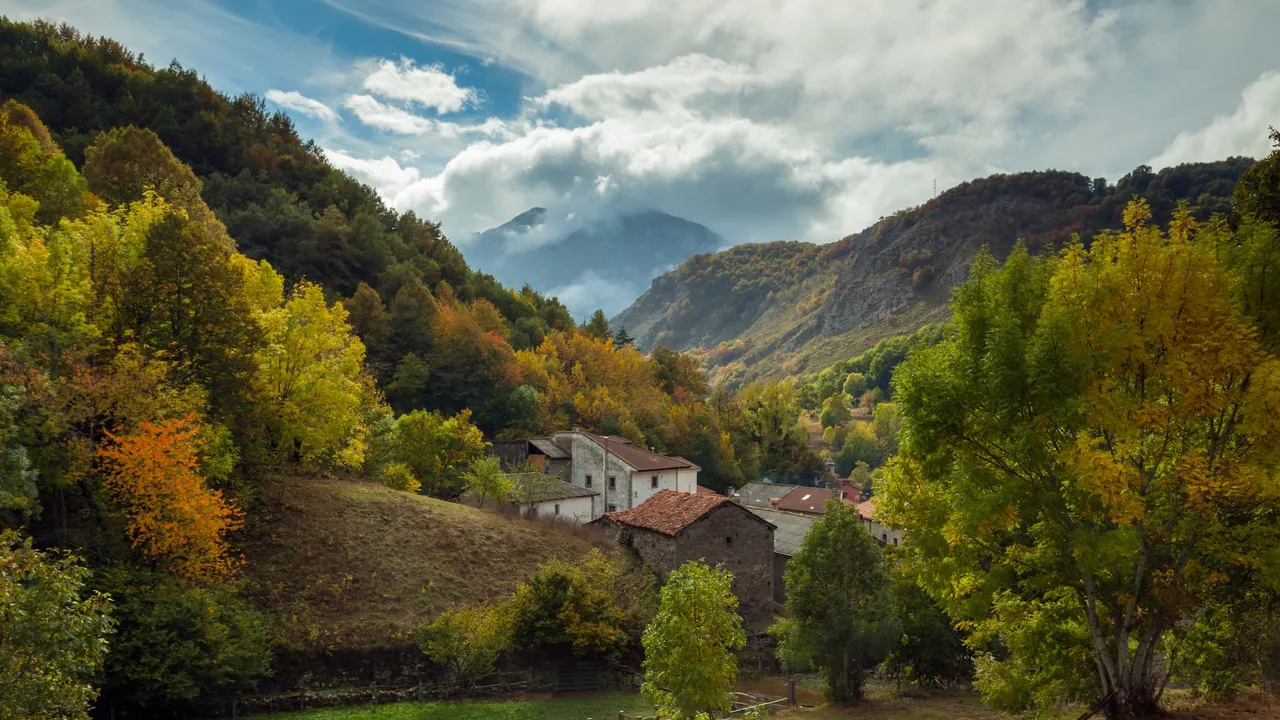
Savage, rugged and steeped in history: that’s what the Picos de Europa are like. Until now, only the boldest adventurers could discover them; but we’ve created a list with the best routes so that no family can miss the spectacle of the Picos.
Áliva and the Frades Beech Forest (Liébana, Cantabria)
The Fuente Dé cable car provides an unparalleled springboard to overcome the 750 meters of elevation that separate the birth of the Deva River from the heights of the Central Massif. The altitude will be, precisely, the greatest challenge of this route and we must be prepared for any change in the weather. Just pack a fleece jacket, a rain jacket, sunscreen and two liters of water in the backpack and we can begin one of the best routes for walking at the foot of the Picos de Europa.
The circular route that links Fuente Dé, the Áliva meadow and the Frades Beech Forest is ideal for children because almost all of its 14 kms of distance run downhill. The trail is very well signposted and during the first three hours you can admire the summit of Peña Vieja, visit the Áliva hotel-refuge, one of the oldest in Spain and look for chamois among the scree as the limestone changes color under our steps.
After leaving behind the Áliva meadows, we will follow the streams that originate in the mountains toward the Frades Beech Forest. A wooden boardwalk will lead us into this vegetal labyrinth whose canopies provide cool shade during the summer months and that hosts the flights of woodpeckers, great tits and coal tits and even the passing of an occasional pine marten if we walk quietly.
The route through the Frades Beech Forest ends when the trees part and we glimpse in the distance the Fuente Dé cable car parking lot where we left the car. And as a reward, the excursion should conclude with an ice-cream snack in the charming village of Mogrovejo.
El Jito de Escarandi and the Andara Mines (Sotres, Asturias)
The eastern massif of the Picos de Europa tends to attract less attention than its neighbors, but its trails offer a unique perspective of summits exceeding two thousand meters such as San Carlos, Pico Boru, or Pico Samelar. Most of the paths that cross this massif originate from the old mines that once trod these mountains to extract their famous caramel-colored blende; a “mining fever” that led many Cantabrians and Asturians to grasp their picks in the galleries of Ándara between the years 1856 and 1975.