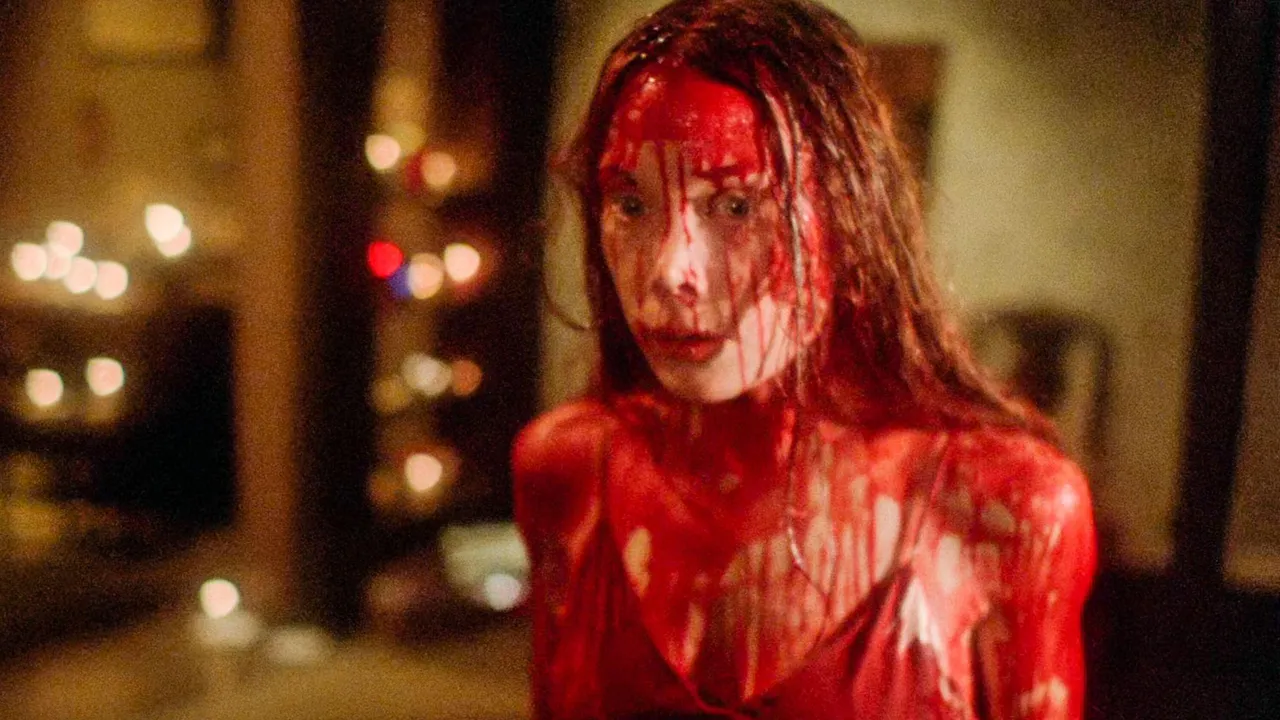
Horror cinema has many queens of the scream, but few queens of the dance. Fifty years ago, Carrie White arrived on the screen to make history… and justice. While it’s true that everything began with that Carrie from 1974, written by Stephen King, audiences and critics (and the author himself) agree that everything changed with Brian De Palma’s film two years later. To this day it has five decades behind it (although in Spain it was released the following year), but it is, unfortunately, as present as ever in the social issues of today. On the occasion of its anniversary, Mike Flanagan, the absolute master of contemporary horror cinema, has joined this trilogy of narrators to close the circle with the miniseries Carrie (2026), released on Amazon Prime Video at the start of this month. Yes, there were other adaptations over the years, but none matched our favorite teenager.
Carrie, history and film, marked a before-and-after in the horror genre on many levels. It was Stephen King’s first published work and the film that launched Brian De Palma to stardom. Both showed that fear is capable of reaching dimensions far broader than those of a typical ghost or haunted house. They wanted to give us a protagonist and they gifted us a superheroine, they wanted to talk about cruelty and they gave us poetic justice in grand fashion: stained with blood and vengeance. All those precedents could only lead to later success: a box office of $33.8 million (with a budget of $1.8 million) and two Oscar nominations for Best Actress and Best Supporting Actress for the impeccable Sissy Spacek as Carrie and Piper Laurie as her mother. Taking into account that we’re talking about the eternally underappreciated horror cinema of the 1970s, this accumulation of milestones shattered all the industry norms.