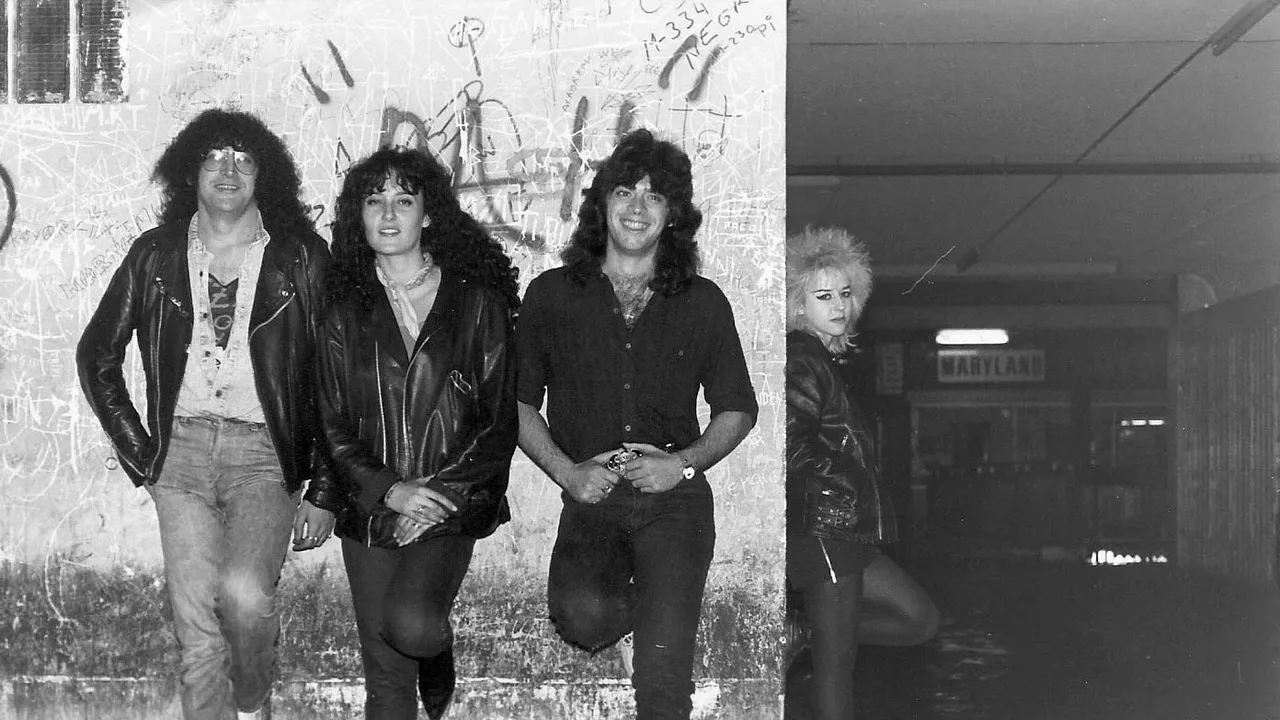
Long hair, patches-filled vests, leather jackets, distorted guitars… There was a time when, oblivious to fashions and trends, rock and heavy metal ruled Madrid’s nightlife venues. Youth sought to escape in bars that smelled of beer and tobacco where their favorite bands blasted at full volume, and concert halls programmed every weekend showcases with the crème de la crème of the national and international scene: Osiris, Piscis, Barrabás, Canciller, Argentina/Canciller II… Following the success of They Are Electric (centered on the pioneering women of Spanish rock and heavy metal), Leo Cebrián Sanz has decided to pay tribute to those mythical venues in his new documentary, 500 Pesetas with a Bang.
The music journalist has approached the project with two clear constraints. The first, territorial, focusing on the Madrid scene, “essentially because the hard rock and heavy metal movement in Spain did not manifest itself in any other territory in such a massive and powerful way as in the Community of Madrid. Something so relevant and obvious doesn’t seem to be part of the official cultural history of the capital and its suburban towns, for which researchers there is nothing but the overexploited Movida. Outside the M-30 there was life and cultural and musical leisure, and almost no one has told it,” he explains to us.
As Cebrián notes, the documentary does not limit itself to Madrid city, but also includes other Madrid-area municipalities: Leganés, Getafe, Alcorcón, Fuenlabrada, Móstoles… “The south also exists,” he remarks. “Benedetti wrote it and Serrat sang it. Our south was that entire “red belt” that found in the harshest musical styles an almost natural identification, very much tied to the kind of urban planning that sustained that map of cities. Pop did not offer the attachment to reality that heavy metal did, which also lacked the aesthetic demands of the era’s most exclusive modernity. The denim vest and the patches were within everyone’s reach, and the youthful rebellion in the lyrics mirrored a way of life that did not require external validation from elders or the approval of conventional society. Pure independence and freedom for the ‘Rock and Roll Children’ Dio sang.”