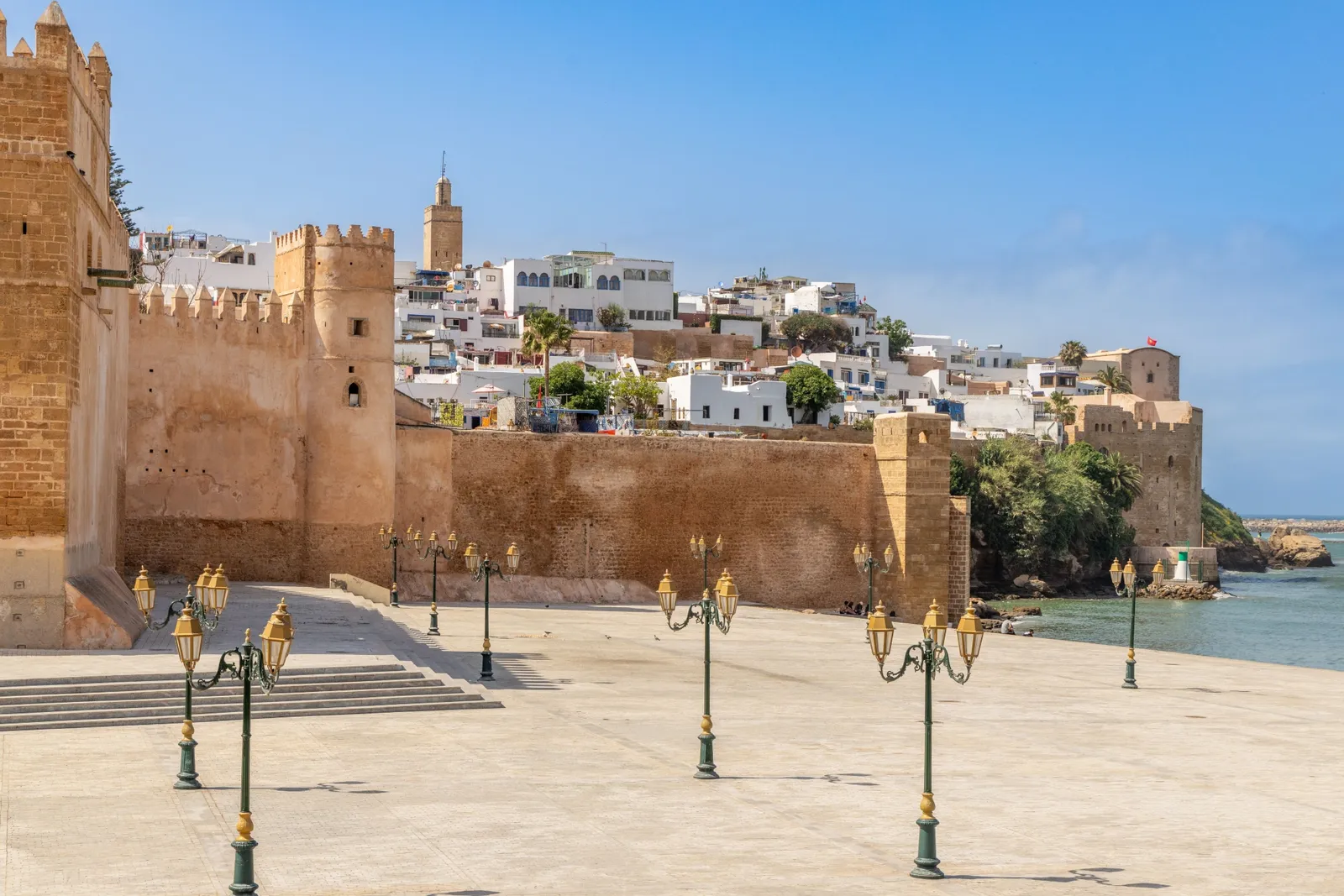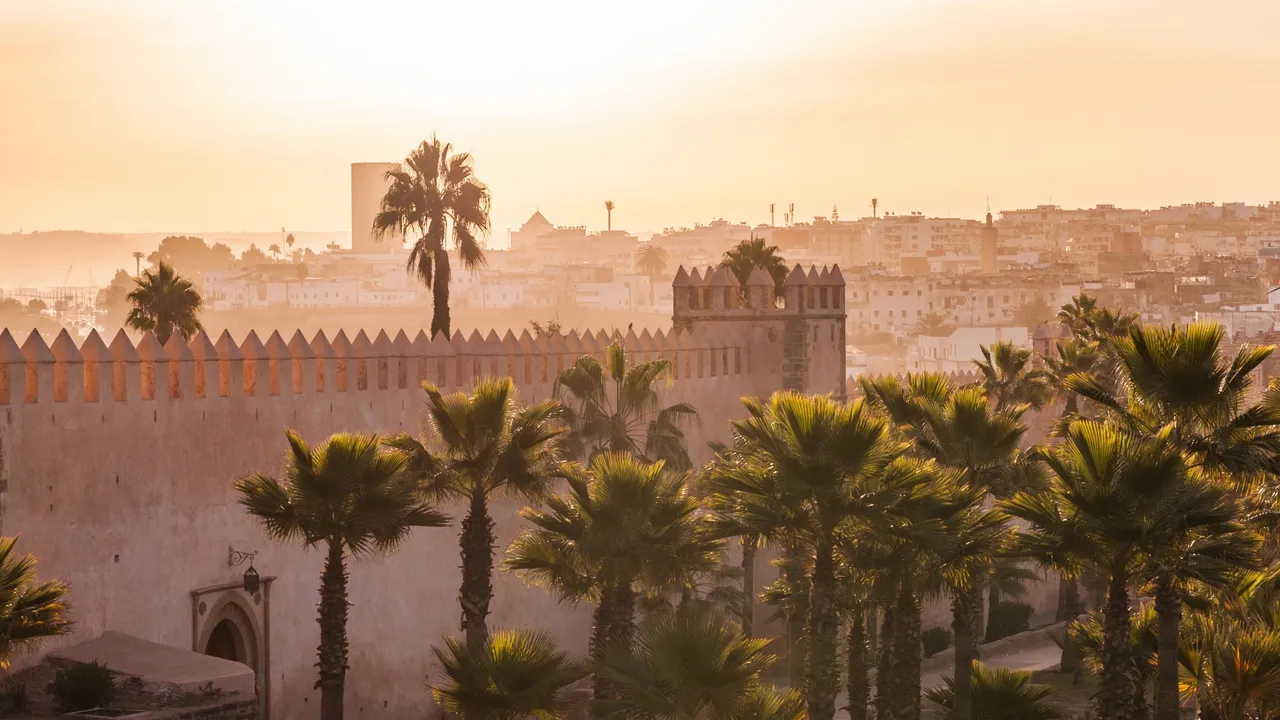
Rabat lives between two worlds, the Western and the Eastern. With a pace slower than that of some neighboring cities, it allows itself to be guided by its French colonial past while still honoring Islamic tradition. Although it sits on the edge of the Atlantic, its kasbah carries a Mediterranean air of whitewashed towns.
Day 1: Kasbah des Oudayas
9:00 a.m. We begin with a traditional Moroccan breakfast at the Riad El Bir, located inside the medina: homemade jams and freshly baked pastries bought at the souk, along with the msemen (flaky crepe) and the baghir (the crepe with a thousand holes).
10:00 a.m. We start toward the Kasbah des Oudayas via the longer route, the one that leads us deeper into the medina. Along the way we pass by Mohammed Aziz’s bookshop, Rabat’s oldest bookseller. Each day the same ritual—except on rainy days, as he explains—pulling out every book in different languages from his tiny shop and laying them along the sidewalk. Aziz represents an institution in the city. Passing by and watching him read by the doorway of the shop is a literary pleasure. I’m not sure if it’s tied to the fact that Rabat has been named World Book Capital in 2026 by UNESCO, but this title undeniably belongs to the city.
12:00 p.m. Before venturing into the ancient fortress, Andalusian gardens greet us as the gateway to the National Jewelry Museum. It’s worth paying the 60DH (about 5.5€) to wander through the caftans from various regions of Morocco and its jewelry collection. Yet what left me most captivated were the Moroccan haute couture outfits inspired by Salvador Dalí.