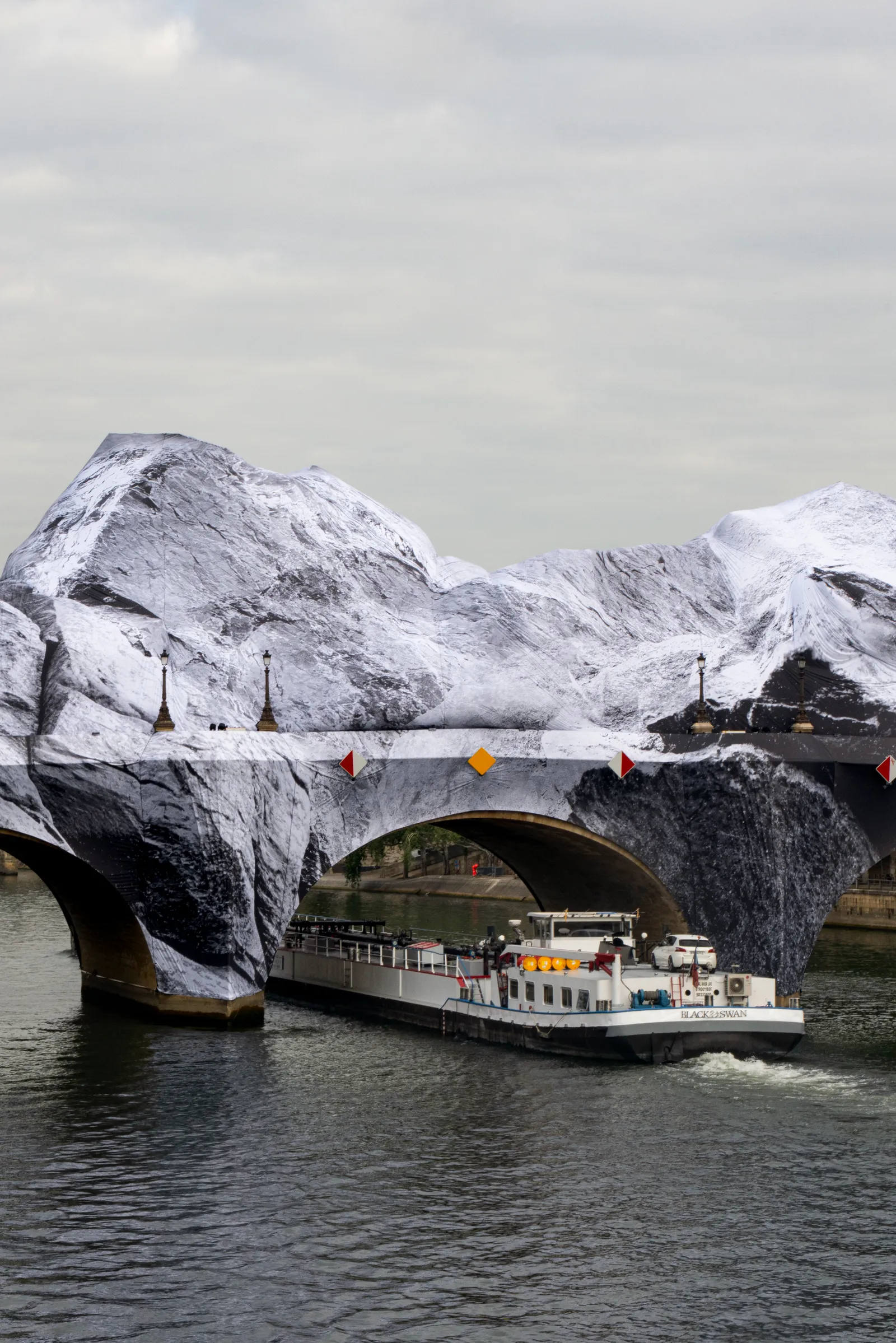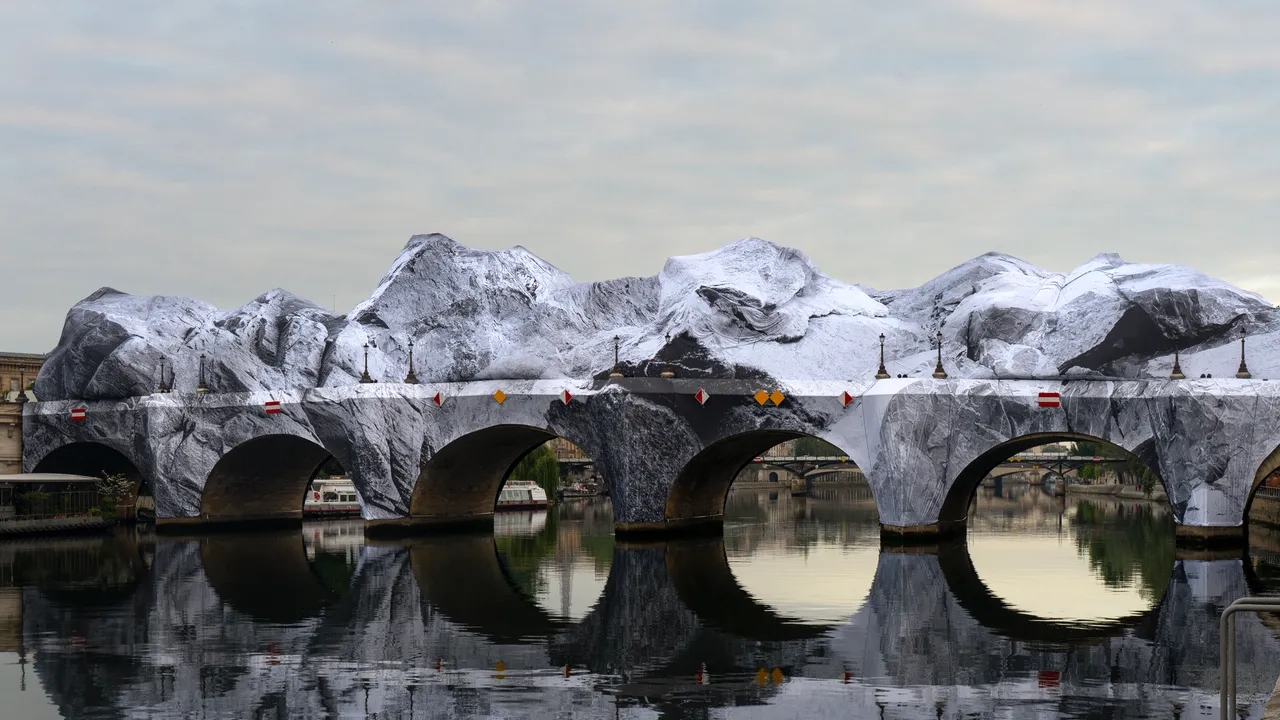
The Cavern of Pont Neuf. This is how the temporary installation by the French street artist and photographer JR (Jene-René) has been named, in what can be considered the oldest bridge in Paris.
This monumental work, which will be accessible for viewing from June 6 to 28, pays homage to The Wrapped Pont-Neuf (1985) by Christo and Jeanne-Claude, one of the artists duo’s most ambitious projects, which celebrated its fortieth anniversary last year.
Both Parisians and visitors will have the opportunity to immerse themselves in this ephemeral reinterpretation of the Pont Neuf in a free, 24-hour experience. The installation can be viewed from multiple perspectives, each more inspiring: on foot or by bicycle, from elevated quays and nearby bridges, or even aboard a riverboat.
The Cavern of Pont Neuf, which measures 120 meters in length and 18 meters high at its tallest point, will also be visible beyond its immediate surroundings: in June, views from the top of the Eiffel Tower are promised. Although the interior is still in the final finishing stages, the exterior of The Cavern of Pont Neuf already makes a commanding impression.
The Concept Behind the Colossus
To bring The Cavern of Pont Neuf to life, the Paris-born artist JR drew inspiration from the ancient quarries from which the stones of the bridge were extracted. What is his aim? To foreground the foundations of the architecture of the City of Light and to foster a dialogue between past and present.
Completed in 1607, the Pont Neuf marked a turning point in Parisian history as the first footbridge built entirely from Lutetian limestone –the iconic “Paris stone”— instead of wood. This material, quarried from the local basin’s quarries, shaped a large part of the urban landscape. Another milestone of the Pont Neuf was the incorporation of paved sidewalks, signaling the start of a new way of inhabiting public space.