Sometimes cities are best understood from their rivers rather than from their squares. The latter are the official version, the neatly combed family portrait; rivers are the inner tale, what the city tells itself. In Lisbon, this monologue is sustained by the Tagus, which is really not a river but an estuary with ocean manners, and which for centuries has done the same thing: divide the city between those who turn their backs on it and those who insist on looking at it. For a long time, the former won. The Lisbon of hills and azulejos evolved inward, as if the water were only a means of transport or a backdrop. The Expo of 98 managed to put everything in its place.
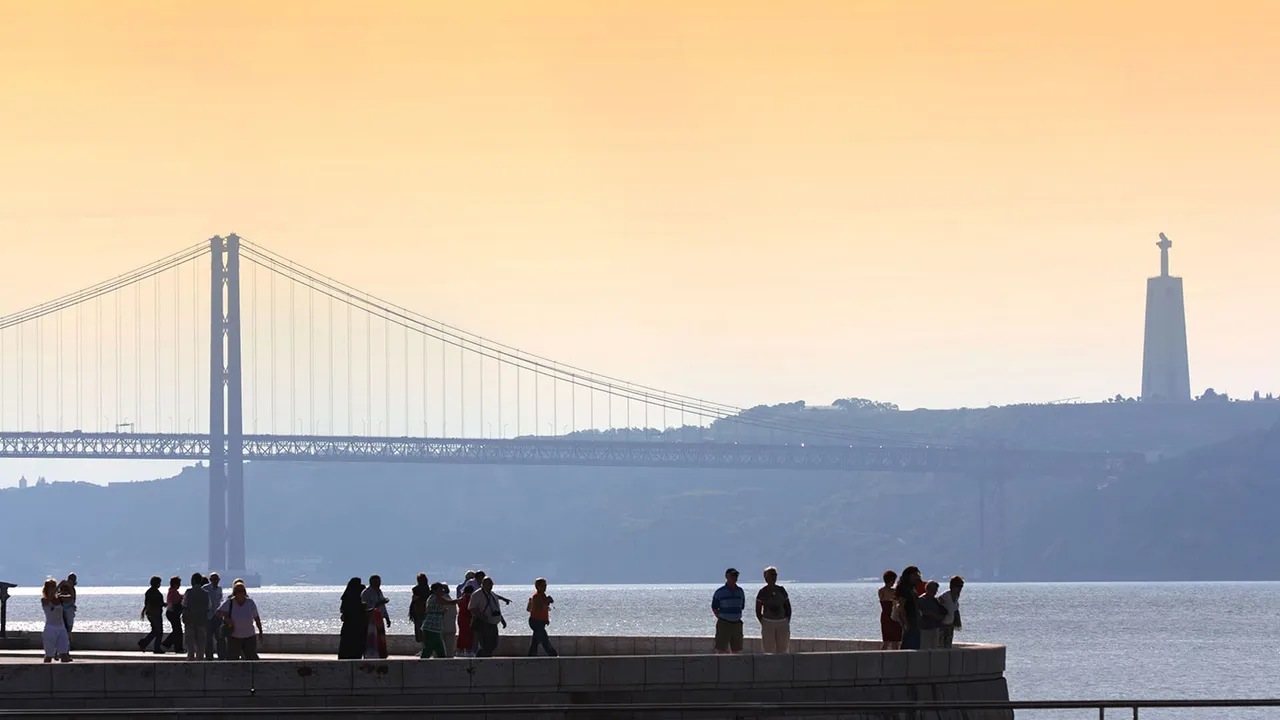
When no one is watching I slip off my shoes and soak my feet in the dark water. It looks like a sea, but it is the Tagus. From the Myriad hotel, in Parque das Nações, the tides rise and fall with Atlantic cadence, the ships passing by the window are freighters sailing from open sea, and the seagulls have a flight longer and slower than those of any inland riverbank. On the promenade, a pair of guys hug, resting their backpacks on the stone promenade.
The hotel, with its sail-shaped architecture and rooms oriented toward the water, rises beside the Vasco da Gama Tower, the needle of concrete and steel of Expo ’98 which today houses at its summit Fifty Seconds, a two-Michelin-star restaurant under the direction of Rui Silvestre. Further up, Babylon 360 operates as one of the best viewpoints in the city with a panorama that spans from Serra da Arrábida to the two bridges. This entire stretch was invented just three decades ago on the grounds of a refinery and a slaughterhouse.