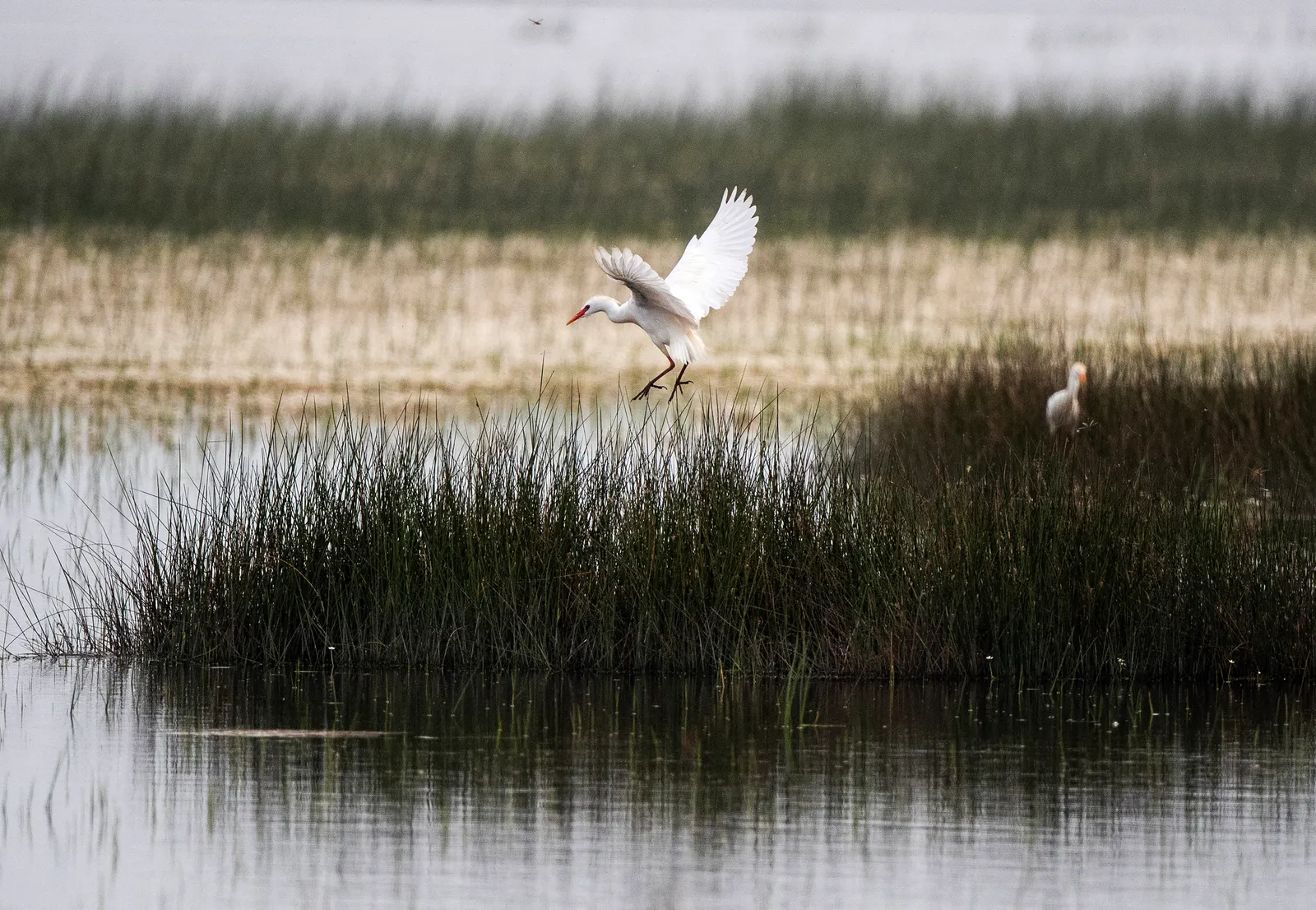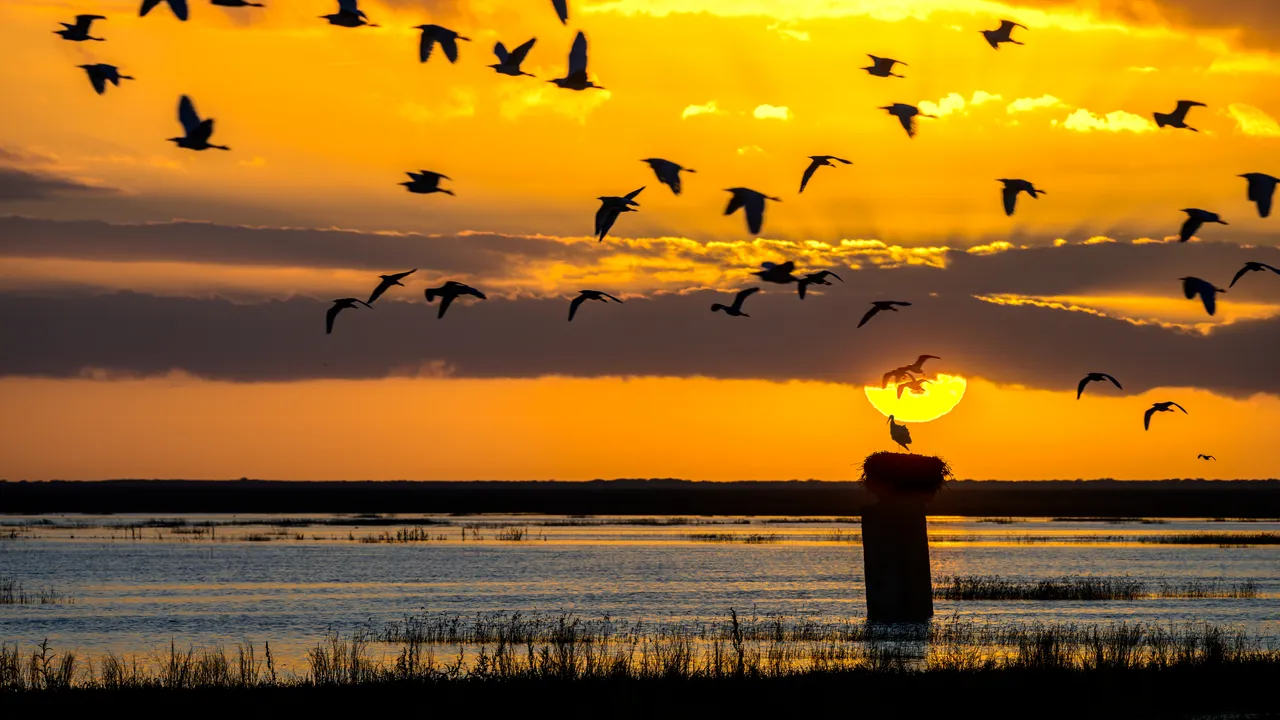
The roads leading to El Rocío, a week before the romería began, were already packed with horses that kicked up clouds of dust as they passed and carts, some richly adorned and others more austere, parked in every corner. The village streets, among the liveliest, were traversed by dozens of devotees of the Virgin of Rocío, the Queen of the Marshlands, preparing the marismeñas huts (or the houses that today, whitewashed and rustic in style, imitate what those huts were), home to the brotherhoods during the celebrations. And the marshes, which shelter the village and have created the famous image of the Virgin’s Sanctuary reflected on the water, share with it more than it might seem: life, purity and tradition.
Doñana: sacred land
Doñana comprises the National Park, the core and most protected area, the Natural Park, which surrounds Doñana’s core and acts as a pre-park that expands the protected zone, and other spaces such as the Biological Reserve.
When, at the end of the 1950s, Doñana was one of the few wild places of this kind that remained in Europe, it faced the danger of being developed and exploited. At that time the marshlands were the obsession of scientists, naturalists, ornithologists and many other profiles who, for years, fought against their industrialization. It wasn’t until the NGO WWF (World Wildlife Fund) was founded in 1961, from which they began purchasing hectares in Doñana to protect them, that the Doñana Biological Reserve, the first marsh area with official protection was created by the CSIC (Higher Council for Scientific Research).