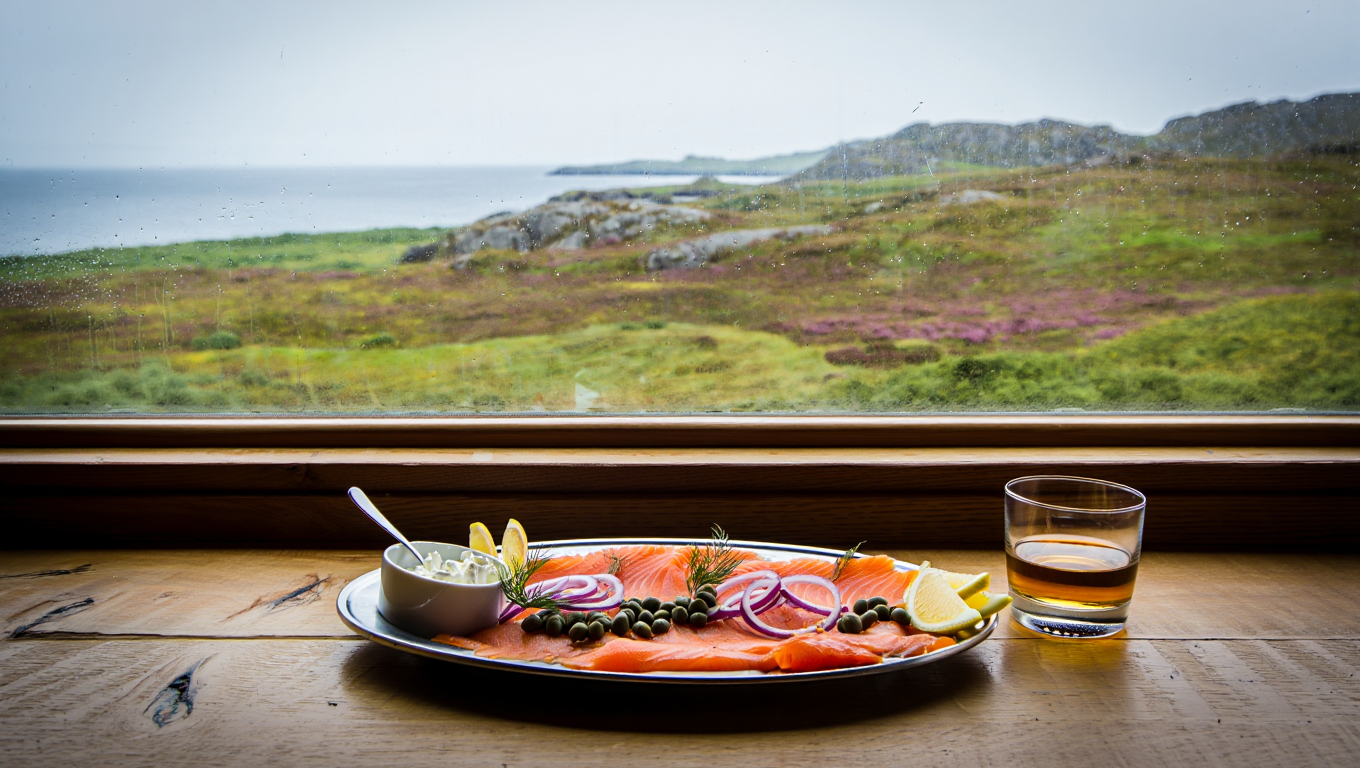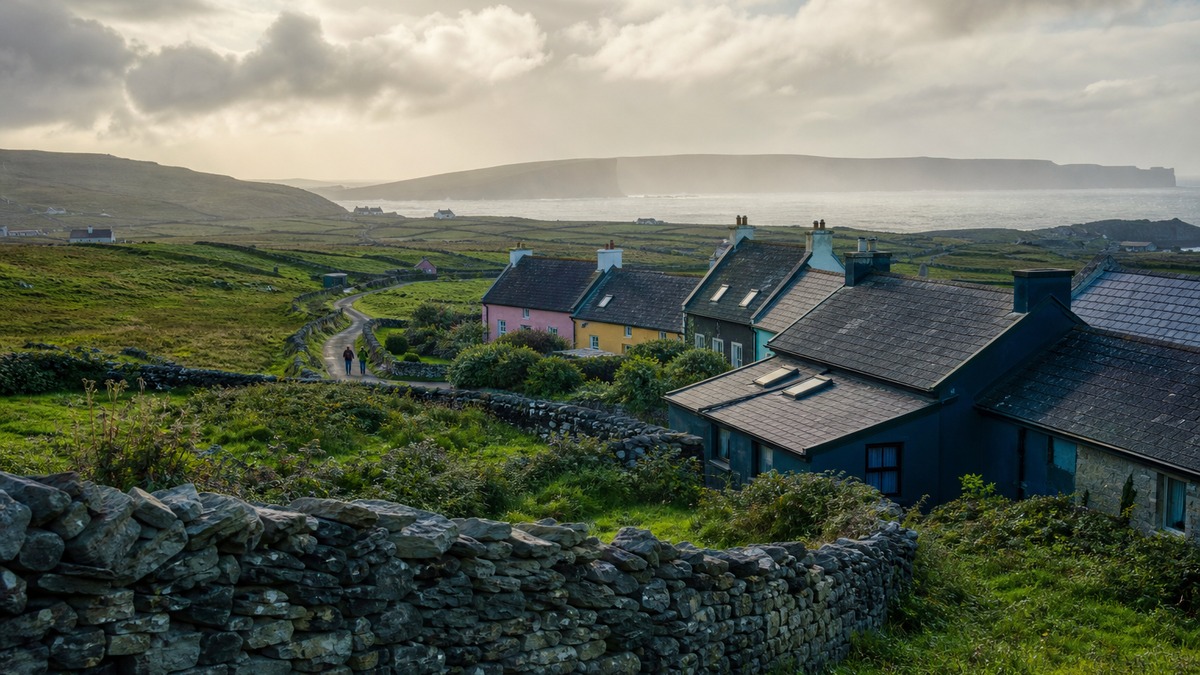
The road bends past limestone walls and Atlantic fields before Doolin appears in a scatter of cottages, pubs and small guesthouses. The village does not compete with Ireland’s biggest landmarks through scale. Its appeal is more intimate: music behind a pub door, salt in the air and the feeling that the land is already leaning toward the ocean.
County Clare’s famous cliffs are only a few miles away, yet many visitors pass through without giving the village a full day. That is a mistake. Doolin works as more than a departure point. It offers a slower way into the Burren landscape, with walks, local food and sea journeys that change character with the weather.
The coloured fronts often photographed along the main road add warmth to the grey stone and green fields. They are not a stage set detached from local life. Homes, shops and music venues remain part of a small working community whose rhythm changes sharply between a winter morning and a busy summer evening.
A village shaped by limestone and Atlantic weather
Doolin sits on the western edge of the Burren, a region known for exposed limestone pavement, narrow fissures called grikes and plants that thrive in an unusual mix of conditions. The ground can look austere from a distance, but closer inspection reveals a surprisingly intricate landscape of wildflowers, stone walls and low pasture.
That geology also defines the coast. Waves meet dark shelves of rock below fields where cattle graze, while the Aran Islands appear and disappear across the water. On a clear day, the view feels open and generous. When mist moves in, the same scene becomes compressed and theatrical, with sound carrying farther than expected.
The weather deserves respect. Sunshine, rain and wind can follow one another quickly, even in summer. A waterproof layer and shoes with grip are more useful than a perfect forecast. The landscape is rewarding precisely because it is not controlled; the Atlantic sets the pace.
The Cliffs of Moher are close but the approach matters
The Cliffs of Moher rise south of the village and extend for several miles along the coast. Their highest points reach more than 200 metres above the Atlantic. Most visitors arrive at the main centre by road, but Doolin offers another perspective: the cliffs can be approached on foot or seen from the water, each route revealing a different sense of their scale.
The coastal walk is not a casual pavement stroll. Conditions, official access and sections of the route can change, so current local guidance should be checked before setting out. Where access is open, the journey rewards patience. The cliffs do not appear all at once; they build gradually from low coastal ledges into immense walls.
Boats from Doolin also run toward the Aran Islands and, in suitable conditions, offer views beneath the cliffs. From sea level, the vertical rock faces feel less like a viewpoint and more like the edge of a continent. Sailings remain dependent on weather and season, making flexibility part of the experience rather than an inconvenience.
Traditional music here is not background decoration
Doolin is closely associated with Irish traditional music. The local tourism site presents it as “the home of traditional Irish music”. Sessions in its pubs helped build that reputation over decades, drawing musicians and listeners without requiring the formality of a concert hall. A good evening is not defined by a rigid schedule. Players join, tunes pass from one instrument to another and the room learns when to listen.
The phrase “traditional music capital” is often used in tourism material, but the more interesting detail is the scale. In a small room, a fiddle or uilleann pipes need little amplification. The audience can hear breath, bow and foot rhythm, as well as the brief discussion that decides the next set.
Visitors should not treat a session as a themed attraction demanding constant photos or conversation. Buying a drink or meal, leaving space for musicians and following the room’s mood are simple courtesies. As many regulars put it, the music is a living social practice, not a performance arranged solely for strangers.
How to give Doolin more than a hurried stop
An overnight stay changes the visit. Day-trip traffic thins, the light softens over the Atlantic and the village becomes easier to read. Early morning suits a quiet walk; late afternoon can be kept flexible for the coast; evening belongs naturally to food and music. That loose structure works better than trying to collect every viewpoint in a few hours.
Travellers arriving without a car need to check seasonal bus and ferry timetables carefully. Those driving should still expect narrow roads and limited space at popular times. Choosing accommodation within walking distance of the village reduces short journeys and makes an evening session easier to enjoy without watching the clock.
The cliffs may dominate every map of this coastline, but Doolin supplies the details that a panoramic photograph cannot hold: wet stone after a shower, a tune beginning in the next room and islands hovering on the horizon. The landmark is close enough to command attention. The village earns its own by asking visitors to stay.