Every morning, a man walks past a fastfood establishment where there used to be a neighborhood bakery. We also see it in the rivers that lay bare their guts due to the drought, or on every beach where we spent our childhood sheltered under the pines, now overwhelmed by cranes and crowds.
For years, the phrase “All this was countryside,” which your father (or mine) might say when he sees the childhood orchards turning into a housing development, carried a meme-like quality. Yet that gesture sprang from solastalgia.
The term, coined by Australian philosopher Glenn Albrecht in 2005, and formed from the etymology sōlācium (comfort) and the Greek root –algia (pain), refers to the distress caused by looking at a landscape affected by climate change, but also episodes such as gentrification, drought, or mining.
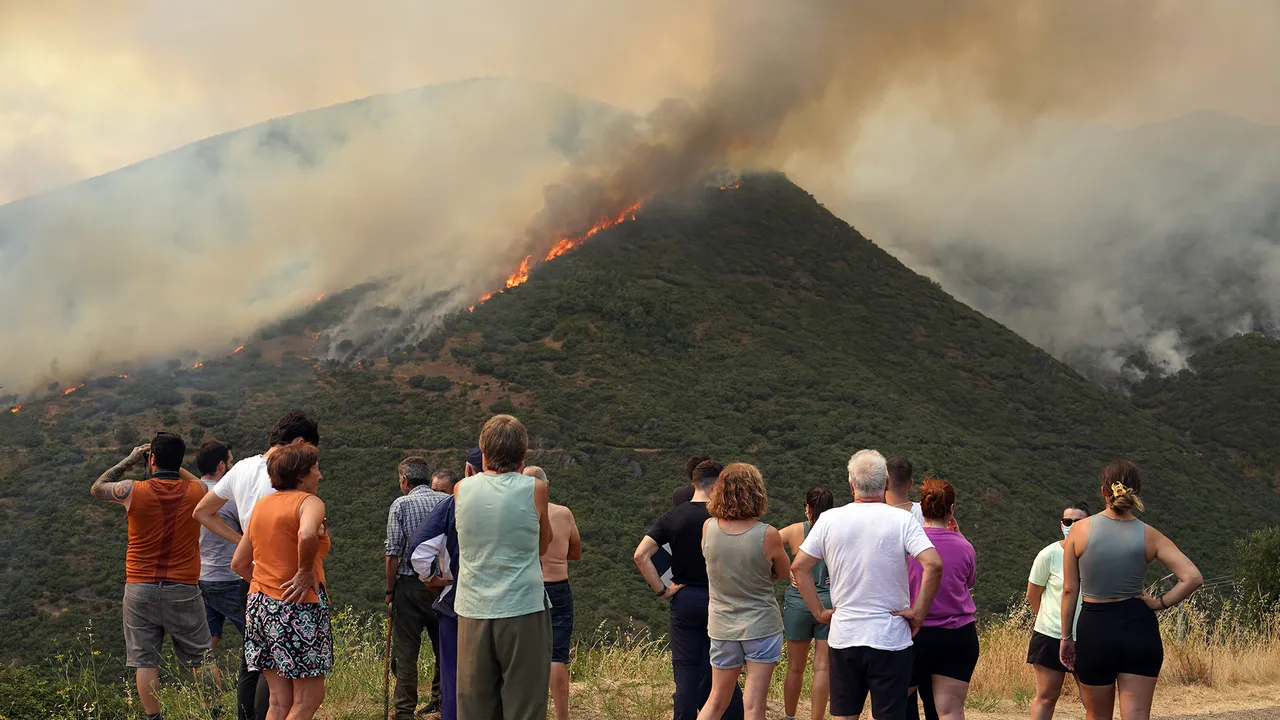
At a moment when we are recovering from the devastating fires that swept through Spain this summer, solastalgia takes on more importance than ever. Especially when it comes to identifying new emotions produced by the environment’s own impact.
That Feeling Is Called Solastalgia
(A dry well from La Mancha, from the poetry collection Añil, by Miguel Galanes)
Someone who loves Chilean Patagonia often travels there on vacation. But one night he saw lights beyond the mountains. At first curious—and later, with pain—he discovered that it was a fire. Then he began to feel sadness, then pain, anger, and a range of other emotions. The next day he was very sad, inconsolable, seeing that that territory which had been so important to him and his life was being destroyed by fires caused by humans.
That is the story Felipe Landaeta Farizo, a transpersonal psychologist and professor at the University Adolfo Ibáñez in Chile, shares with me: “The person with solastalgia feels pain for a territory that ceases to be as it was. It is a feeling tied to the loss of what was. It relates to nostalgia for the past, but it is pierced by loss. It happens when we visit a place we love, with which we have a special relationship, that in the past was different and that we realize over time has deteriorated. It has something of mourning,” Felipe tells Condé Nast Traveler.