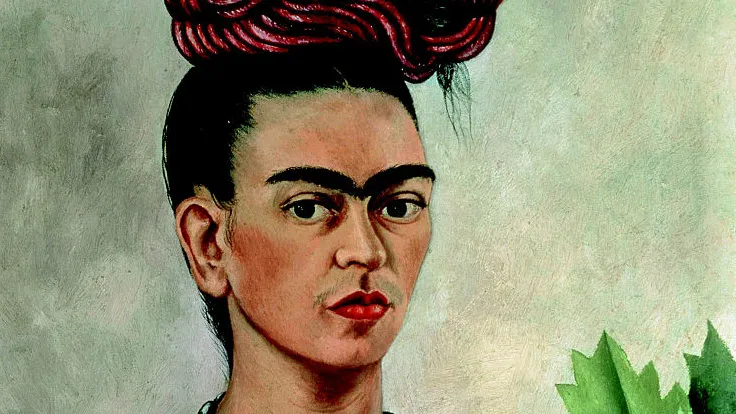
The collector Natasha Gelman had just acquired a not exactly cheap Braque when she became obsessed with a work by Frida Kahlo titled “Diego in My Thought” (1943). To her husband, Jacques, who was amassing a huge fortune thanks to the Mexican film industry and an alliance with Mario Moreno, better known worldwide as Cantinflas, it did not please him much to see such a frequent outlay, but in the end he yielded.
That same self-portrait by the Mexican artist stars in one of the two galleries occupied by the Gelman Santander Collection in the new Faro Santander cultural center. The majestic Edificio Pereda – the former Banco Santander headquarters redesigned by Pritzker Prize winner David Chipperfield – already functions as a museum. The general public opening is scheduled for tomorrow, September 8.
It has been a long process, and not without controversy, since this very collection, regarded as one of the finest compilations of modern Mexican art, had been missing for nearly two decades when the story surfaced that the Santander Foundation and the current owners, the Zambrano family, had agreed to a long-term loan.
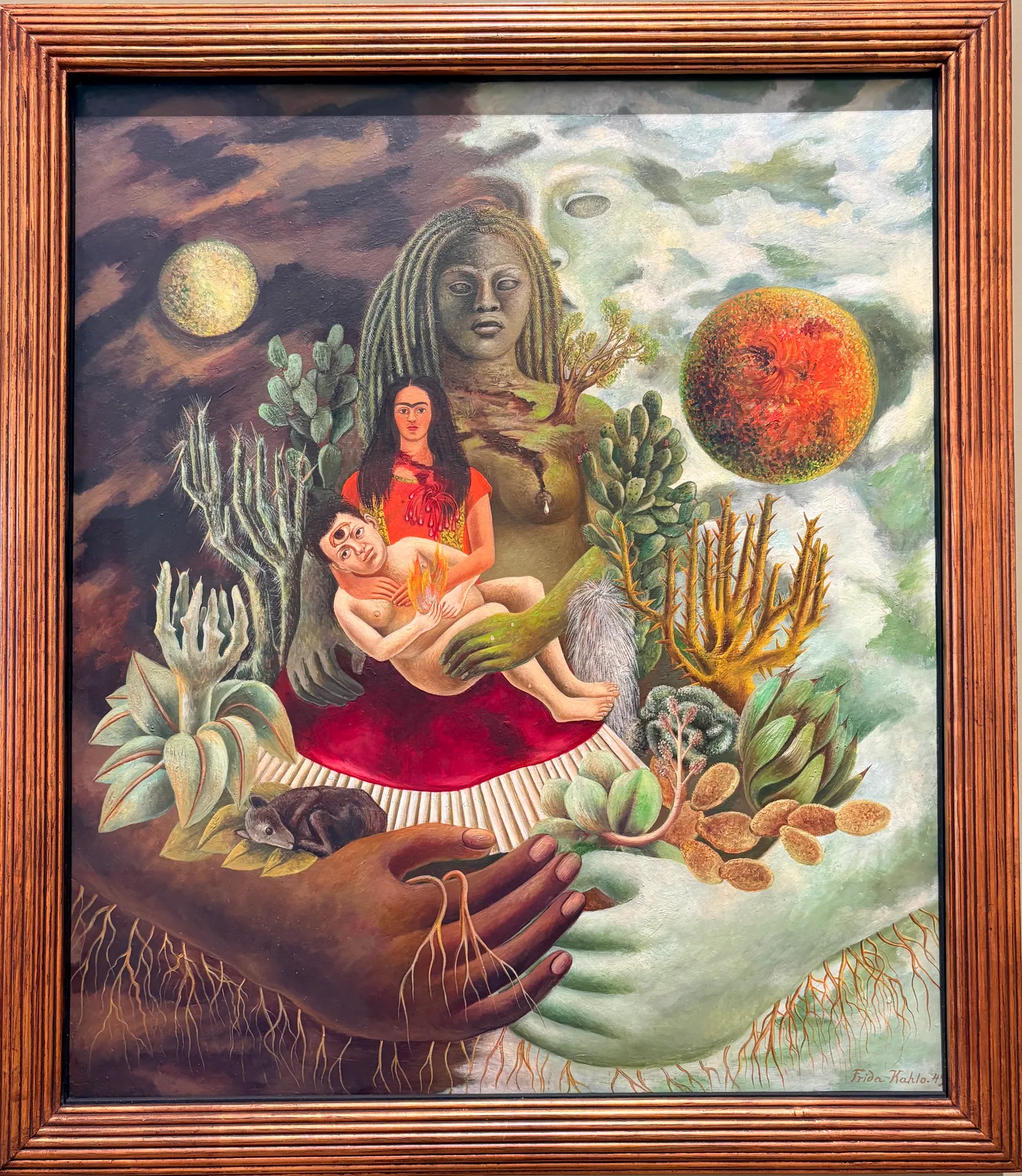
The uproar, as is logical, followed. There are artists protected by Mexican law, such as Frida, Rivera, or Orozco. When news broke that all of them were present in the Gelman Collection, the Mexican art sector began to wring its hands, foreseeing that the country would lose even more works by its heavyweight stars. However, shortly thereafter it was confirmed that the collection would leave the country only temporarily. In fact, every two years it will return to Mexico to alternate with exhibitions in different parts of the world. Therefore, is Banco Santander the new owner of the Gelman Collection? No. The Santander Foundation will act as manager of the 161 works by Mexican artists (or those who had resided in the country), among which as many as 18 works by Kahlo are included.
Not Everything Is Diegos and Corsets
When the Gelman couple met the Kahlo-Rivera team, it was because they commissioned him to paint a portrait of her, Natasha. Diego proved perfectly capable of fitting into the bourgeois aesthetic of the couple. Reclining on a sofa in a stunning dress worthy of a Hollywood star—remember that her husband was part of the film industry—the patron Natasha Gelman welcomes visitors at the entrance of the exhibition “Mexico Modern in the Gelman Santander Collection.”
However, despite the beauty of the portrait, it is very hard to keep one’s gaze from drifting directly toward Frida Kahlo’s self-portrait that the show’s curator, Marisol Argüelles, director of the Museo de Arte Moderno de México, has placed nearby in the middle of the room, functioning as the spine of this first of the two rooms that make up the collection.