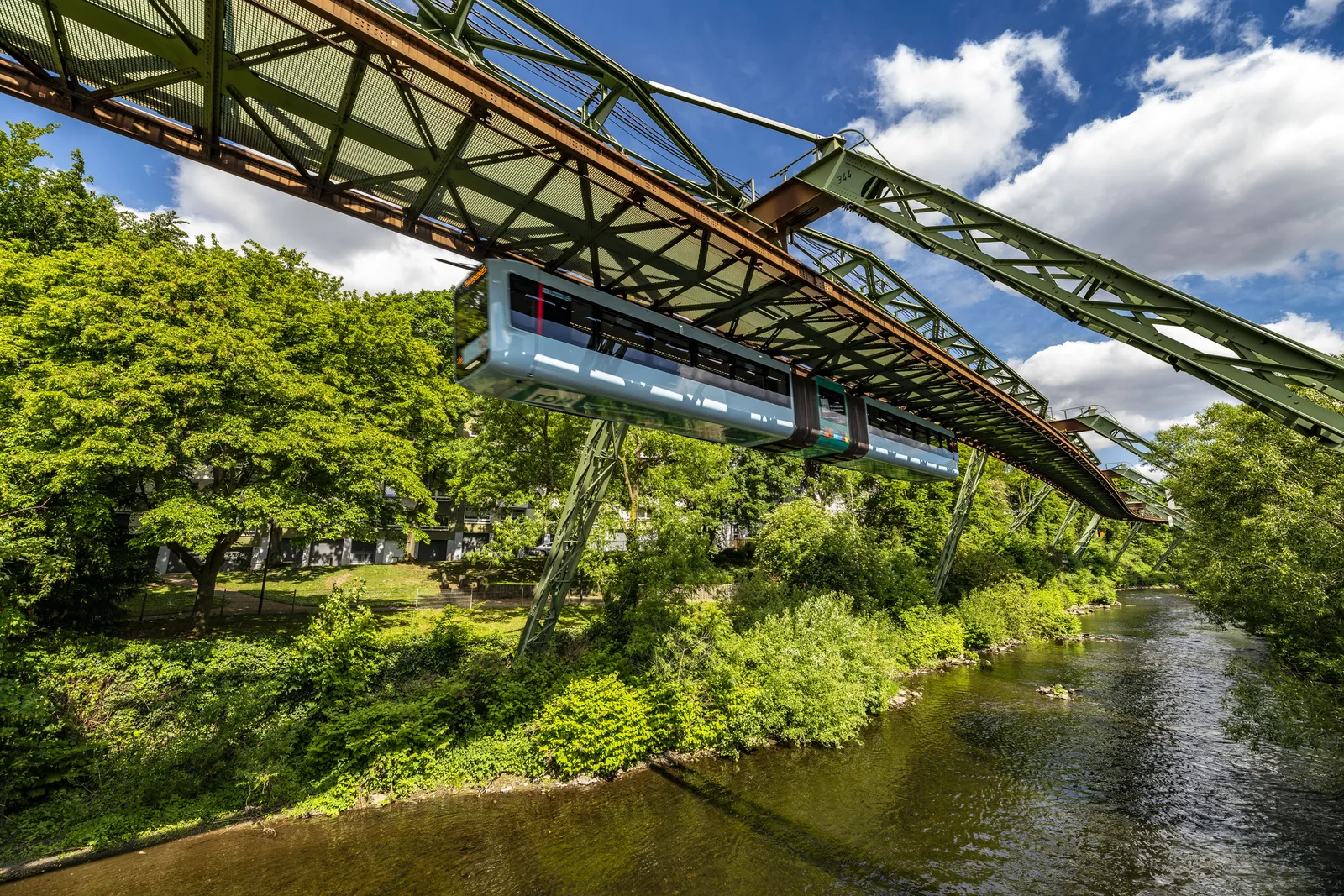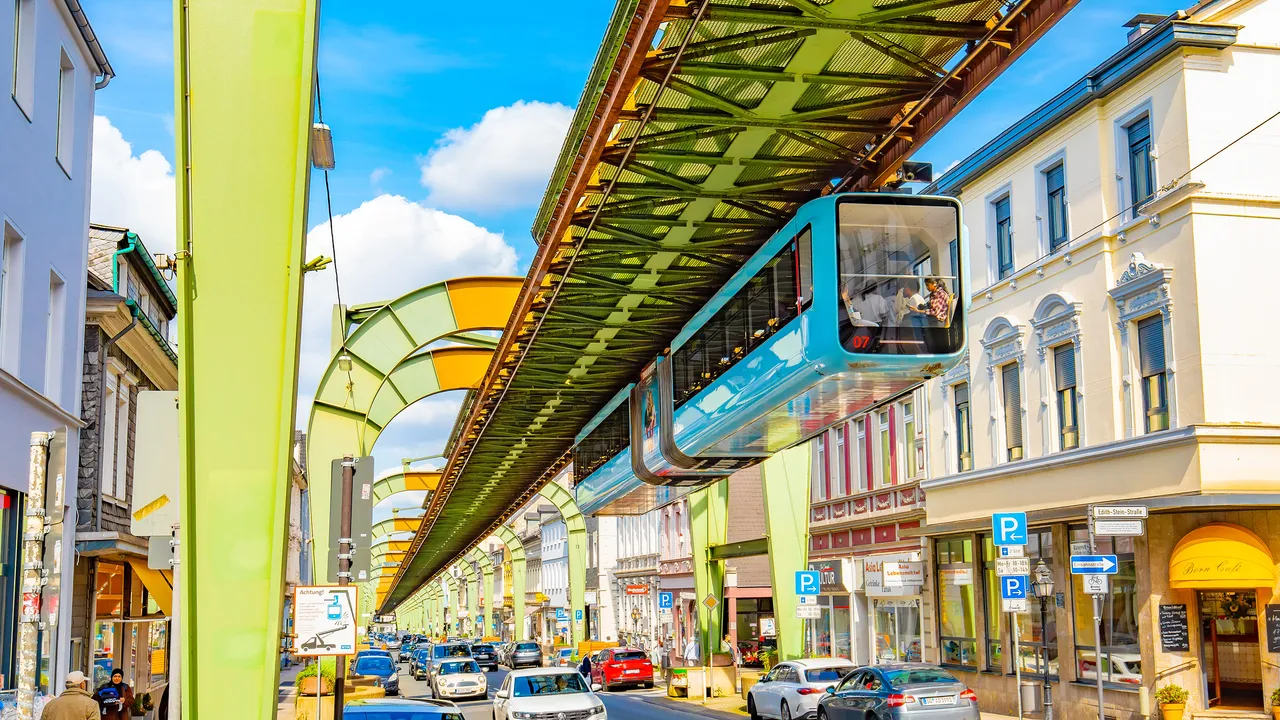
Any resemblance to fiction is purely coincidental. It also evokes the dystopian monorail from Fahrenheit 451 (1966), the magazine’s editor (David Moralejo)’s favorite film, while the Wuppertal suspended train has been in operation since 1901. Back then, François Truffaut hadn’t even been born…
Exactly 125 years have passed since this peculiar railway began traversing the Wupper Valley and, far from having become a relic of the past, the Schwebebahn continues to be part of the daily life of the city.
More than 80,000 passengers use the line every day, a figure that says a lot about Wuppertal’s close relationship with this mode of transport, which began as an engineering solution — lifting the tracks above the Wupper River allowed it to surmount the terrain’s limitations — and ended up becoming one of its great symbols.
Eugen Langen, who had already designed a similar model in Dresden, was the German engineer who developed the infrastructure. However, he did not live to see the Schwebebahn built: he died in 1895, three years before the construction began.
Although for the residents of this western German city it has long been part of both routine and the urban landscape, visitors tend to view the Schwebebahn with a blend of disbelief and fascination, as if it were pure science fiction. After all, not every day can you board a train that, instead of moving along the tracks, hangs above them.