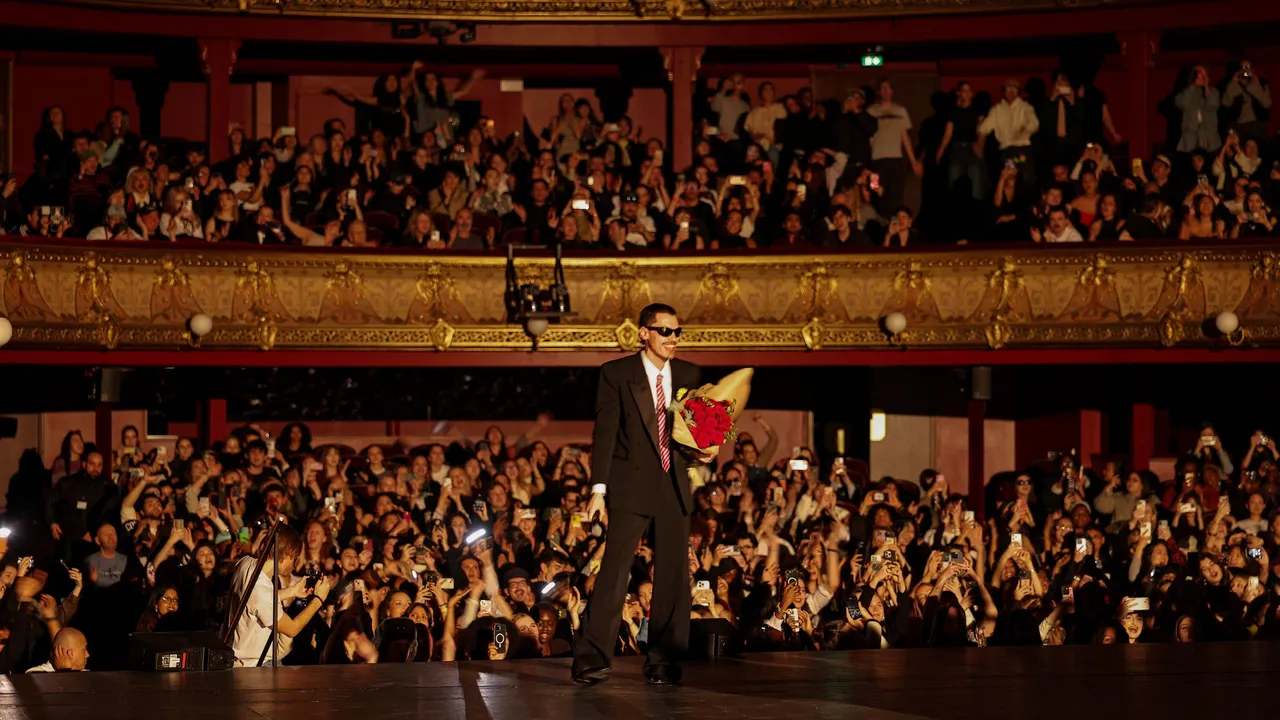
“I’m sorry, but we can’t let you in (you’re not cool enough).” This is what, we imagine, was the reply from Dior’s communications department to the French influencer Elias Medini (@ly.as) when he sent them an email requesting an invitation to Jonathan Anderson’s debut show (S/S 26). With resignation, but the same eagerness to enjoy the show, Lyas organized a collective viewing in a Paris bar with a call to action through his personal account.
Instagram content
The réseaux sociaux did their magic and nearly 3,000 people gathered around a screen as if it were the World Cup final (for the fashion sector, in reality, it was the closest thing to a World Cup final that could happen). Now, just over a year after the first viewing, you will find him in the front rows, surrounded by familiar faces, and extending invitations to La Watch Party to celebrities of worldwide fame.
To understand why an event like this is born, one must understand that attending runway shows is, increasingly, more complicated. It matters who, how many and for what purpose: globally reaching influencers often replace the more niche content creators, the nepo babies have VIP access and mass diffusion is the priority. This, if we talk about the fashion weeks of the world’s major capitals in this field, such as London, Paris or Milan, as opposed to Copenhagen, which takes place outside the official calendar, known above all for the great presence of influencers of all kinds in the front rows.