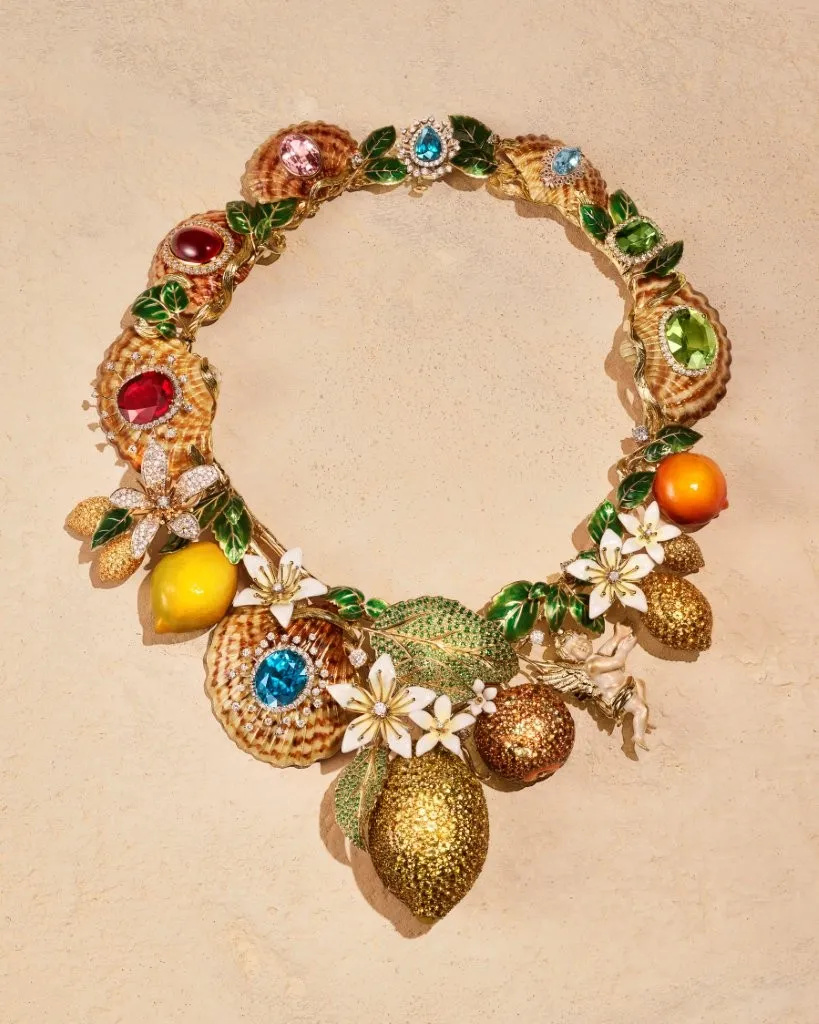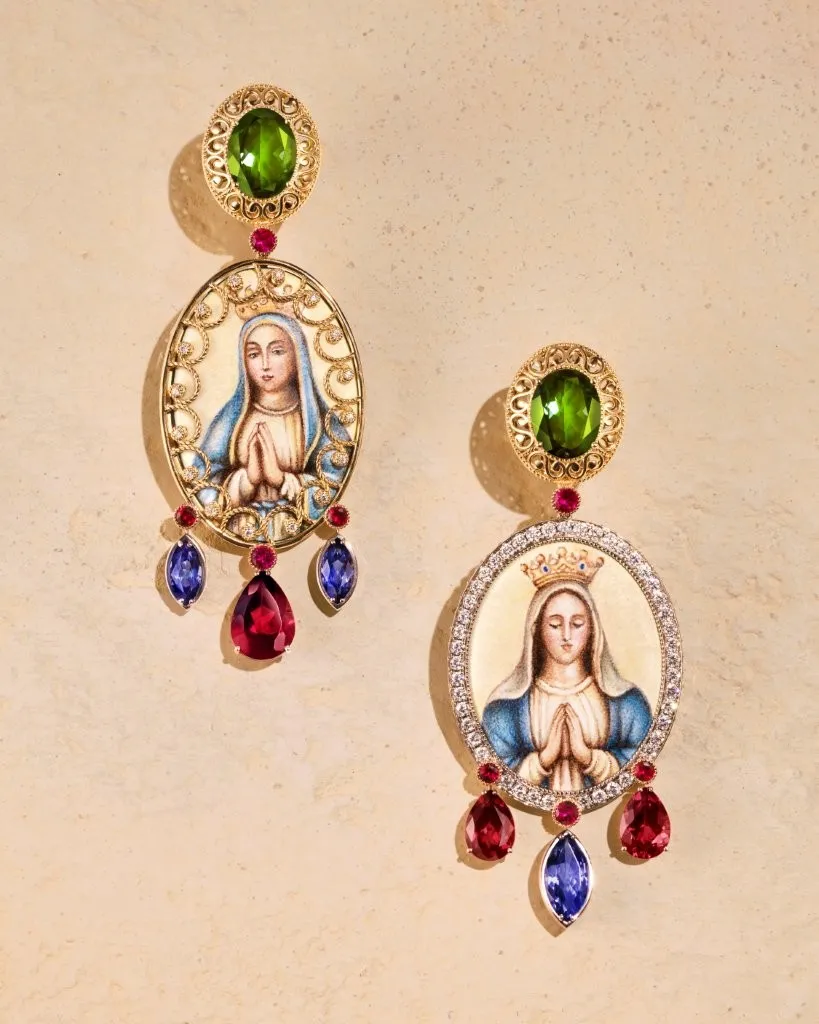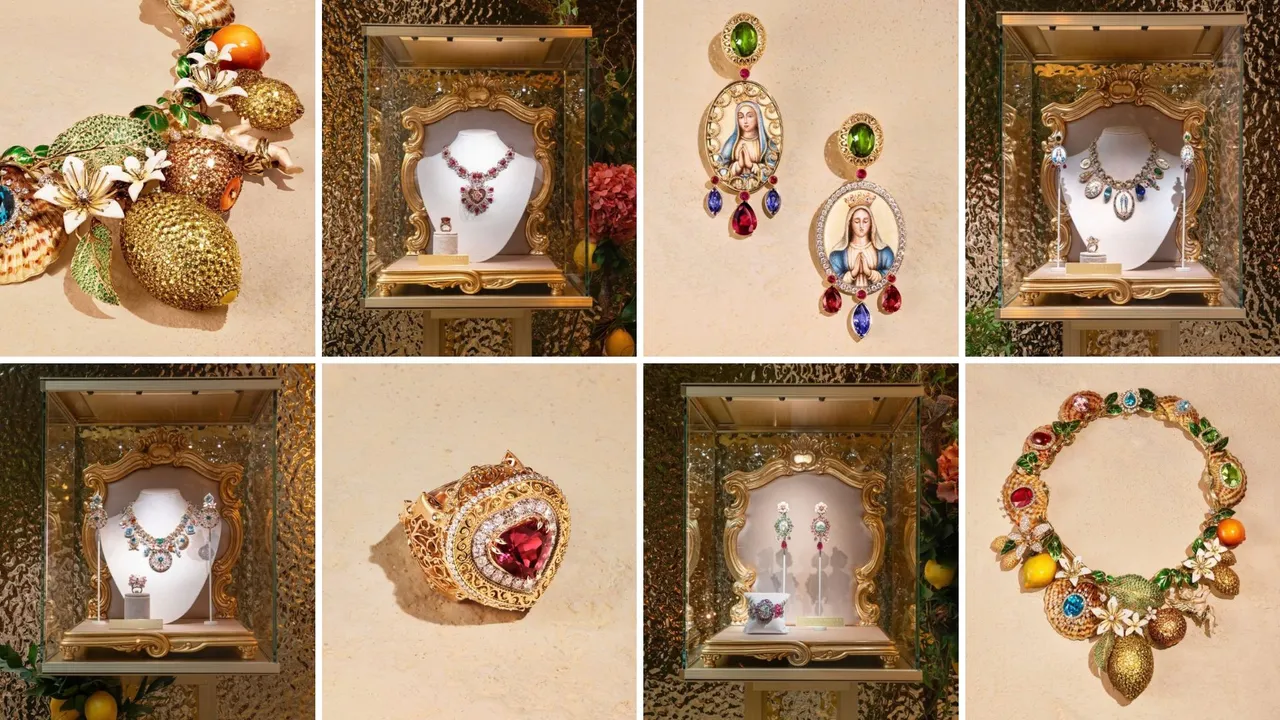
For Dolce&Gabbana, Sicily has never been merely a geographic destination. It is the birthplace, a sentimental homeland, and one of the foundational pillars of a creative universe that for decades has drawn from the island an inexhaustible source of inspiration. Their relationship with it is deep, historical, and, in many respects, an enduring declaration of love.
Part of that bond is also biographical. Domenico Dolce was born in the Sicilian town of Polizzi Generosa and grew up surrounded by fabrics and patterns in his father’s tailoring workshop. Alongside Stefano Gabbana he has transformed the Sicilian imaginary into a language recognizable the world over: the colorful carretti, the hand-painted ceramics, the puppets from the tradition of the pupi, the Madonnas and the votive offerings of popular Catholicism. To these are added Baroque theatricality, full-bodied silhouettes, the nero Sicilia, the lace, the citrus fruits, and an opulence that finds in jewelry one of its most powerful expressions. They do not appear as mere decorative motifs, but as fragments of a culture that the house reinterprets again and again.
Because Sicily is impossible to sum up in a postcard. The vivid blue of the Mediterranean and the shadow of Etna; the hush of a church and the clamor of a family table; the austerity of black and the insolence of a lemon tree heavy with fruit. All of it coexists here with an intensity that is hard to explain and yet easy to remember. Faith as well, which in Sicily is not limited to temples: it passes from mothers to daughters, is kept in medals, worn close to the heart, and ends up becoming part of daily life.