Sunrise reaches me, lost among the orange trees. A rooster crows in the distance and the palm trees converse with the Segura, the minimalist river that keeps moving forward, laying down a carpet of lemon trees, herons, and reed beds. And gradually, the heavens turn a dreamy blue that the Murcian poet Vicente Medina once gazed upon: “It seems that even in heaven, just as in men who do not feel the sorrows of the poor, one cannot discern the brightness of a tear.” Something like that.
The last Moorish corner of Spain was also a place of contemplation for Sufi monks who found peace among mountains and gardens, leaving a trace for a subsequent generation of entrepreneurs who have breathed new life into the Valle de Ricote, the heart of a Murcia orchard teeming with serendipities that sprout as surely as lemons and oranges.
Valle de Ricote: a long life for the orchard
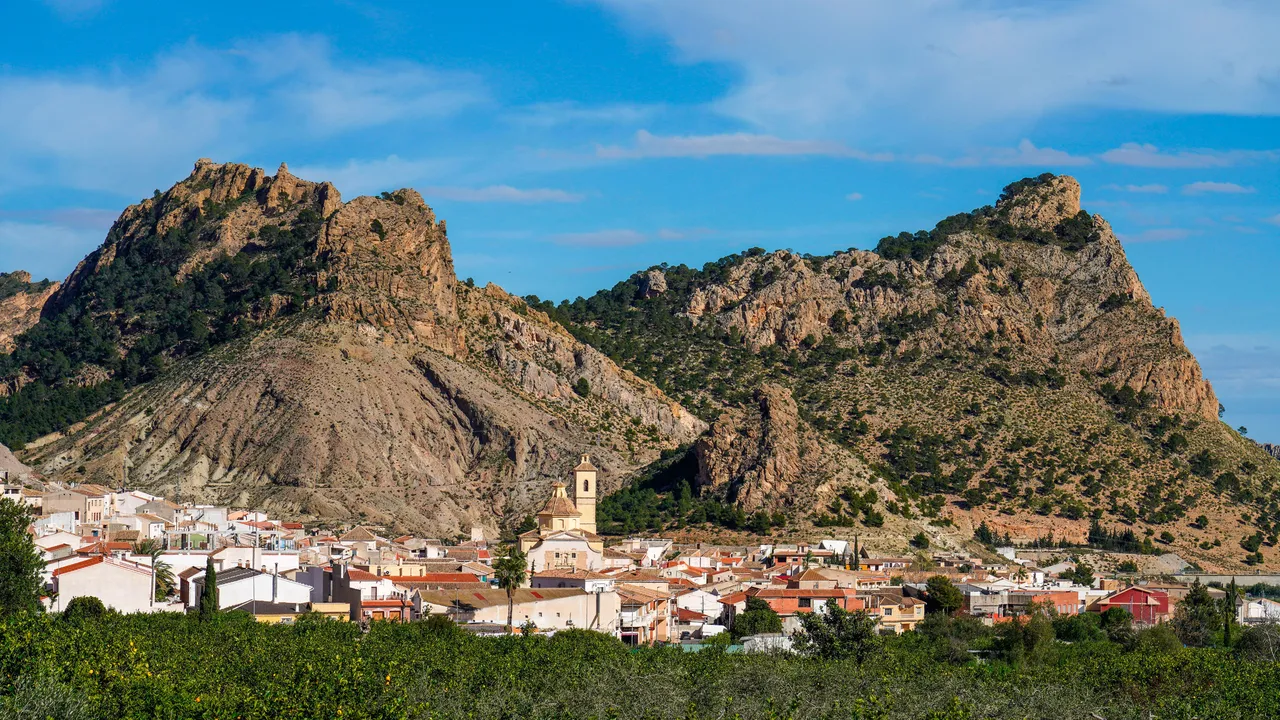
On one side of the road, La Olivera Gorda, the oldest tree in the Valle de Ricote, sits hidden, nearly imperceptible, like a vast matrix whose branches murmur words: the al-saqiya, or acequia; the as sad, the azud – as in Ojós –, the azarbe, or the canalization that collects the surplus waters of the orchard. The Moorish heritage and the Ricoteño’s bond with the surroundings pulse in a corner of the Region of Murcia whose landscape could belong to a nativity scene, to a desert, to an oasis amid the current noise. A green, sinuous tongue that makes its way between the mountains, caressing corners camouflaged in memory.
There is a blue door in Ulea behind which esparto gathered, which, according to certain rumors, once drew designers such as Loewe. And the scent of pisto that drifts through the lanes of laundry-drying streets and flowering balconies, the ducks strolling along the riverbank, and a Hispano-Muslim orchard that speaks of resilience and miracles where words crystallize in the landscape: from its towns painted with lime and blue tiles to the palm groves, terraces, weirs, and other elements that weave the magic that here springs forth in the form of beans, tomatoes, apricots, peaches, oranges, lemon trees, and fig trees.
The hamlets scatter between roads and riverine islets, blurring the borders among the various towns, their inhabitants’ chests swelling with resilience and a heady personality that reveals a range of postcard-worthy scenes.