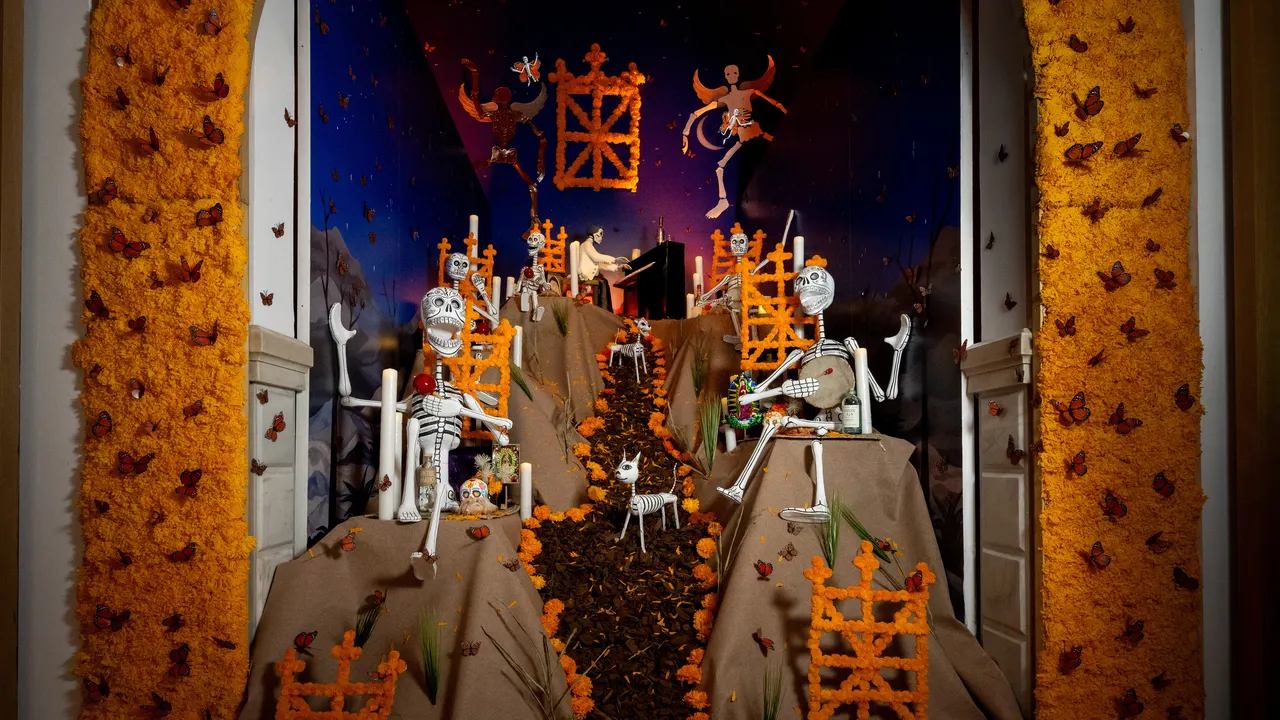
Once again, the Casa de México Day of the Dead altar becomes a must-visit appointment on Madrid’s agenda of plans. Until November 8, it’s impossible to stroll along Alberto Aguilera Street and not stop in front of the cempasúchil marigold flowers and the tin skulls that hang from the balconies at number 20. In this ninth edition, the tie to the capital is stronger than ever: the 2026 altar is dedicated to Agustín Lara, the famous Mexican singer and composer and author of the popular chotis Madrid.
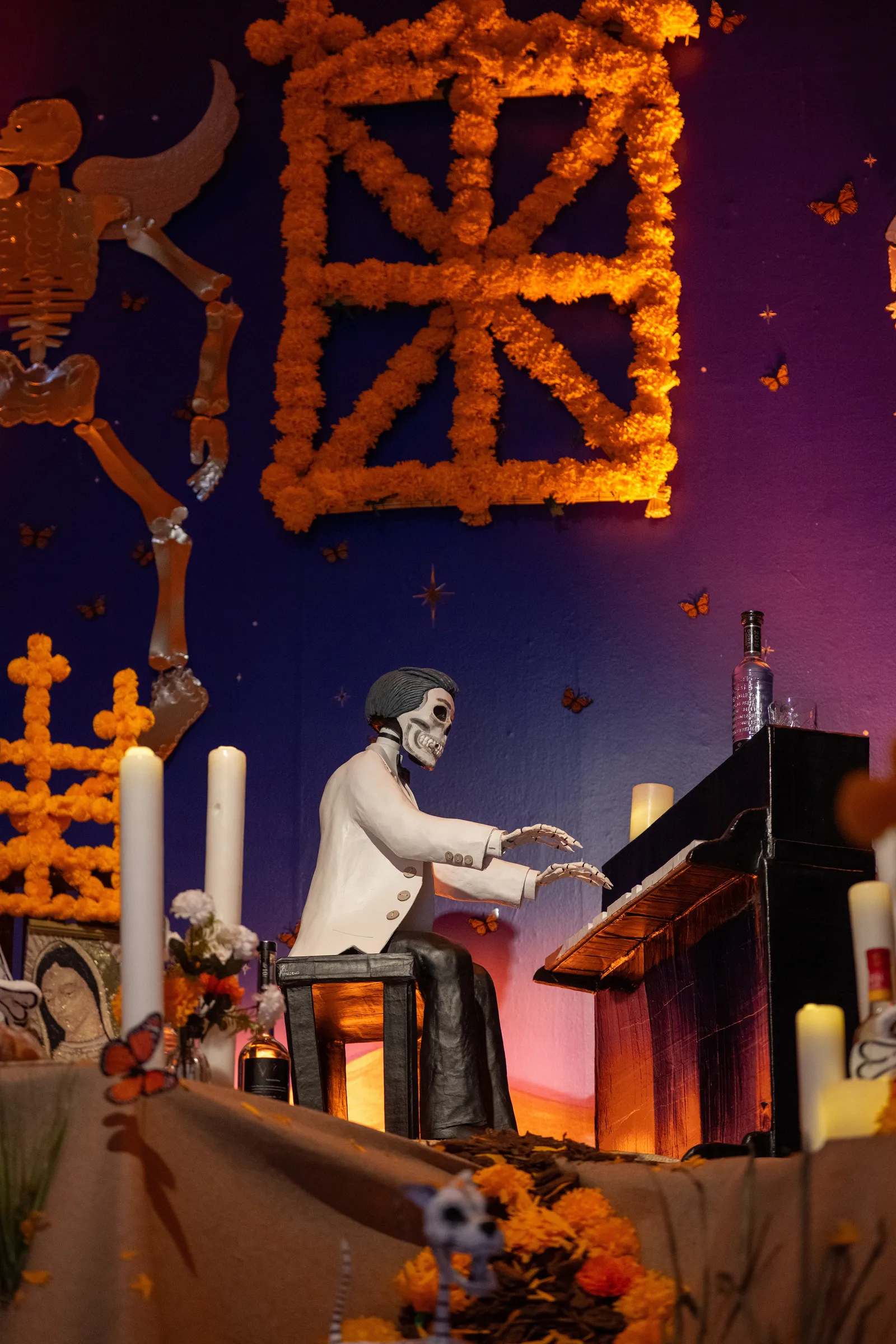
The design of this year is by Beatriz Redo, whose profound love for music has become the guiding thread of the altar and of the overall journey. That is why the main stage of this edition, baptized as ¡Viva la vida!, features a charming group of skulls playing various instruments and led by a very special one at the piano and dressed: none other than Agustín Lara. All of them are crafted with an admirable papier-mâché technique, the work of artisans Raimundo Amezcua and Marta Linares.
The stepped, ascending arrangement in which these skulls are posed isn’t accidental. Another major source of inspiration this year are the mountains of Michoacán. The scene specifically represents a cemetery in the region on the Night of the Dead, when families gather to remember and reconnect with the deceased. As every year, there are sugar skulls, drinks, and candles, but in this edition the altar stands out for the abundance of butterflies, the wheels of marigold, and the tinplate.
In the Purépecha and Mazahua communities of Michoacán, from the end of October to the beginning of November, the monarch butterfly arrives in the region’s forests. Its coincidence with the Day of the Dead has given rise to portraying these butterflies as carriers of the deceased on their wings. Through their flight, they are entrusted with reuniting the living with the dead. Besides the ones that appear decorating the arch framing the altar and the walls, don’t miss the two tiny butterfly-winged skulls hanging from the ceiling.
The marigold wheel, that kind of symbol-door crowned with a cross and unfolded several times across the altar, symbolises a metaphoric doorway between the spiritual and the earthly world and serves to guide the path of the souls. Another of the year’s leading techniques is tinplate, originated in Mexico in the 16th century. It appears represented in the winged skulls in the background as silver angels and recurs in different forms throughout the course.