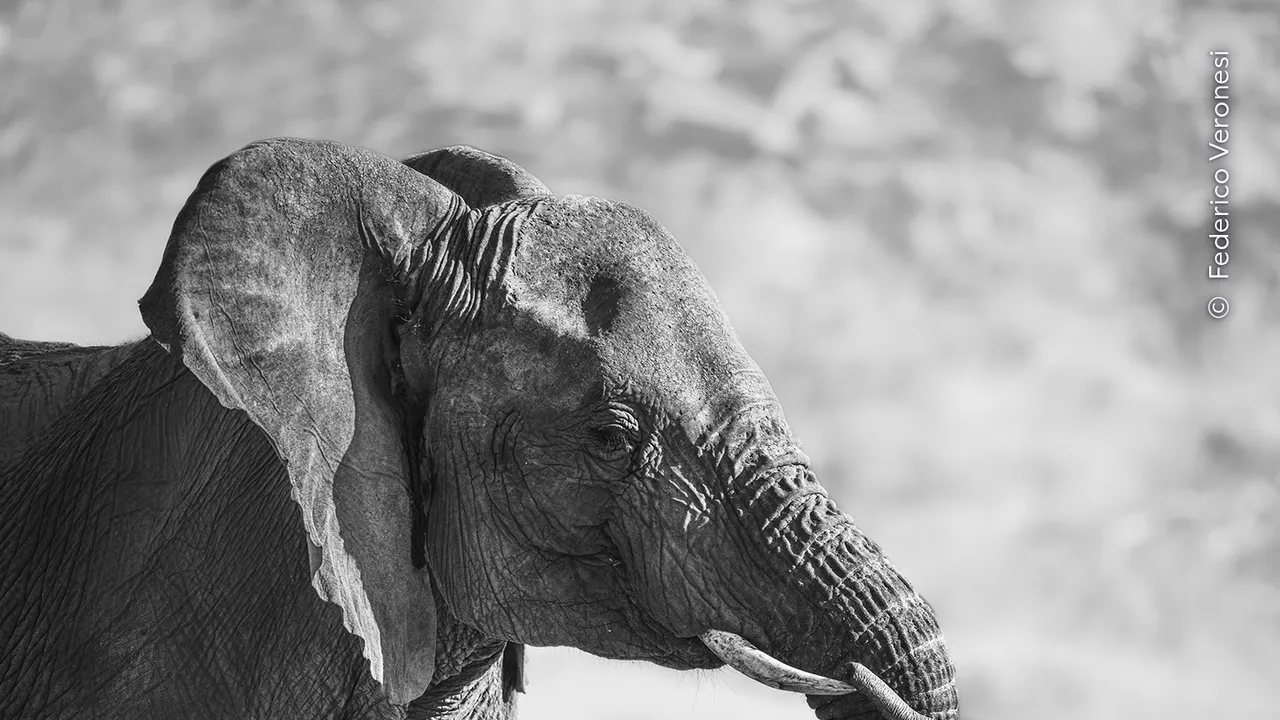
There is always a story behind a photograph, and more often than not it is not what it seems. The Italian photographer Federico Veronesi has captivated the entire jury of the ‘Wildlife Photographer of the Year 2026’ with his image, The Aftermath, taken in the Huab River valley, Damaraland, Namibia. Behind what might appear to be a lighthearted moment lies a sad scene: a mother elephant carrying a dead calf, something rarely seen and that reveals the complex behavior of animals.
The image was unveiled by the Natural History Museum, which once again recognizes the talent of photographers from around the world in its popular competition Wildlife Photographer of the Year 2026, which this year marks its 62nd edition. Veronesi has emerged as the overall winner, but there are more victors across the 19 categories of the contest, whose ultimate aim is to exhibit them at the museum from 16 October.
This year has received more than 65,000 submissions from 121 countries and territories around the world. The images are judged anonymously by a seven-member panel of experts, who evaluate creativity, technical excellence, and originality. Winning the title of Wildlife Photographer of the Year (Wildlife Photographer of the Year) stands as the最高 accolade in the field of nature photography.
View photos: ‘Wildlife Photographer of the Year 2026’: these are the best wildlife images of the year
Instagram content
The Year’s Best Photo and Its Story
Last year, the prize went to a photograph taken in Spain (Torre de Juan Abad, Ciudad Real) featuring the Iberian lynx. In the previous edition, a hunting image that was quite charming turned out to be very different from this year’s. What do we know about it?
Apparently, Federico was following the tracks of some elephants when he came across unusual marks in the sand near the river. The origin of them became clear when he reached a family group: a female appeared carrying the calf, with one of its legs trapped between her tusk and her trunk. Behaviors related to death have been documented in both Asian and African elephants; among them, vocalizations, guarding the remains, inspecting and manipulating bones, and transporting deceased individuals. Some researchers suggest that these behaviors could reflect a process by which elephants come to understand death, while others interpret these actions as possible manifestations of mourning. The photographer, who has been living in Africa since 2002, captured the striking image with a Nikon Z8.