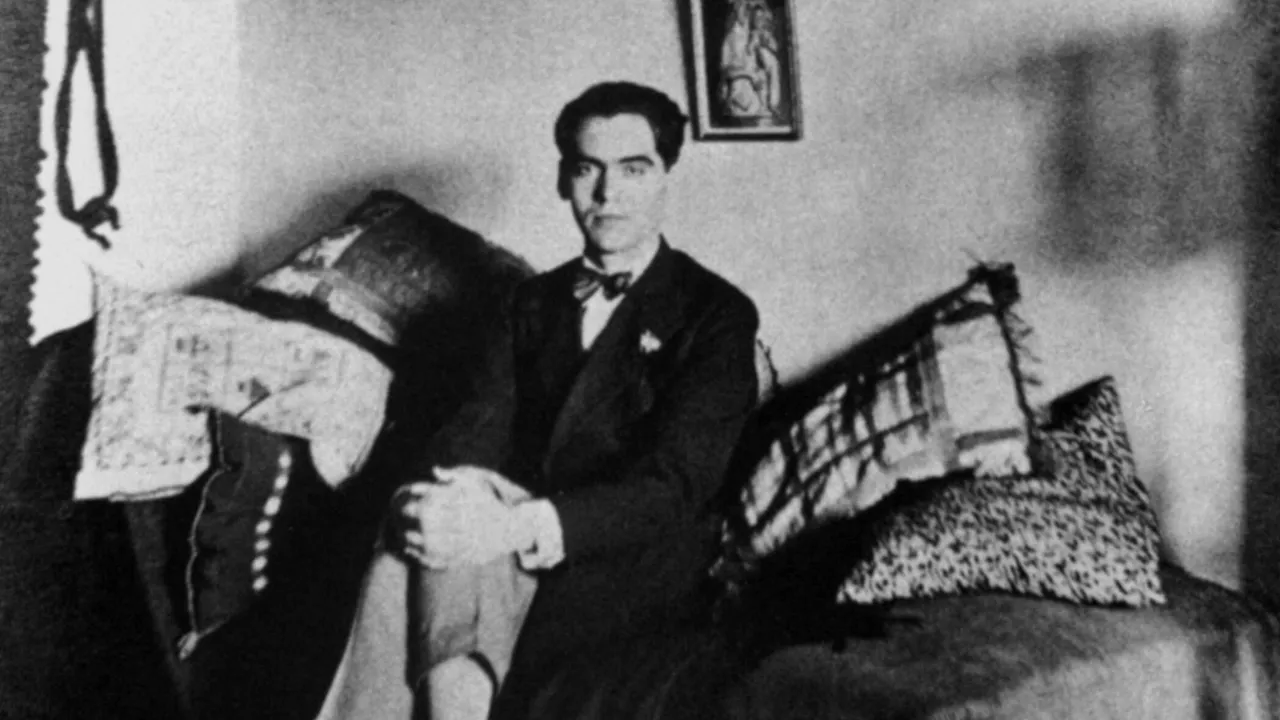
On August 18, 1936, Federico García Lorca was assassinated in Granada, the city that had seen him born 38 years earlier. Those who sought to erase him found that the shot had backfired. And since then, his figure has been remembered through all kinds of reissues of his verses, performances of his plays, recreations of his fleeting life (in series such as El Ministerio del Tiempo or, more recently, the acclaimed film The Black Ball) or tributes of every kind. Dead the poet, the legend was born.
This year, on the 90th anniversary of his assassination, Granada is set to celebrate the definitive tribute. From October 15 to 18, 2026, the city will host Requiem for Lorca, a large-scale work that was conceived as a collective chant to loss, an act of shared memory, public restitution and celebration of mourning through the performing arts, literature and music.
It is the second piece in a curatorial trilogy that began in Madrid in 2024, as Pep Olona and Maral Kekejian (the project’s artistic directors) explain: “Mozart’s Requiem is one of the most important musical works in history, and it carries a strong poetic charge. In 2024, in several spaces in Madrid, together with contemporary artists, we reinterpreted the first seven movements, those that are known with certainty Mozart composed. After the success of that first Requiem, Laura García-Lorca, president of the Federico García Lorca Foundation, asked us to conceive a Requiem for Lorca for the 90th anniversary of his assassination.”
It is a work of four acts and four days: “We defined it as an artistic piece of collective memory, in which the inhabitants of the city are the true protagonists. There are eleven productions created specifically for the occasion and divided into three per day. The verses of the calligram Rosa de la Muerte by Federico García Lorca weave the project’s narrative across four acts: Water for your love, Earth for your soul, Fire for your ashes and Air for your mouth.
Pep and Maral explain to us that, although the works can be viewed independently, they recommend that “whoever can, view the maximum possible number of the scheduled pieces, since you will take away a much more complete image of this Requiem. Think of it as a book of stories, which you can read either independently or in any order, but if you read it as the author conceived it, it takes you to a much more special place.”