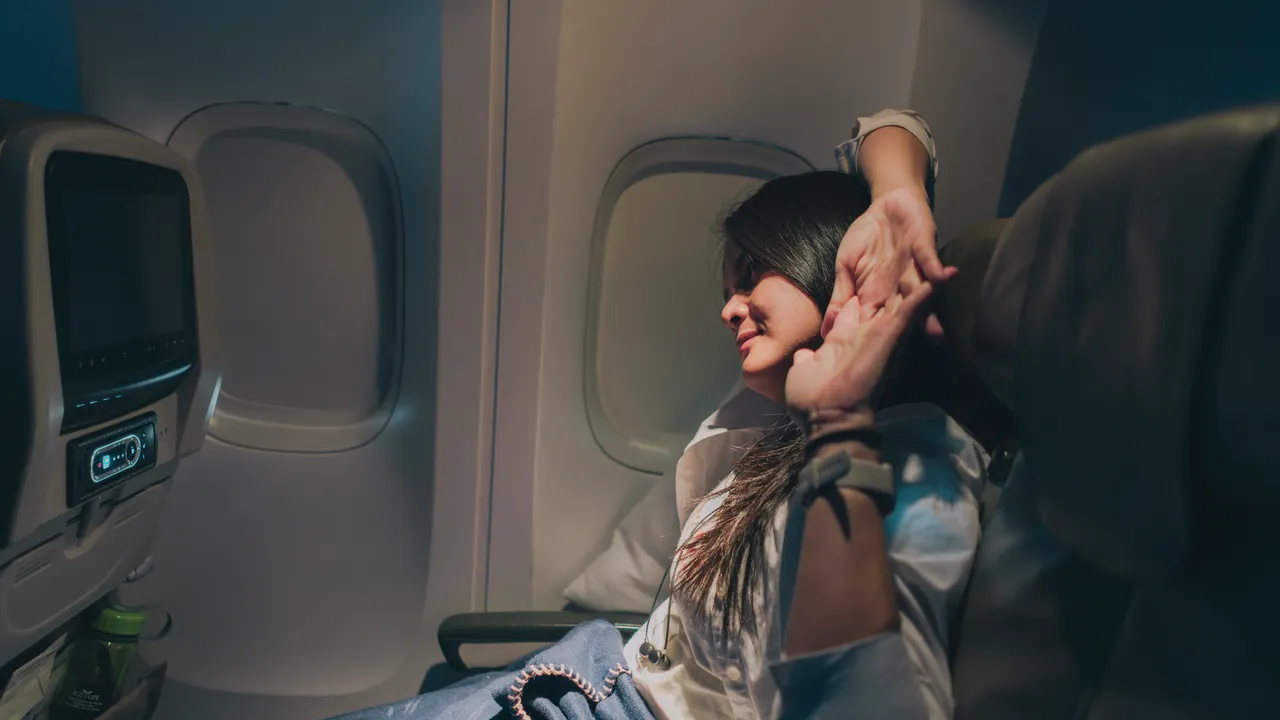
Oh, long flights! Those that bring us the promise of distant destinations as much as back pain and a stiff neck. Even the most intrepid traveler feels the physical effects of spending nine hours seated without moving, regardless of the seat category you’re in. But a little activity can have a big impact, and with a few simple actions you can greatly increase your chances of arriving at the destination with your cervical spine intact. With some gentle Pilates exercises on the plane, which you can do from the comfort of your seat, we can give our muscles enough movement to avoid body pain when landing. But how do we do it without disturbing the person sitting next to us? This is what the Pilates instructors we spoke with have told us.
Why Pilates exercises for the plane?
Pilates is a low-impact conditioning method invented in the 1920s by Joseph Pilates to help the physical recovery of soldiers in World War I. These mindful movements, which increase strength and improve flexibility, can be performed in small spaces and even while seated, making them ideal for long flights. With a few Pilates exercises on the plane, well chosen, you can “reduce stiffness, feel more comfortable upon arrival, and combat inflammation by improving circulation in a generalized way,” according to Jessie Seleio, a Stott Pilates instructor at Real Pilates. Although you don’t need to be a regular practitioner to the exercises you’ll see below, if you travel often, consider taking classes so your body has “solid foundations and is better equipped to cope with long periods of sitting and traveling”, advises Lisa Sayers, co-owner of House of Burn.
Why is moving around so important?
The issue isn’t about performing a full Pilates routine in the aisle: firstly, because you will likely bother other passengers and the crew, but also because you don’t need to perform extreme movements to gain those benefits for your body. Sayers, who before opening her Pilates studio was a flight attendant, confirms that “the effects of a long flight are felt much more by the passenger than by the crew, and one of the main differences is simply how much you move.” While passengers tend to stay seated for hours, flight attendants spend most of the flight on their feet, which reduces the chances of feeling stiffness or discomfort. Getting up from time to time to walk a little or stretch is essential to arrive at the destination in good condition. “Just by changing position, moving the joints, and standing up when it’s safe to do so you notice a huge difference,” explains Sayers.