The struggle between good and evil, and inheritances… were among the major themes projected in a great novel, East of Eden, which John Steinbeck considered his crowning work, and which actress, director, screenwriter, and playwright Zoe Kazan has now turned into a miniseries (available on Netflix) starring Florence Pugh, Mike Faist (Rivals) and Christopher Abbott (Girls).
“How do we reconcile with what remains of who we were?” was one of the precise questions Zoe Kazan asked herself when rereading East of Eden. “What is inherited? What do we carry with us?” she wondered, to reflect even on herself, since it was her grandfather, the filmmaker Elia Kazan, who, precisely in 1955, directed the famous cinematic version, the first of the three films that James Dean starred in, the only one released while he was still alive.
Bringing Cathy’s story (Pugh) and the siblings Adam (Abbott) and Charles (Faist) to this moment is even more epic, without abandoning the necessary intimacy demanded by a drama of this caliber. “It had to be [a story] as personal for me as it had been for Steinbeck,” said Zoe Kazan, who, for that reason, devoted special effort to unravel the central character, the woman described by its author as cold and manipulative, for whom she embodied the very devil. “I tried to research her, to know her, to understand her, without inventing anything. Everything is based on the text,” the filmmaker clarifies. Cathy embodies evil, which makes her incredibly alluring to the brothers, but in the seven-episode miniseries she is no longer a mere archetype.
‘East of Eden’: Locations
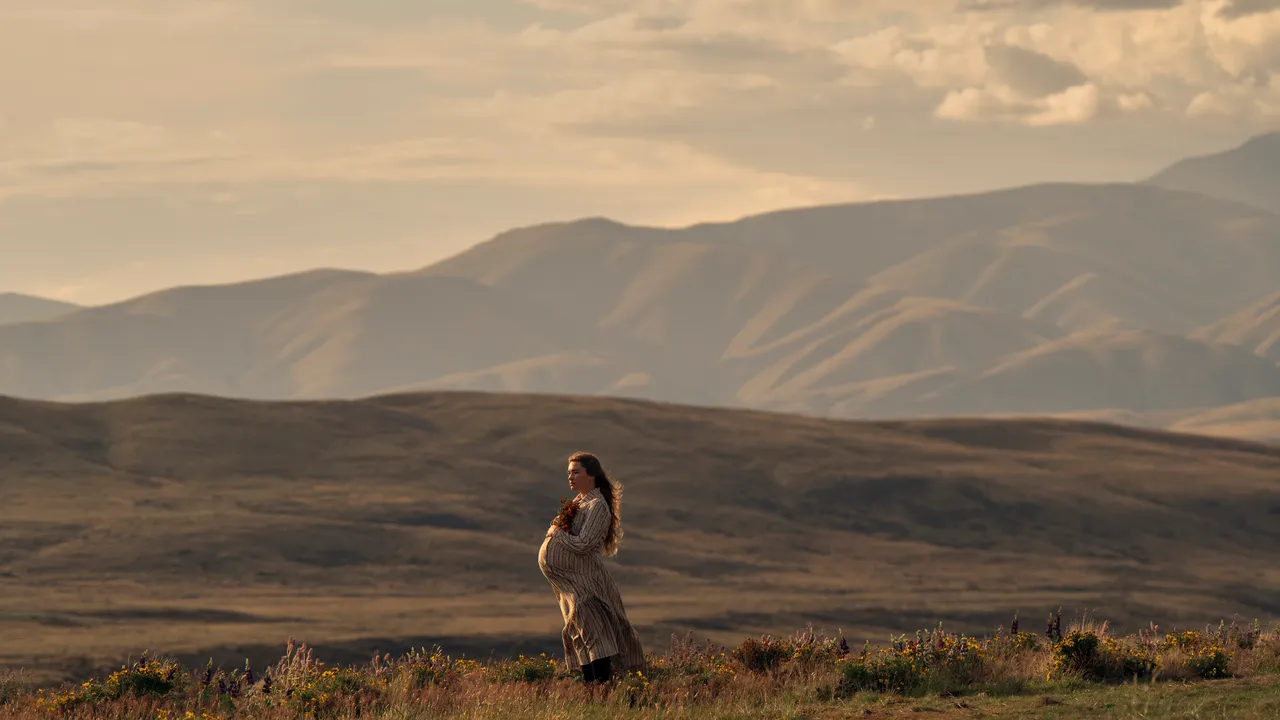
The novel is set in California, in the Salinas Valley, in the late 19th century; two brothers reunite at their late father’s farm, which has left them an inheritance they did not know they possessed. There Cathy appears, wounded; Adam falls in love at once, and they marry. Grand epic landscapes, Western plains that, in the series East of Eden, were shot partly in the Salinas Valley and mostly in New Zealand. Impressive horizons and architecture that did not intrude, fitting the historical moment they were filming.