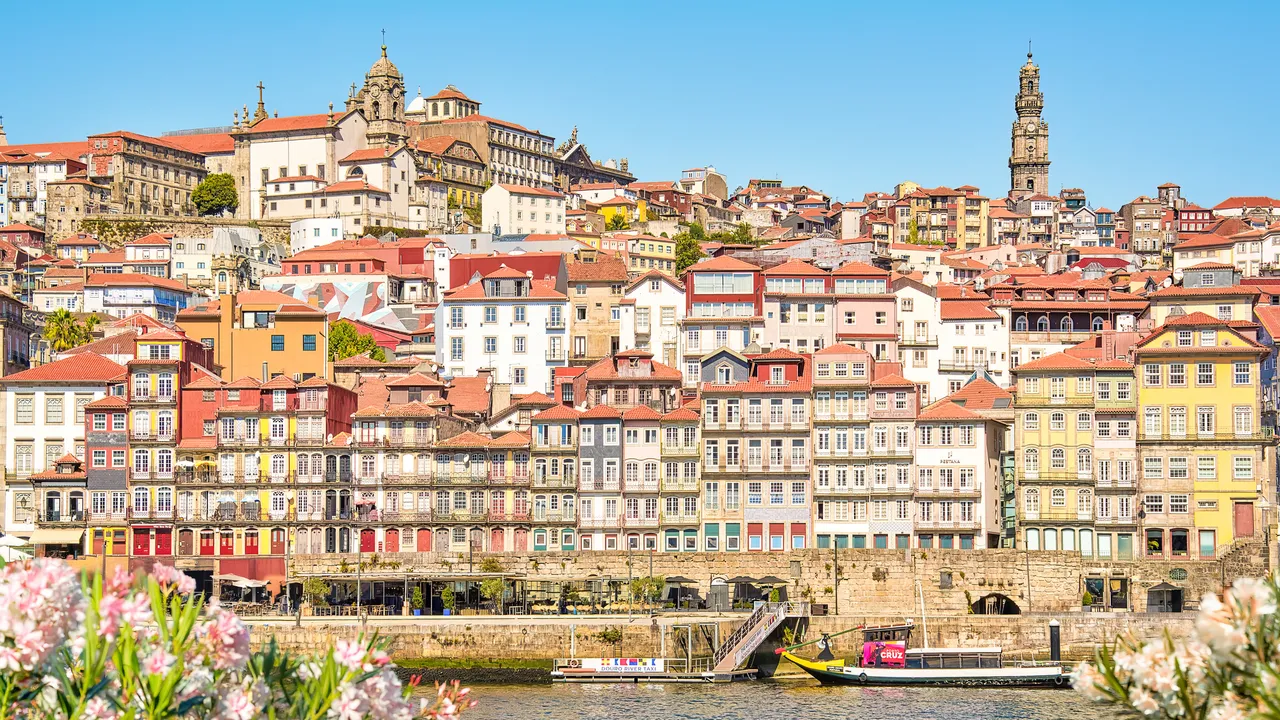
Although compact in size, Porto contains three cities, and in all three there is much to see. Each corresponds to a period and to a character, and even to a material. The historic tiles, modern granite and contemporary metal, but all bound together by the pavements of the the classic Portuguese Pombaline pavement, by the scent of grilled sardines, and by the Atlantic mist that enters each night through the Douro to the heart of Ribeira.
Historic Porto
Let’s start with the obvious: the historic center, which in 1996 was designated a UNESCO World Heritage Site. It is one of Portugal’s quintessential postcards. Take pleasure in strolling it at first light, when it’s still empty, or at dusk, because the golden light of sunset outlining the Luís I Bridge is a spectacle that, by itself, should be cataloged as an engineering work.
The area is compact, with narrow streets that coil between houses painted with colorful tiles. If you’re hungry, the best move is to follow the smell of the embers and the cod and to avoid the increasingly frequent restaurants with prices that are not justified. Upon arriving at the Ribeira (the promenade) where the rabelos (classic river boats) jostle for passengers, you’re already inside the postcard. The body instinctively wants to sit on a bench or on the warm granite of the ground to admire the metallic structure of the Luís I Bridge, the city’s crown jewel. By the way, contrary to the legend and the twisted silhouette of the Eiffel Tower, this bridge was not built by the French engineer, but by one of his collaborators… Eiffel did build another bridge over the Douro, the Dom Maria Bridge, which is less than a kilometer away and is no longer in use.