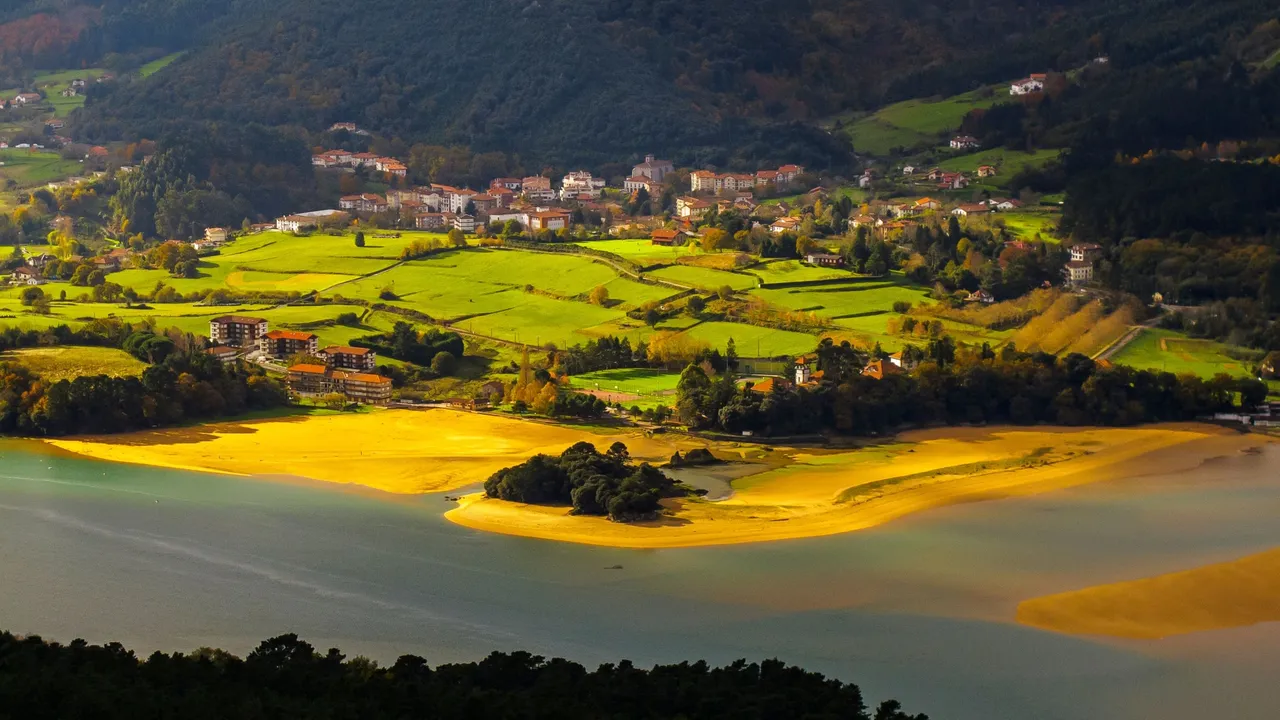
Urdaibai’s first impression is that of a landscape in motion. The water withdraws, revealing an expanse of mudflats, channels and vegetation, only to return, slowly, with the aim of transforming the marsh into a mirror where the clouds are drawn. In the distance, green hills descend toward the estuary, farmhouses dot the slopes, and the Cantabrian Sea waits beyond the sands.
Situated on the coast of Bizkaia, the Urdaibai Biosphere Reserve was recognized by UNESCO in 1984. It spans around 22,000 hectares and comprises a mosaic of marshes, forests, beaches, cliffs, and small communities that have built their identity in close relation to the surroundings. It is not a natural space isolated from daily life, but a populated, worked, and transformed territory over generations. One of those rare examples in which humans and nature have managed, to a large extent, to coexist in peace.
That coexistence is precisely what makes the journey interesting. In Urdaibai you can observe the flight of a migratory bird, walk through an ancient holm oak forest, pause before a wave famous among surfers and end the day in a harbor where fishing activity continues to set the pace. There is also historical memory, art, gastronomy, and a language that keeps alive a deep bond with the land. All unfolds on a human scale, without the landscape losing its prominence.
The Oka River, the Heart of Urdaibai
Water is the undisputed protagonist of Urdaibai. The Oka River descends from inland and, as it nears the Cantabrian Sea, becomes an estuary that organizes much of the territory’s life. Its tides continually reshape the appearance of the marshes, an ecosystem of enormous importance for biodiversity and one of the main reasons this corner of Euskadi deserves a slow, unhurried visit.