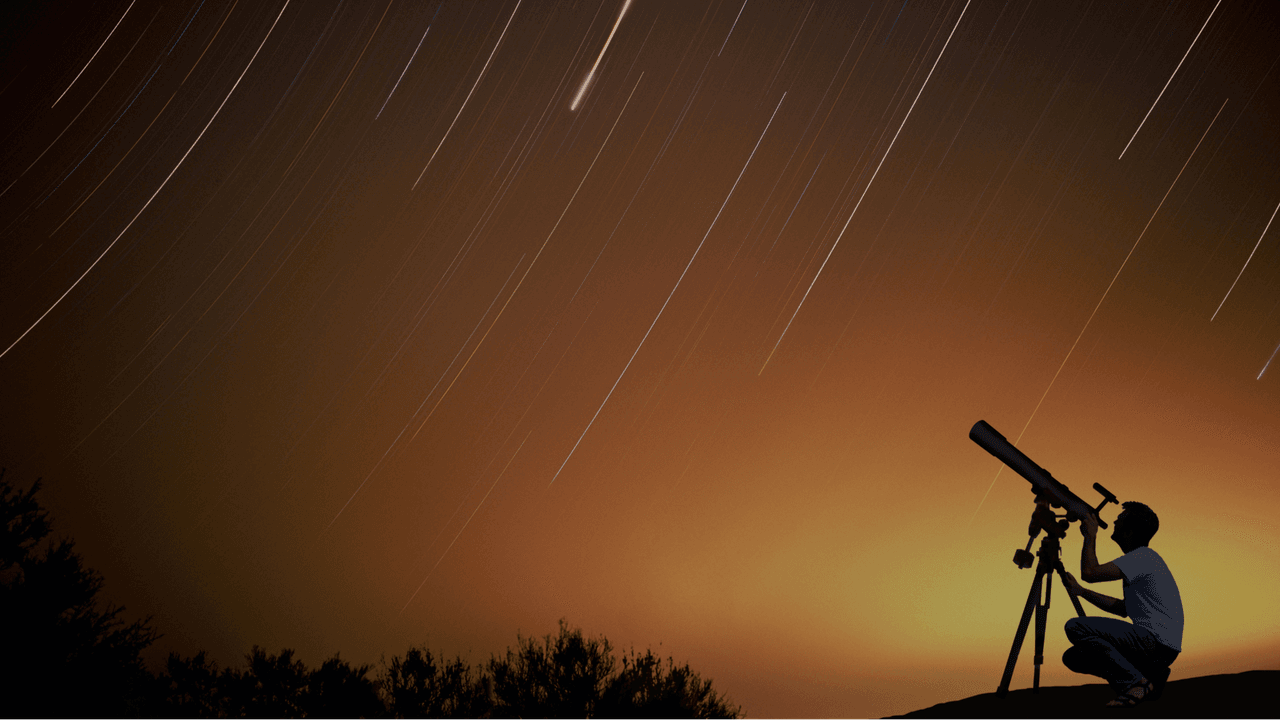
There is a meteor shower on the horizon. The Lyrids are back, one of the year’s most anticipated meteor showers! According to the 2026 astronomical calendar, this meteor shower is scheduled between April 16 and April 25, however, its peak activity will be at 21:40 (Peninsular Time) on April 22. In other words, viewing will be more favorable during the first half of the night.
Will they be visible this year, therefore? The Moon will lie near the first quarter, which will be on the 24th, although it will be on the opposite side of the sky from the radiant. That will mean it will permit the visibility of the meteor shower.
From the National Astronomical Observatory, they explain that the Lyrids have an average activity rate of 20 meteors per hour, and a velocity of 49 kilometers per second during several days. “Although it is a modest meteor shower, in some years the activity rate rises to more than 100 meteors per hour, but it is difficult to predict in which year these outbursts will occur. For observers at our latitudes, 40° north, the radiant of the Lyrids lies above the horizon from an hour after nightfall until dawn.” These will occur after the full moon of April, on April 2. The rest of the lunar phases will be on April 10 (Last Quarter), April 17 (New Moon), and April 24 (First Quarter).
How to view the Lyrids, the most anticipated meteor shower of April
So, and most importantly, can we see them? To enjoy them, it is essential to seek a very dark sky, not the one above our city. Because, as they explain, it is preferable to observe from a location with few obstacles to the view (such as buildings, trees, or mountains), and not to use optical instruments that limit our field of view.
“Although the Lyrids seem to originate from the Lyra constellation (hence their name), they can be seen anywhere in the sky. It is advisable to direct your gaze toward the darkest areas, in the direction opposite to the Moon’s position if it is present during the observation. The most comfortable approach is to lie down and let your eyes adjust to the darkness.”