The journey to historical Garnachas is also a journey into the region’s past and present. From when the people of its villages made bulk wine in the stone quarries and caves that each inhabitant guarded as the most precious treasure. From the time of phylloxera, which reached France twenty years before it did in Spain, the neighboring country relied on the Aragonese grape to meet its wine production. And from when, after phylloxera in Spain, cooperatives gradually emerged with which Campo de Borja is now governed.
Protecting a Historical Grape
If other grapes such as Tempranillo, Cabernet, Syrah… are grown in the area, there is no doubt that the queen of them all is Garnacha, known for its aromatic intensity and fruity flavors. Hence the idea, really the need, to create a cooperative group for the conservation of historical Garnachas of the Denomination of Origin Protected Campo de Borja. The initiative began in 2025, working in a group of vineyards composed of twelve plots, six relatively young, the so-called test plots, and the six older or historical plots, chosen according to the criteria of the wineries entering the research project and by the technical staff of the D.O.P. Campo de Borja. A proposal that, on the other hand, cautions about the imperative to preserve the differential values of the Spanish wine regions.
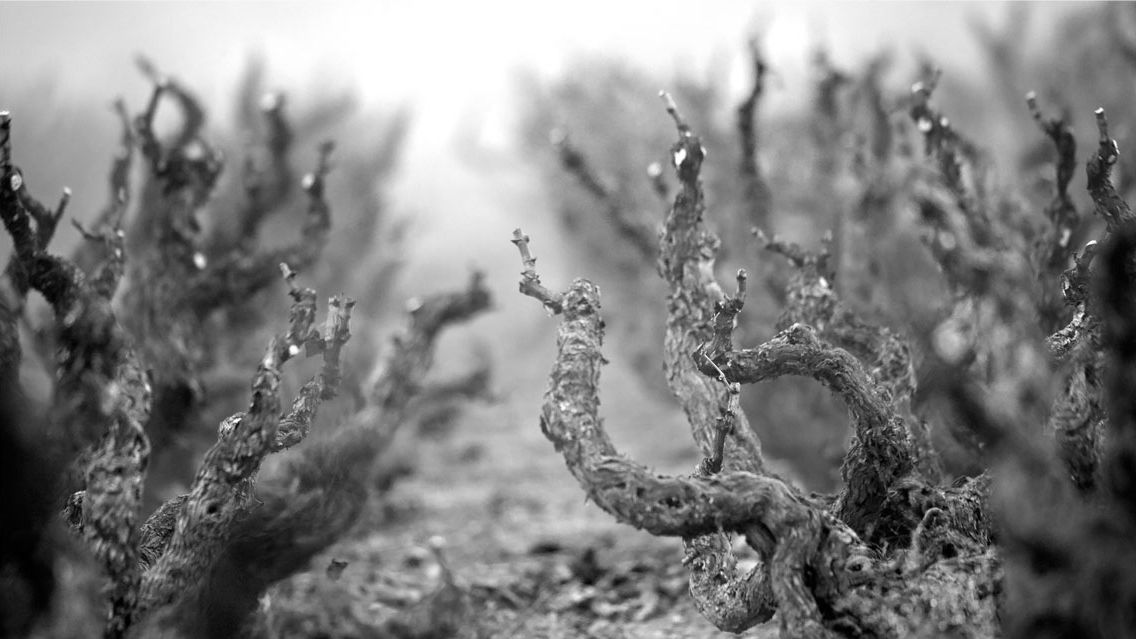
A old vineyard cannot and should not be forgotten, as it brings a series of peculiarities that enrich and help understand Garnacha today, by establishing age ranges and seals that differentiate the wines produced in the historical plots. Within the initiative is to configure the structure of the vines, the number of arms, length, degree of ramification and renewal and its genetic identity, both at the level of rootstock and variety. Reaching the conclusion that old vineyards develop aromas closer to black fruit and that their bond with the land is much more evident.
This privileged information about the historical Garnacha is shared by José Ignacio Gracia, the secretary-general of the Campo de Borja Denomination of Origin. And he explains how, to understand Garnacha, one must clarify that the 7,500 hectares that make up the denomination have different soils that enable the production of distinctive wines.