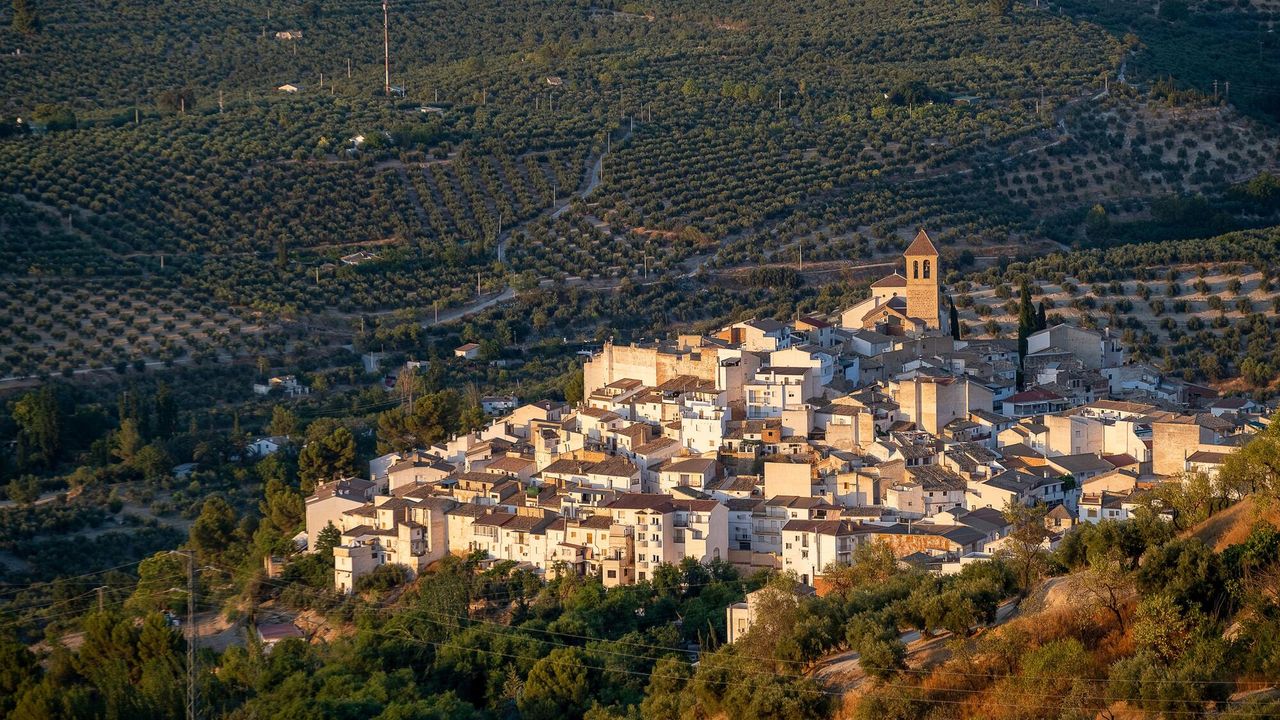
Getting away from the city and oxygenating the lungs in the Sierra de Cazorla, Segura y Las Villas Natural Park is something that should be done at least two or three times a year. Besides being the second-largest natural park in Europe and a UNESCO Biosphere Reserve, this green lung of Jaén province has two reasons to fill your backpack and hit the road: the beautiful village of Quesada and the source of the Guadalquivir river.
A millennial past to tell
Quesada is one of those charming towns that Jaén keeps fairly hidden. And it tends to go quite unnoticed. Perhaps too much. But Quesada carries a rich history to tell, chapter by chapter. Many of them could begin as legends from the Prehistory. In fact, the existence of caves and shelters with prehistoric paintings and Bronze Age remains prove that settlements already existed in these lands almost five thousand years ago.
The Roman civilization also roamed freely across the lands of Quesada, forming the villa of Bruñel, which in its day lay between the villages of Quesada, Peal de Becerro and Cazorla. This Roman villa, now in ruins and closed to the public, preserves a collection of ground mosaics that is simply spectacular. This year they began to recover them after seven years of absolute neglect, so it is hoped that soon it will be open to the public with facilities that allow enjoying this treasure while keeping it intact.
A city that has inspired painters and poets
The stroll along Quesada’s streets transports us to a villa that Muslims wished to christen as a “fertile and beautiful place.” It was with the Arab occupation that Quesada rose to become one of the region’s most important towns, both for its burgeoning commercial activity and for its own beauty. From that moment on, Moors and Christians would contend for control of the fortress, swapping it back and forth on several occasions until its definitive reconquest at the dawn of the fourteenth century.
A solid account of its history can be found at the tourist office, located beside the town hall, in a building that also houses the Centre for the Interpretation of Quesada’s Archaeological Heritage. This museum is the most direct introduction to Quesada’s rupestrian treasure and to its Roman era, through the archaeological remains of the Villa de Bruñel that are on display there.