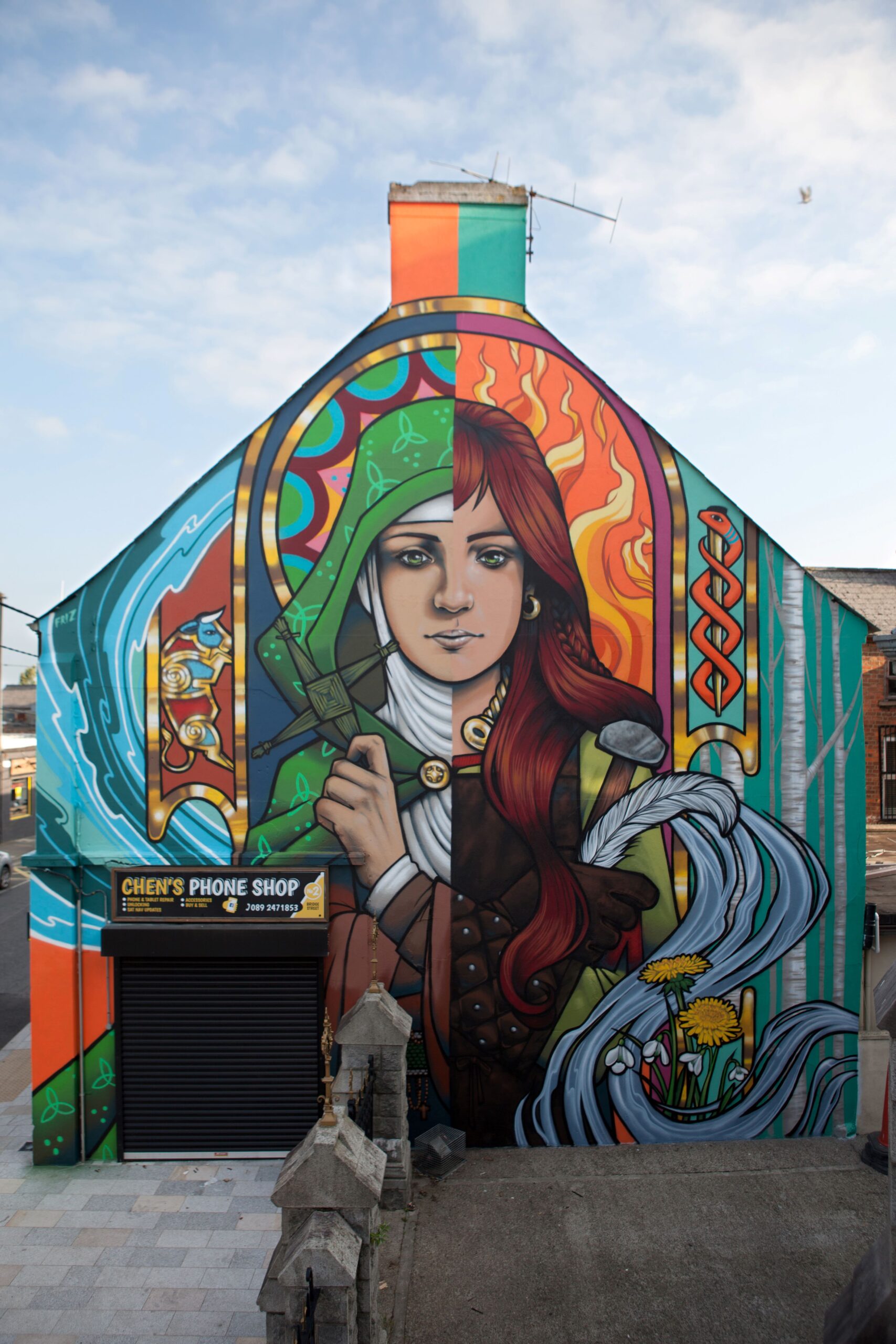
On St Brigid’s Day, we explore the life and enduring influence of one of Ireland’s most renowned saints.
Brigid’s origins lie in Faughart, just outside Dundalk, where her existence as a saint, goddess and lasting emblem of renewal first began to take shape. Today, her significance continues to be honoured in Faughart and across the wider county of Louth through seasonal rites, community gatherings, and events that occur throughout February and beyond the calendar year.
St Brigid’s Day is observed on 1 February, marking Brigid’s birth as she came into the world at sunrise on 1 February in 452 AD. Celebrated for her compassion, hospitality, and miracles involving healing, protection, and plenty, her life bridges the worlds of pagan and Christian Ireland, shaped by traditions tied to healing, fertility, poetry, and care for the land.
As a result, she became the patron saint of poets, healers, blacksmiths, farmers, midwives, newborns, fire, water, livestock, and the coming of spring.
The founder of Ireland’s first monastery in County Kildare, Brigid’s life is closely connected to Imbolc, the ancient Celtic festival that signals the return of light, the promise of spring, and the renewal of land and spirit. Consequently, her feast day on 1 February marks the start of spring and the prospect of longer, brighter days ahead.
During her lifetime, Brigid was renowned for her stories and legends highlighting her generosity. One well-known tale holds that Brigid miraculously turned bathwater into beer for thirsty lepers and visiting priests, illustrating her compassion, generosity, and skill as a brewer. Bridgid’s legacy centers on hospitality and peacemaking, and her values of social justice, peace, nature, and equality remain highly relevant in contemporary Irish culture.
You may recall crafting a Brigid’s Cross in school. Brigid is believed to have created the distinctive cross that bears her name. Typically woven from rushes into a cross shape, it can also be fashioned from straw. The tradition holds that those who display the cross in their homes will keep danger, fire, and famine at bay.
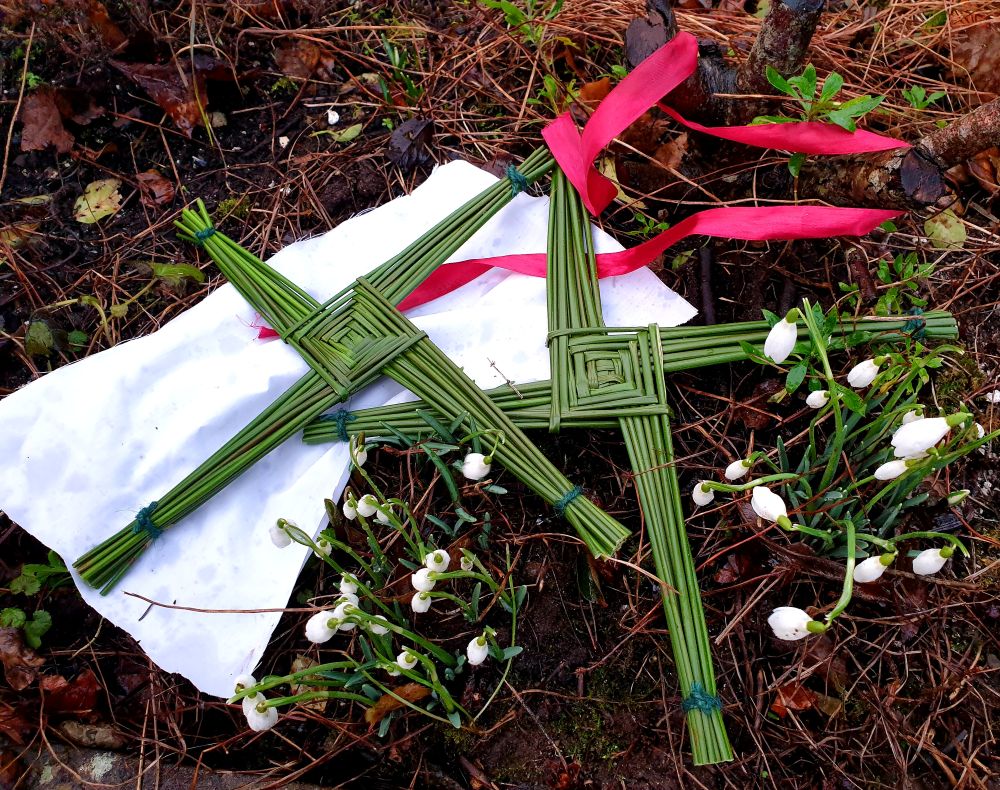
The origin tale of the cross remains uncertain, but the prevailing legend goes as follows. It is said that Brigid sat beside an elderly pagan chieftain’s deathbed as he hovered between life and death. To calm his spirit and pass the time, Brigid is believed to have gathered rushes from the floor and woven them into the familiar cross. Explaining the cross’s meaning to the chieftain, it is said that he requested to be baptized as a Christian before he died.
Today, many people honour Brigid’s feast by weaving their own cross on the eve of 1 February. The cross has also become a popular Irish emblem in modern fashion, jewelry, and interior design.
It is believed that St Brigid passed away at roughly 75 years of age from natural causes, around 525 AD. Brigid is celebrated today for a long life devoted to serving others and to building communities across the country.