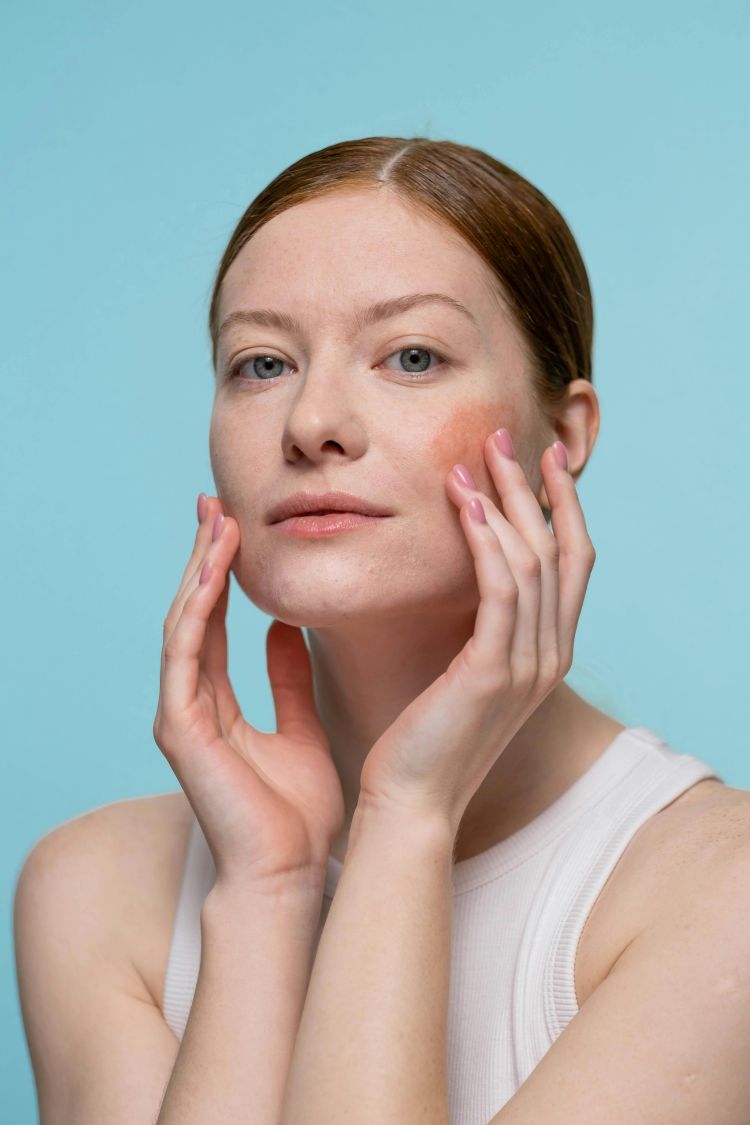
As Rosacea Awareness Month arrives, we examine this chronic skin condition and speak with an Irish expert about the best skincare strategies to manage it.
Approximately 10-15% of Ireland’s population lives with rosacea. This persistent inflammatory skin condition is frequently described as the “curse of the Celts,” a nod to its higher occurrence among Irish people with fair complexions. Those affected commonly experience ongoing facial redness, flushing, visible facial bloom vessels, and acne-like bumps on the face.
April marks Rosacea Awareness Month, a time when organisations and brands alike undertake educational efforts to inform and raise awareness about this inflammatory skin condition.
Rosalique, an Irish skincare label, was created with rosacea sufferers and those with sensitive skin in mind. Here, we sit down with Claudia Talsma, owner and founder of Rosalique and Salcura Natural Skin Therapy, to discuss the brand and her expert guidance for managing the condition through skincare.
What inspired you to create Rosalique?
We aimed to deliver something that yields an immediate impact while sustaining the skin’s health over the long term. At that time, the market lacked a meaningful fusion of skincare and makeup. Foundations would mask redness but offered little benefit to the skin beneath, and CC creams often lacked active ingredients or sufficient SPF protection.
In response to this gap, we introduced our three-in-one concept: instant redness-neutralising coverage, active ingredients to calm and support the skin over time, and SPF50 for daily protection. Rosalique ultimately arose from feedback from our customers; we could see the demand for something that works instantly and also improves the skin over time, a demand that wasn’t being met then.
How would you explain rosacea in simple terms?
Rosacea is a skin condition that manifests as persistent facial redness, typically across the cheeks, nose, forehead, and chin. It can also feature visible blood vessels, sensitivity, dryness, and sometimes spots or papules that resemble acne.
The challenge lies in its cyclical nature, with flare-ups and calm periods often triggered by stress, weather, certain foods, or aggressive skincare. Fundamentally, rosacea involves reactive skin that needs consistent care and the right kind of support to maintain redness under control.
What are the most common misconceptions about rosacea?
One major misconception is assuming rosacea is easy to diagnose. Misdiagnoses occur frequently, not only with rosacea but with many chronic skin conditions. For instance, someone might be told it’s psoriasis when there are many psoriasis variants. The same applies to rosacea—there are numerous forms, and what triggers one person’s flare may not affect another at all.
Another widespread misconception is that there’s a quick fix. People often claim things like “you just need to drink less wine” or “eat less sugar,” and such remarks appear often on social media. The reality is that chronic skin conditions are rarely clear-cut. Each person is different, life stages vary, and factors like hormones or immune system changes can dramatically influence the skin.
What should a basic skincare routine for rosacea-prone skin look like?
A rosacea-friendly routine should center on keeping the skin calm, protected, and supported. Rosacea-prone skin tends to respond best to simplicity, consistency, and gentle care.
Morning routine: opt for a gentle, non-foaming, fragrance-free cleanser. Avoid harsh surfactants like Sodium Laureth Sulfate (SLS) and anything that could strip or irritate the skin. Follow with a soothing moisturiser to bolster the skin barrier, then finish with a high SPF. Since sun exposure is a frequent rosacea trigger, daily protection is essential.
Evening routine: cleanse again gently to remove SPF and impurities, then apply a calming night cream to support the skin’s natural overnight repair process. We often recommend a soothing formulation designed for sensitive, rosacea-prone skin.
Try to avoid over-exfoliating and be mindful of common irritants like synthetic fragrance, potent actives, and high-foaming cleansers, as these can easily disrupt a sensitive skin barrier.
Have you heard any customer stories that have really stayed with you?
One early customer story that has stayed with me is Amanda, among Rosalique’s first customers back in 2018. At that stage, Rosalique and Salcura were still small, with a lot of cross-brand work in the early days, so every piece of feedback carried weight, and this particular experience remains memorable.
Amanda discovered the product through a Facebook ad and contacted us directly. What stood out was that her experience matched exactly what we hoped Rosalique would achieve. She reported that for the first time she could achieve good coverage without stacking multiple layers of foundation, leaving her skin looking less “cakey” and more comfortable. She also observed that her skin appeared calmer and happier, aided by the SPF50 protection and the soothing, skin-friendly formulation.
As a nurse working in the NHS, she represented precisely the kind of person we originally aimed to assist with Rosalique, which made her feedback even more meaningful. It was one of those early moments that gave us genuine confidence we were on the right track, especially in an industry dominated by much larger brands.
Lastly, why is Rosacea Awareness Month important?
Rosacea Awareness Month matters to me for several reasons. In 2018, rosacea was primarily recognised in the United States and hadn’t yet become widely known or established across Europe, particularly here in the UK and Ireland. We felt a real need to raise its profile locally and dedicate time each year to education, especially as April arrives with spring.
Spring is a pivotal period for rosacea sufferers, as skin is commonly triggered by sun exposure, environmental changes, and allergies, all of which can provoke flare-ups. This is why SPF and daily protection become even more vital during this season.
Rosacea affects millions of people worldwide, and many remain undiagnosed or misdiagnosed, which makes awareness and education so important. A dedicated month creates space to deepen understanding of the condition, its various forms, and how to manage it, without judgment.