They say that in fashion everything is cyclical. That the tartan worn years ago has come back with strength, that lace never goes out of fashion or that the animal print will never disappear completely. This fundamental principle of the industry is something no one questions. And the good news is that it isn’t the only realm where things come back around. In gastronomy the same thing happens.
Nostalgia makes us reclaim dishes that scarcely appeared before, to rediscover that recipe that mothers and grandmothers used to make at home. Yes, friends, we live in a constant revival, also gastronomic. And that isn’t in itself a bad thing. If not, look at what happened with flan, which, having been relegated to home consumption straight from the wrapper, became one of the restaurant world’s star desserts. Even now there is a Best Flan in the World produced in Fuenlabrada.
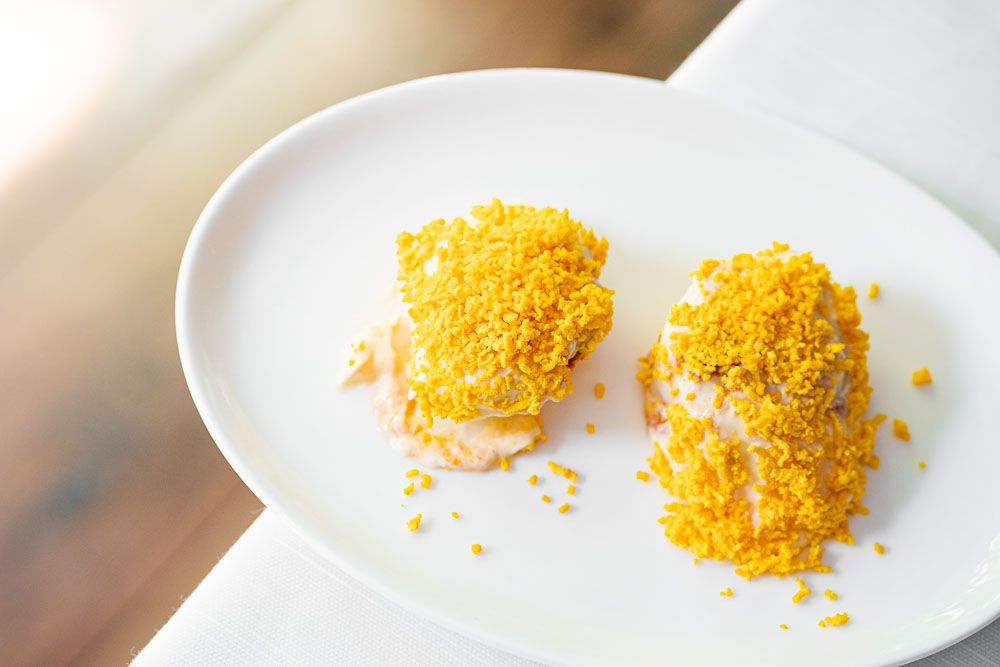
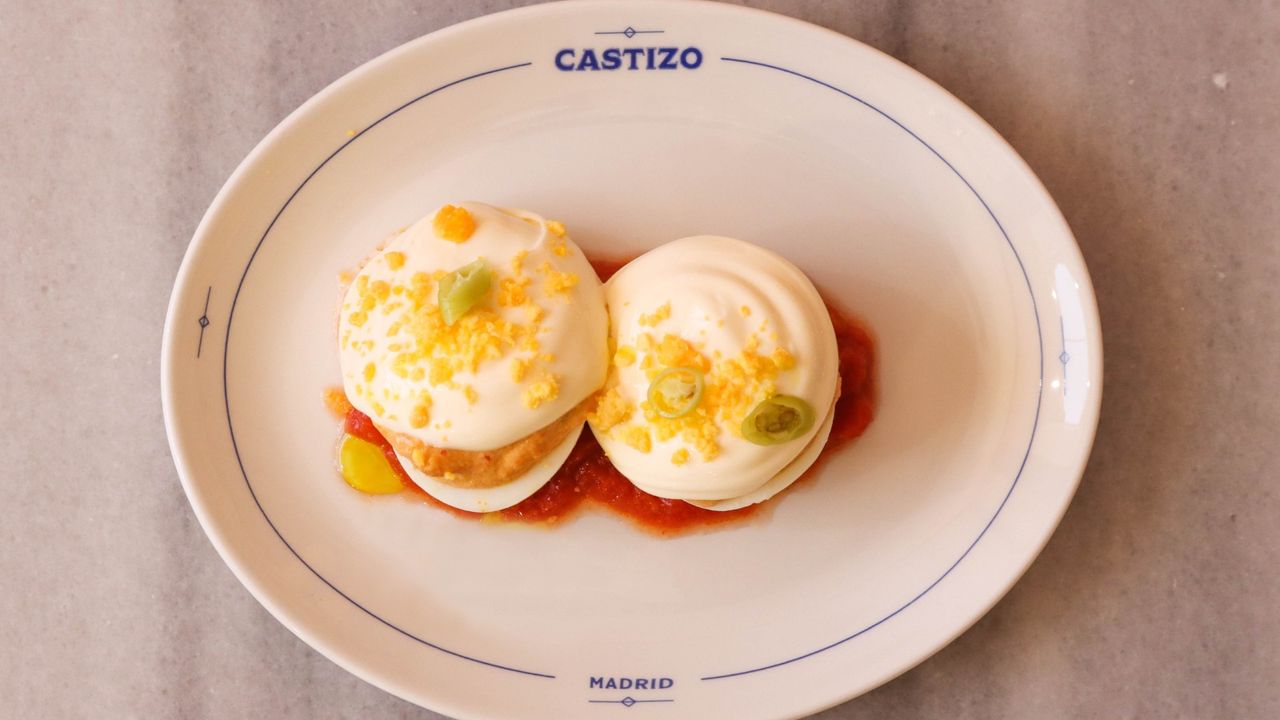
Similarly, spoon dishes, broths, stews… all those kitchens that demanded time, yet were always so rich that we missed them. The next star? The stuffed egg. Who hasn’t sat at their grandparents’ table and seen that one of the starters was always a plate of stuffed eggs?
The dish tastes like home, like memory, like something from a lifetime. And it’s so simple that with a few hard-boiled eggs, a bit of homemade mayonnaise, and canned tuna, you have a ready-to-serve starter in less than half an hour. It doesn’t require anything fancy; just boil the eggs, mix the yolks with whatever you have on hand, and fill.
A Bite With Centuries of History
But let us trace its roots, because this dish isn’t a modern invention. Although its origins reach back to ancient Rome, where seasoned eggs were known to mark the start of elegant banquets, the version we know today emerged in 13th-century Spain. In Al-Andalus, Andalusia, under Arab influence, the earliest recipe is documented: yolks mixed with cilantro, pepper, onion juice, and fermented sauce, the halves joined with a skewer and seasoned with more spices. Very different from what we recognize today, yet that was the seed of the current recipe.
And stuffed eggs are as Spanish as the siesta or the tapas culture. In grandmothers’ kitchens across the country, they have been part of the traditional repertoire for decades. The most typical variant includes tuna or bonito in oil, mayonnaise, and perhaps a touch of tomato or pickles to add crunch. In France they call them mimosa eggs, due to the grated yolk that imitates a flower, but here they are more rustic, with that hearty filling that brings back memories of childhood snacks for some.