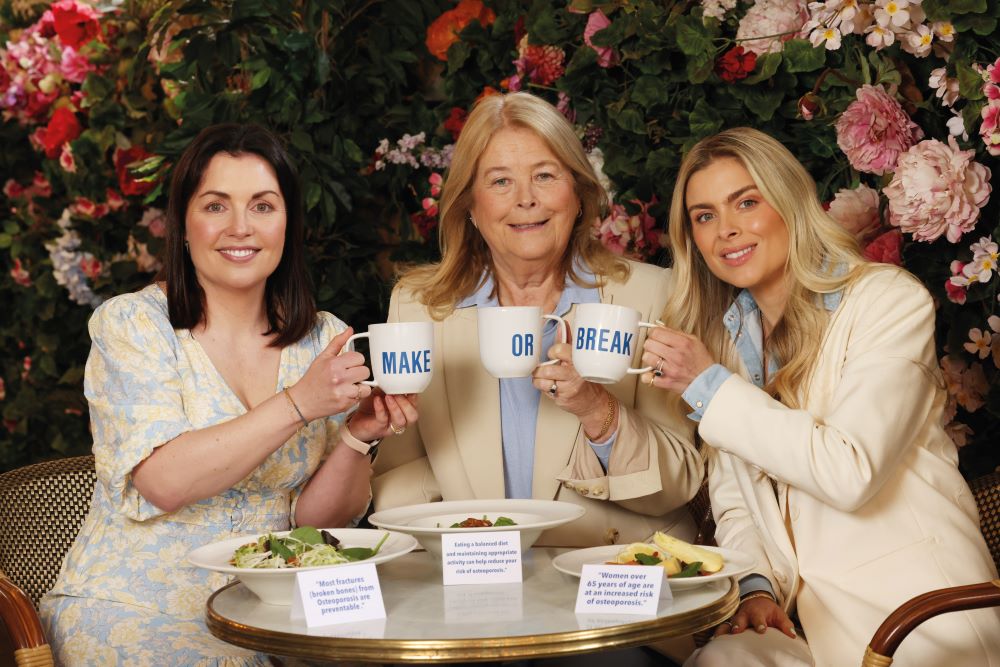
Organised by Amgen in association with the Irish Osteoporosis Society.
When considering women’s health, how often do we pause to think about or discuss our bones? Probably not as often as we ought to. That said, the Irish statistics are stark: roughly 300,000 people in the country live with osteoporosis, a condition that weakens bone tissue, making bones fragile and more prone to breaks.
About 75% of osteoporosis-related fractures occur in individuals aged 65 and older, and women face a higher risk than men, partly due to the decline in estrogen after menopause. Alarmingly, Ireland’s hip fracture numbers tied to osteoporosis are projected to climb sharply—from 32,000 annually today to 51,000 per year by 2034, an increase of nearly 60%.
Often described as the “silent disease,” osteoporosis can progress without notice for many years until a fracture or a fall brings it into awareness. This happens because there are typically no early signs or symptoms indicating bone loss.
That is why the ‘She Doesn’t Deserve a Break’ campaign is being relaunched with a renewed call to action, urging women aged 65 and older to prioritise their bone health, and inviting everyone to break the silence surrounding osteoporosis.
Ultimately, we must reshape how we view bone health and place it at the forefront of our lives and the lives of those we care about. It’s time for everyone to support the women in their circles by initiating essential discussions about bone health with family, friends, and within communities. By fostering these conversations, we can empower the women we love to take proactive steps to protect themselves.
Pharmacist and campaign ambassador Jess Redden, accompanied by her mother Linda Redden, is urging people to check in with the women in their lives about bone health. “Osteoporosis affects real women and real families, and we can help prevent its consequences, such as fractures, by taking action now,” she explains. “It’s essential that the people who are close to these women—daughters, sons, nieces, husbands, and friends—support conversations about bone health. Encourage them to take control of their bone health by talking to their GP or visiting www.irishosteoporosis.ie. Make time for meaningful conversations and break the silence around osteoporosis.”
The message is unmistakable: women’s bone health can’t wait. A simple chat can lead to early diagnosis, stronger bones, and possibly spare someone the pain and complications of a serious fracture. The campaign invites everyone to visit www.irishosteoporosis.ie for more information, resources, and guidance on approaching this vital topic. Because she doesn’t deserve a break, but she does deserve your support.
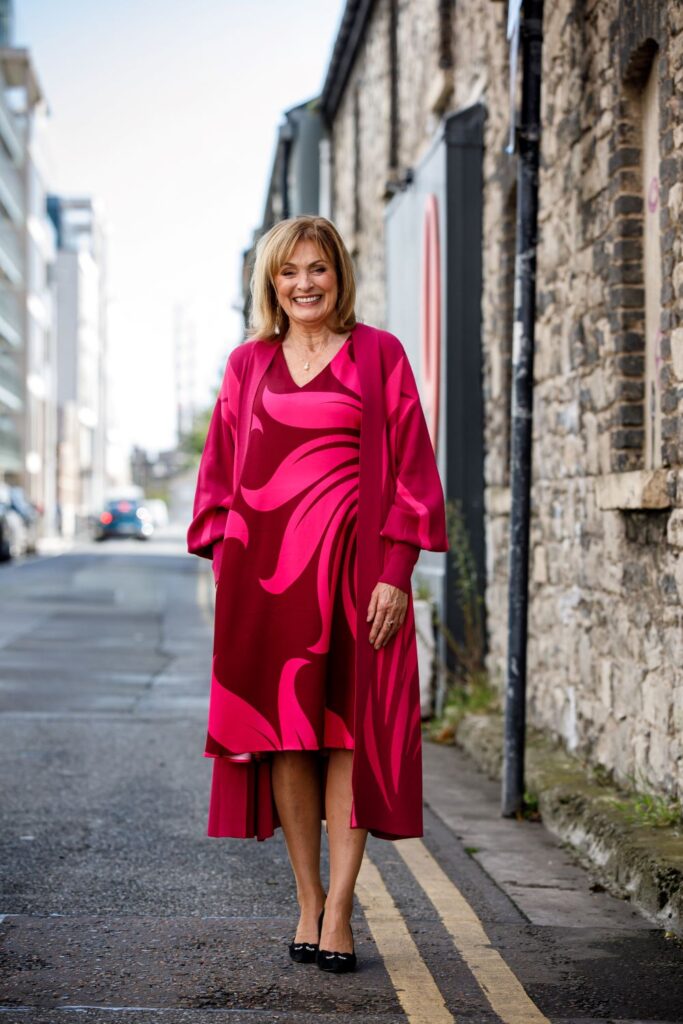
Renowned broadcaster Mary Kennedy is a longstanding ambassador of the ‘She Doesn’t Deserve a Break’ campaign. she is keen to raise awareness about osteoporosis and advocate for proactive bone health
You have been a vocal advocate for taking bone health seriously. Tell us more about this passion you have for spreading awareness about the risk factors of osteoporosis and how important bone health is in maintaining our independence?
I’ve always been drawn to sport from a young age. Building strong bones was part of that journey. My mother instilled in us the importance of overall health. We drank milk with meals. We took cod liver oil capsules and other supplements. A life lived with good health, including strong bones, was a priority as I grew up. I’d urge today’s parents to emphasise this with their children. The payoff is substantial.
What does minding your bone health look like in your own day-to-day life?
I used to run daily, but now I favour brisk walking. I also lift weights about four times a week. Thirty minutes a day of appropriate weight-bearing activity, like walking, can help keep you independent. Staying active is crucial to slowing bone loss and boosting bone strength. Movement feels natural to me. I enjoy gardening—there’s plenty of stretching and bending involved. I rise from a chair without needing support. I choose stairs over the elevator whenever possible. These routines suit me, but those with bone loss should be assessed by a doctor to determine what is safe for them to do first. Nobody should underestimate the value of movement that fits into everyday life.
How do you stay on track when your schedule gets busy?
Consistency is key. The main point is not to be too hard on ourselves; when life gets hectic, there’s usually some form of activity happening, and there’s a sense of fulfilment involved. The important thing is to resume the routine when things settle, picking up where you left off. Alarmingly, almost seven in ten older women in Ireland have not been diagnosed with osteoporosis, leaving them vulnerable to fractures.
Do you think people underestimate the importance of prevention because the consequences aren’t visible until it becomes serious?
The aim of the osteoporosis awareness campaign is to highlight that prevention is possible. I would hate to lose my independence, even briefly, due to a fall or a broken bone. Being bone-health aware simply makes sense so that we can enjoy life fully as we age.
How do you encourage others to take those first proactive steps, especially those who think it’s too soon — or too late — to start caring about their bone health?
Campaigns like this one are highly effective, as is word of mouth. The bottom line is that it’s never too early or too late to adopt measures to improve bone health. And that is encouraging news.
A central message of this campaign is that women, particularly those over 65, should carve out time to speak with their GP about bone health and osteoporosis risk factors, and to pursue a DXA scan if needed to assess bone density. This is something you did—could you share more?
I believe a DXA scan is incredibly important. As mentioned, many people don’t realise they are losing bone mass and that their bones have weakened due to osteoporosis until a fall occurs and a fracture results. Why not keep your bone health up to date with a scan, much like we monitor health with regular blood tests? A DXA scan is a 10–20 minute, non-invasive, low-dose X-ray procedure that measures bone density and strength. It’s painless and not claustrophobic. Doctors may use it as part of a comprehensive assessment, alongside reviewing clinical risk factors to diagnose osteoporosis. I would wholeheartedly encourage women over 65 to discuss osteoporosis with their GP, since women in this age group are most at risk.
Women need to advocate for themselves.
Yes—women should set aside time for their bone health, empower themselves with knowledge about osteoporosis and its risk factors, and then talk to their GP about their bone health. If needed, the GP will decide whether a DXA scan is appropriate.
Read more inside the July|August edition of Irish Country Magazine, out now.