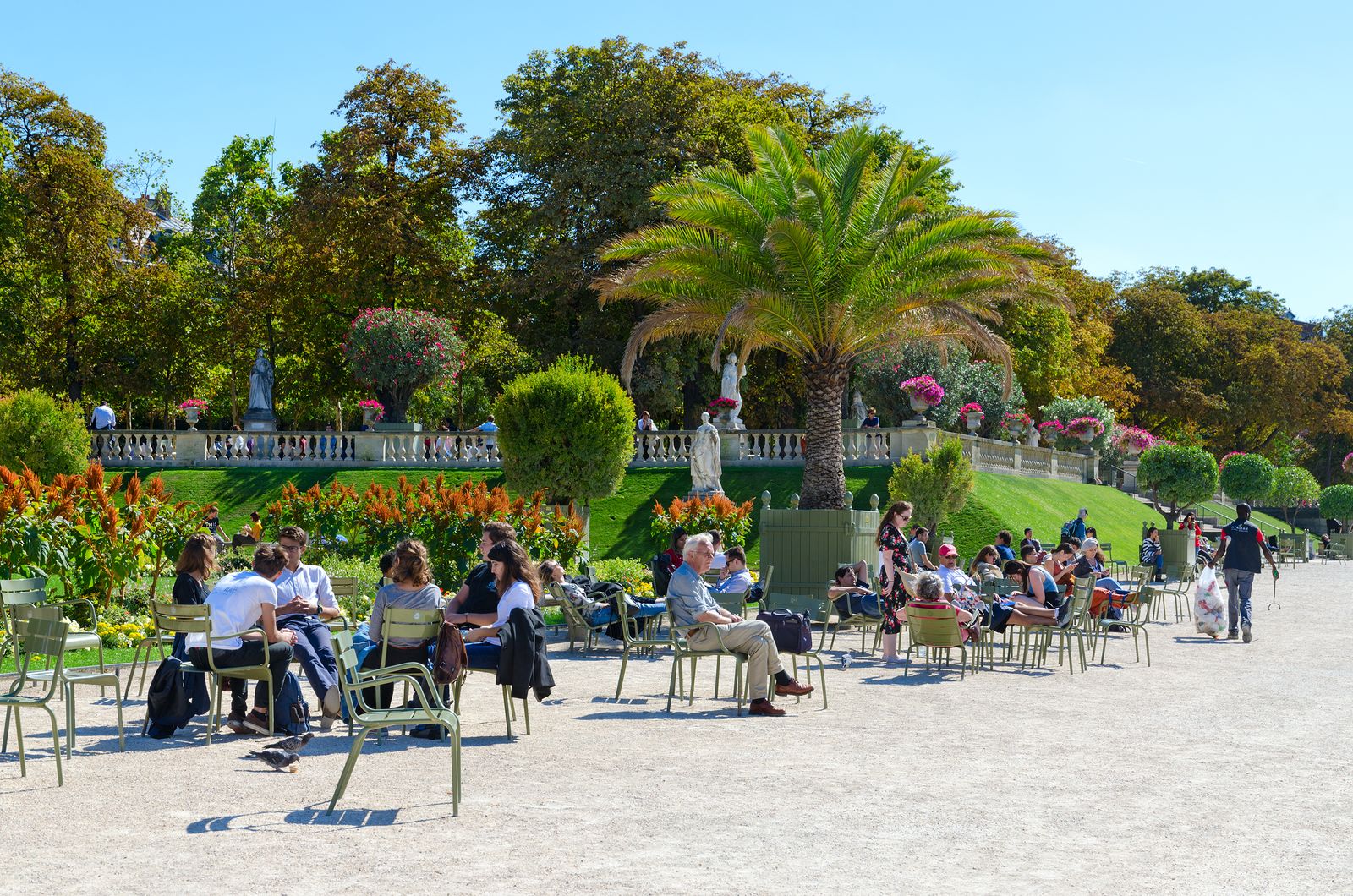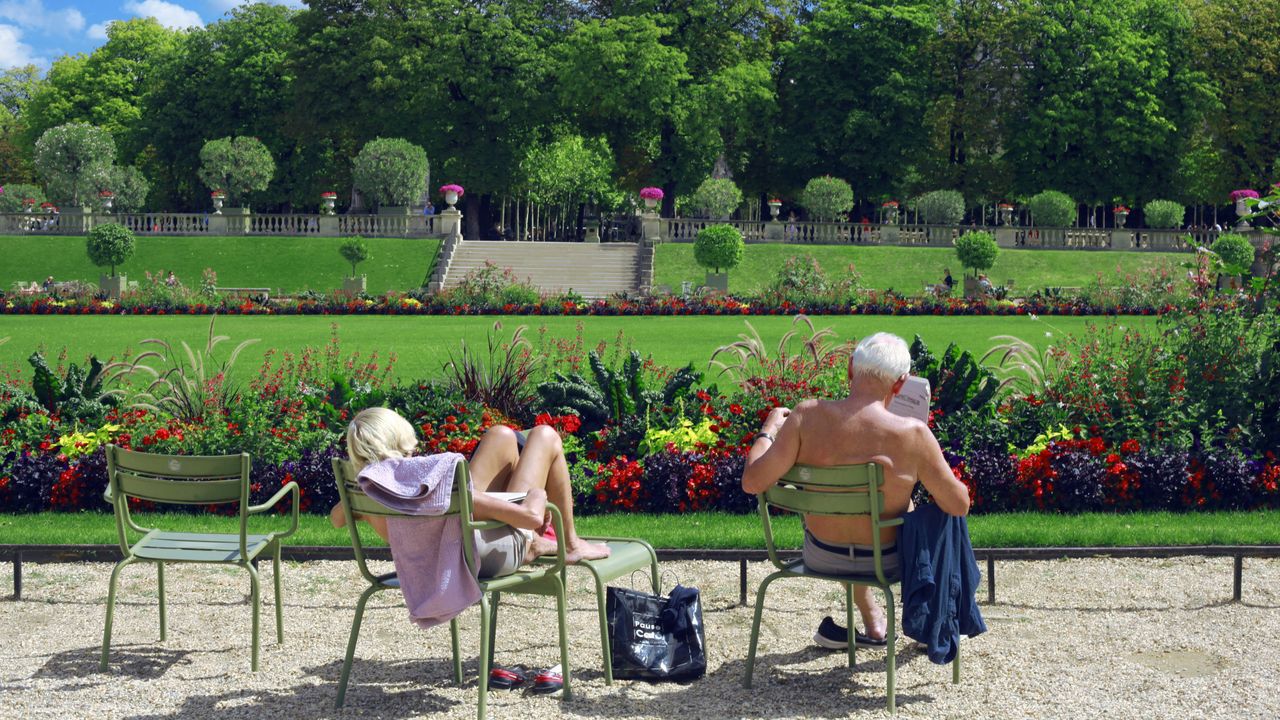
Lovers exchanging hugs—the title “city of love” is no accident—dreamy gazes indulgently savoring a moment of solitude, tourists seeking the perfect postcard, friends spreading a checkered cloth over the grass, families strolling… In spring, the gardens of Paris are more alive than ever, and there is no better shared ritual to celebrate it than settling into one of its green Sénat chairs.
Approximately, 4,500 movable Sénat seats dot the Jardin du Luxembourg, classified into three historical variants: the chair, the armchair, and the recliner. Enjoying a session of bucolic leisure and contemplation atop these iconic steel pieces, painted to match the perfectly trimmed hedges of the park, it is inevitable to wonder: how did they come to be the true protagonists of this green lung of the city?
From business to ritual: the legacy of the Sénat chairs
The history of the Sénat chairs dates back to the 18th century, when the popularity of the Jardin du Luxembourg spurred the installation of seats that were more comfortable than the original benches. That is how private companies ended up being subcontracted for the rental of these chairs: if one wished to use and enjoy them, an individual fee had to be paid.
The initial contracts to maintain the chairs in the garden demanded such a high payment—the Senate had overestimated the revenue the activity would generate—that the lessee went bankrupt. To fix it, the Grand Referendum lowered the rent and, from 1843 onward, the terms became more flexible.