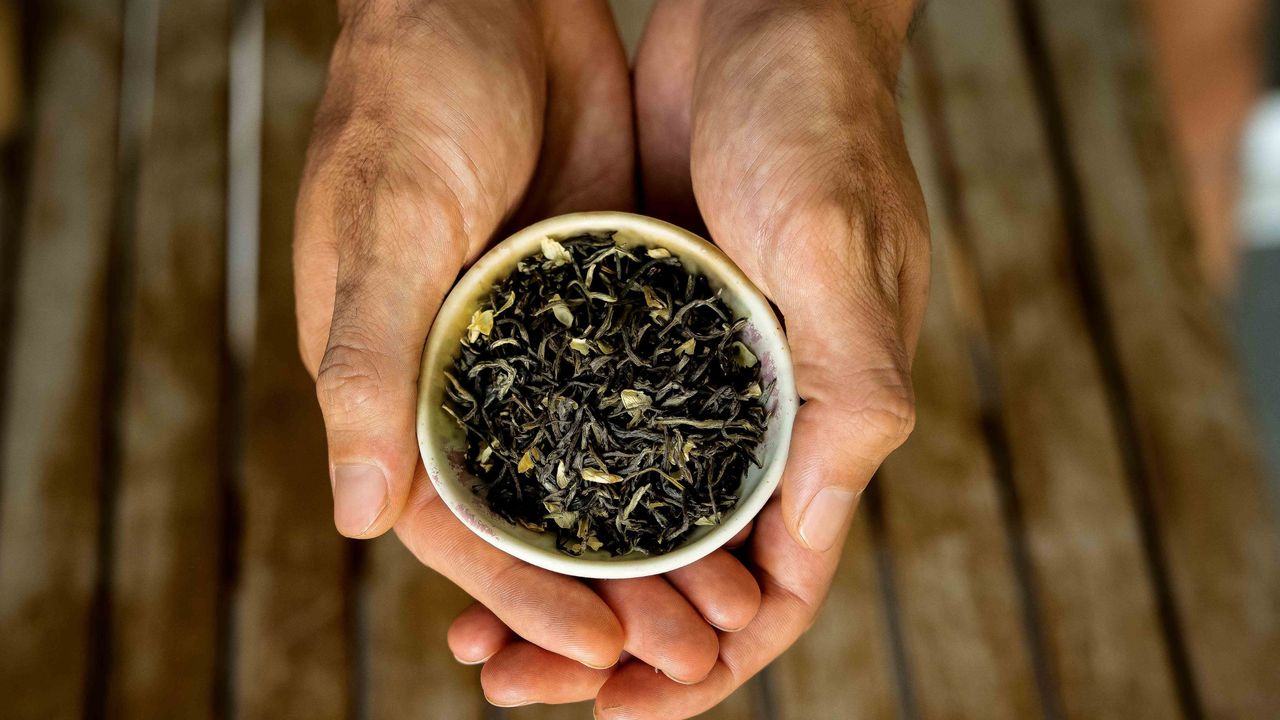
Cheesecake, orange chocolate, piña colada… Tea spent years masquerading as a dessert, as if it were shy about knowing itself. We gave it snack-time names and party scents, and it worked. The stronger the perfume, the easier it was to forget that inside there was a leaf.
However, the evidence is the following (we had it right under our noses and failed to see it): so much aroma was not character, but makeup. And, just as happens in beauty, for example, now we pursue the opposite: a tea that does not hide behind sugar nor marketing tricks (in a sense, we have opened the window after too much air freshener). Touché.
As Santiago Rusiñol wrote, “he who seeks the truth runs the risk of finding it,” this amateur infusionist is reminded, until recently faithful to the combo of white tea, citrus peel, flower petals, vanilla and fragrances.
Tea (including matcha) originated in China around 618 CE and speaks of small rituals: the precision, the attention devoted to something minimal, the sense that things can still acquire a new meaning if one looks slowly. Yet, two worlds continue to coexist. On one side, mass consumption, fast, cheap and everyday. On the other, a slower, more selective and conscious one, where the purity of the leaf, the clarity of origin, and the experience surrounding each cup matter. Does that resonate with you?
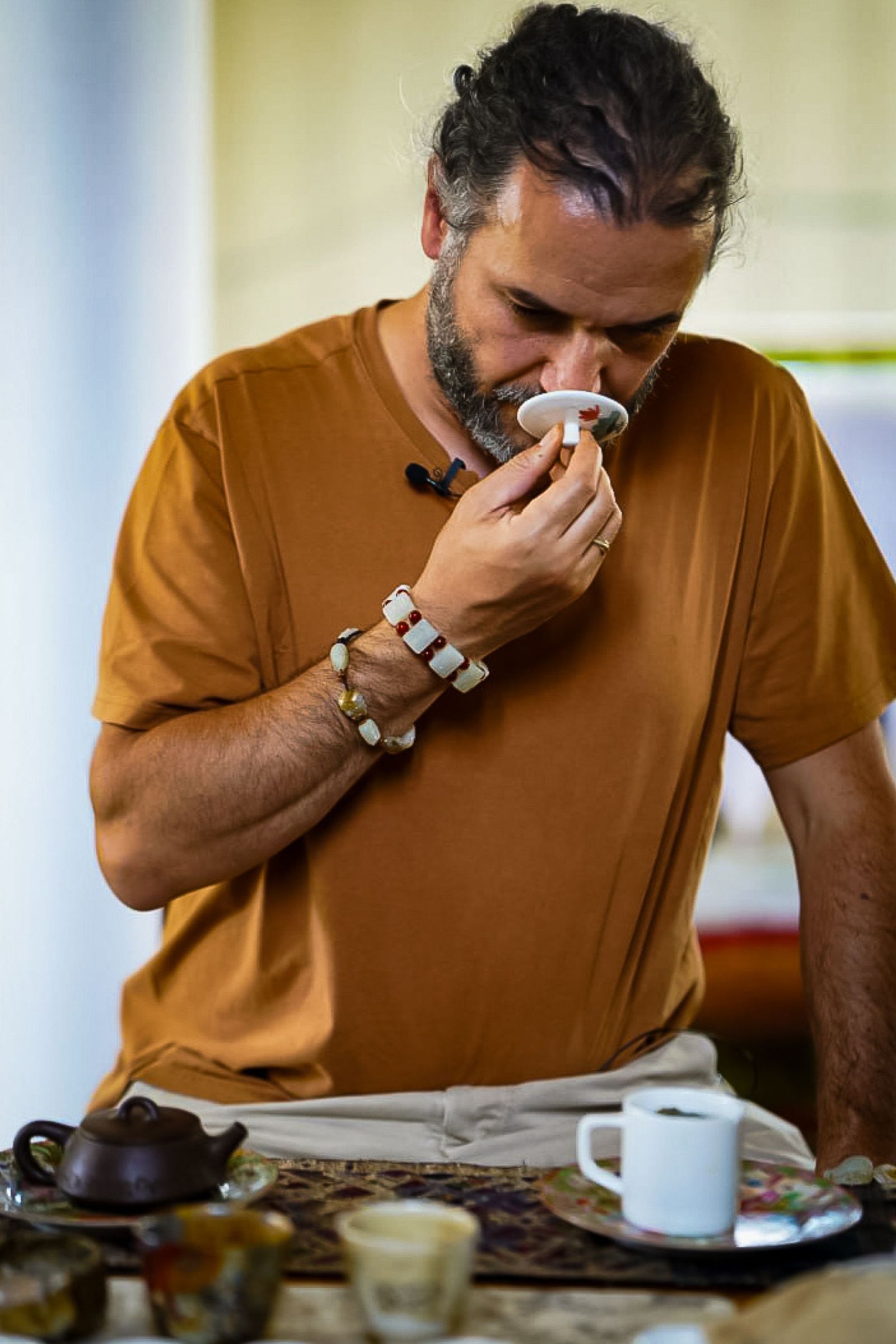
In this second universe, tea stops being just a hot drink and becomes a liturgy. We spoke with Sergey Shevelev, author of Geografía del Té Chino and founder of Moychay Barcelona, a space that invites you to discover tea –more than 250 varieties– at a calm pace through ceremonies such as Gongfu Cha, workshops, tastings and a tea bar with mocktails and matcha.