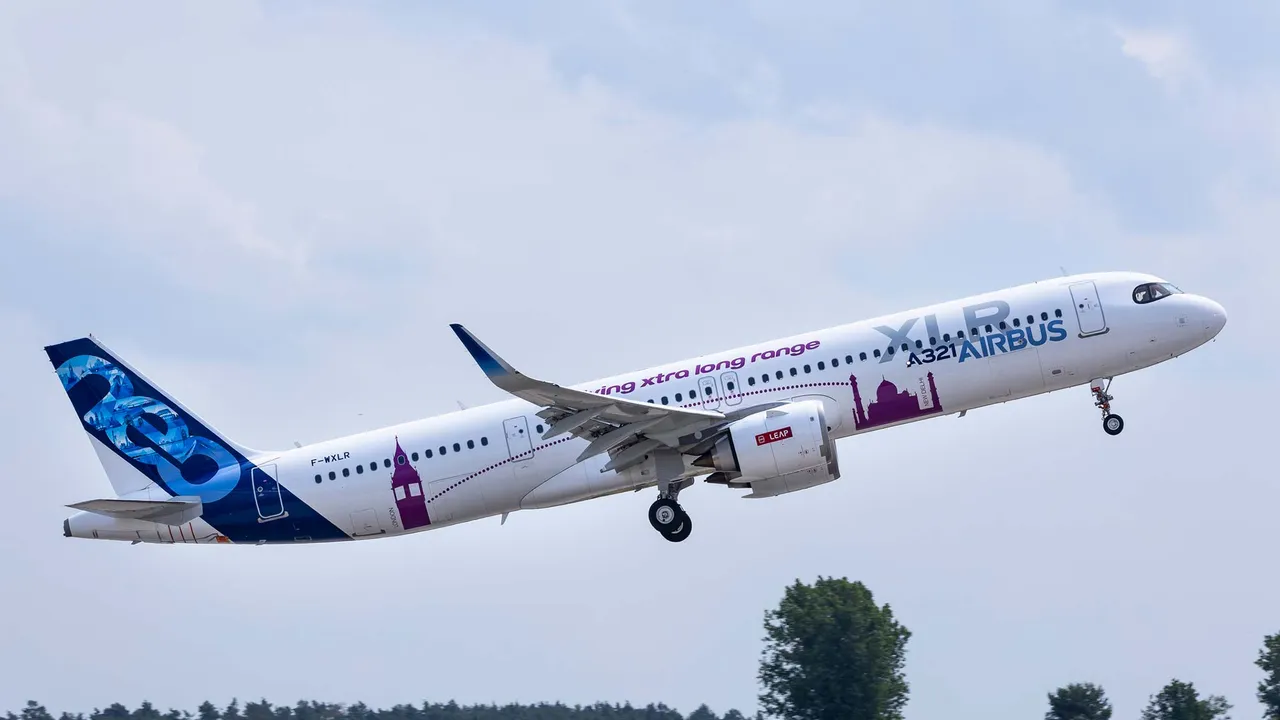
For years, long-haul flights seemed to move in a single direction: ever-larger aircraft, huge hubs, and thousands of passengers funneled through major airports such as London, Frankfurt, Dubai, or Doha. The Airbus A380 was probably the pinnacle of that model, which, incidentally, more and more airlines are bidding farewell to.
Casi could be said that now the trend is the opposite: a single-aisle airplane, with a look much closer to short-haul (models like the A320 or the B737) than to the traditional image of an intercontinental flight, is starting to redraw air connections. And all of it because of one aircraft, the Airbus A321XLR. A model that allows airlines to cross the Atlantic with fewer seats, but with a cost structure that makes viable routes that previously might not have justified a large widebody.
The result is a shift in logic: less need to concentrate passengers at a hub and more possibilities to connect directly cities such as New York with Ibiza and Valencia (hello, United).
The aircraft that raises the stakes
For decades, one of the unwritten rules of long-haul has been simple: if you want to open an intercontinental route you have to fill a considerably large aircraft. That works splendidly between Madrid and New York, London and Los Angeles, or Paris and Miami. But what happens when the proposal is a route like Philadelphia-Porto or Montreal-Palma de Mallorca?
There may be demand. Even quite a lot of demand. But perhaps not enough to fill profitably a widebody with 250, 300 or more seats throughout the season. And the XLR lowers that bet.
Airbus argues that it consumes up to 30% less fuel per seat than rival aircraft from previous generations. It can fly up to 4,700 nautical miles — about 8,700 kilometers — and stay aloft for up to eleven hours, according to Airbus. All this with the operating economics of a single-aisle plane. And this is what makes it interesting, especially for airlines. Here, every euro counts, hence the major appeal for airlines is that this aircraft model allows entry to operate in smaller markets with less capacity and, therefore, with less risk.
That’s why it’s not surprising that Air Canada explicitly speaks of using it to service direct to “secondary markets.” The airline has ordered 30 units and already uses it as part of a strategy that includes destinations such as Berlin, Toulouse, Edinburgh and Palma de Mallorca.