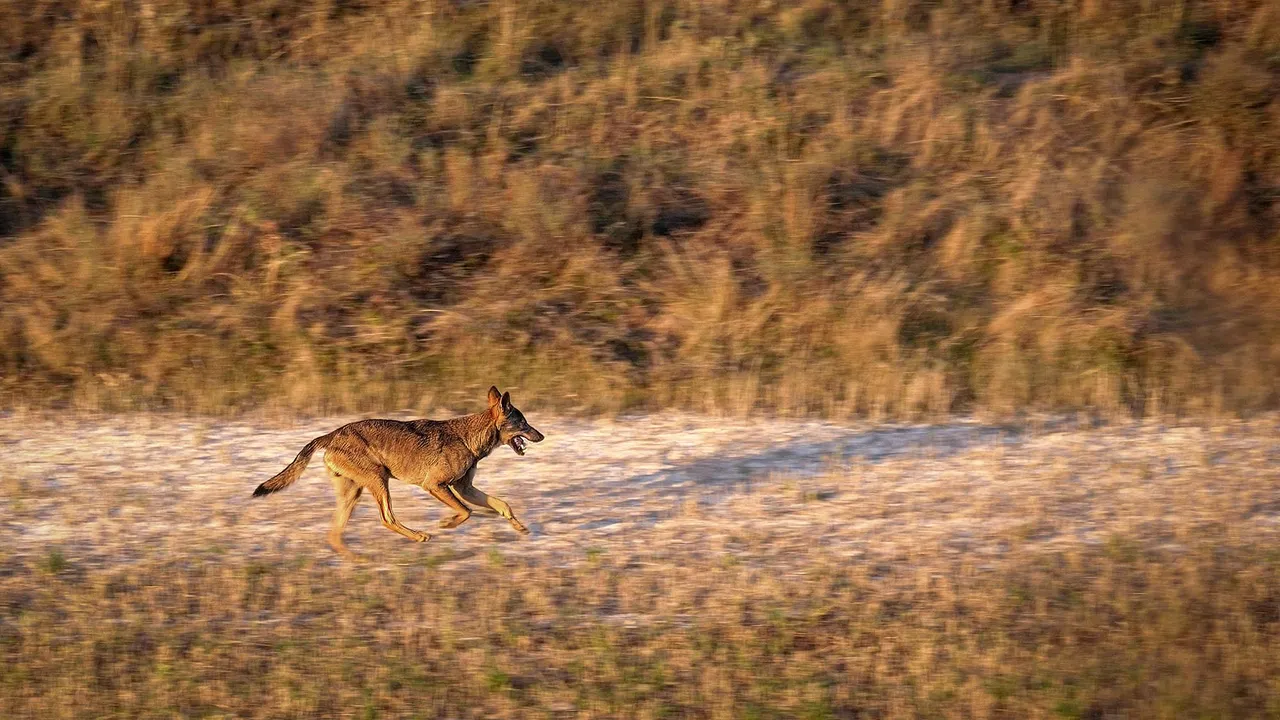
Sleeping with Wolves, one of the key films of the Another Way Film Festival, is much more than the narration of a quest — the Iberian wolf — it is a five-year journey by director Andoni Canela (Tudela, Navarre, 1969) alongside his daughter Amaia. The photographer and documentary filmmaker, known for his film The Journey of Unai, a candidate for the Goya Awards in 2017, and Panthers, has spent more than three decades traversing some of the planet’s wildest landscapes to capture its fauna. His images and reports have appeared in prestigious publications, as well as in numerous books dedicated to species such as the brown bear, the imperial eagle, the Iberian lynx, or the Iberian wolf.
The family adventure and environmental outreach have gone hand in hand in many of his projects, and they converge again in the film Sleeping with Wolves, a documentary that will be screened on October 25 at Cineteca Madrid, as part of the Another Way Film Festival. The film follows five years of Canela and his daughter Amaia, who begins the journey as a ten-year-old girl, in her search for wolves in freedom in different corners of the Iberian Peninsula.
A story about the fascination with one of our most misunderstood animals, but also about the passage of time, childhood and the bond with nature. Canela’s relationship with these creatures goes back a long way: already in the nineties he began photographing them in the Sierra de la Culebra, in Zamora, and in 2014 he published the book Sleeping with Wolves, the fruit of two decades of encounters, waiting and observation in the wild.
In this new adventure he aimed to go beyond the territories where the species is best established and delve into places such as the Pyrenees, where the wolf was exterminated more than a century ago and where its return is slow and complex. “Wolves are very difficult to see, because they are elusive,” the director explains to Condé Nast Traveler, and recalls week-long journeys without managing to spot a single specimen.
Some of his expeditions took place under heavy snowfall and frigid temperatures. Patience, more than a virtue, became an indispensable tool for the shooting. However, one of the documentary’s grandes attractions is not so much the encounter with the wolf as Amaia’s gaze. Traveling with his daughter has allowed the filmmaker to reclaim a simpler and less prejudiced way of approaching the wild world. In front of the adults’ specialized discourses, conversations with a child force a return to essential questions and to shed “that cloak of the black legend” that still surrounds the animal.