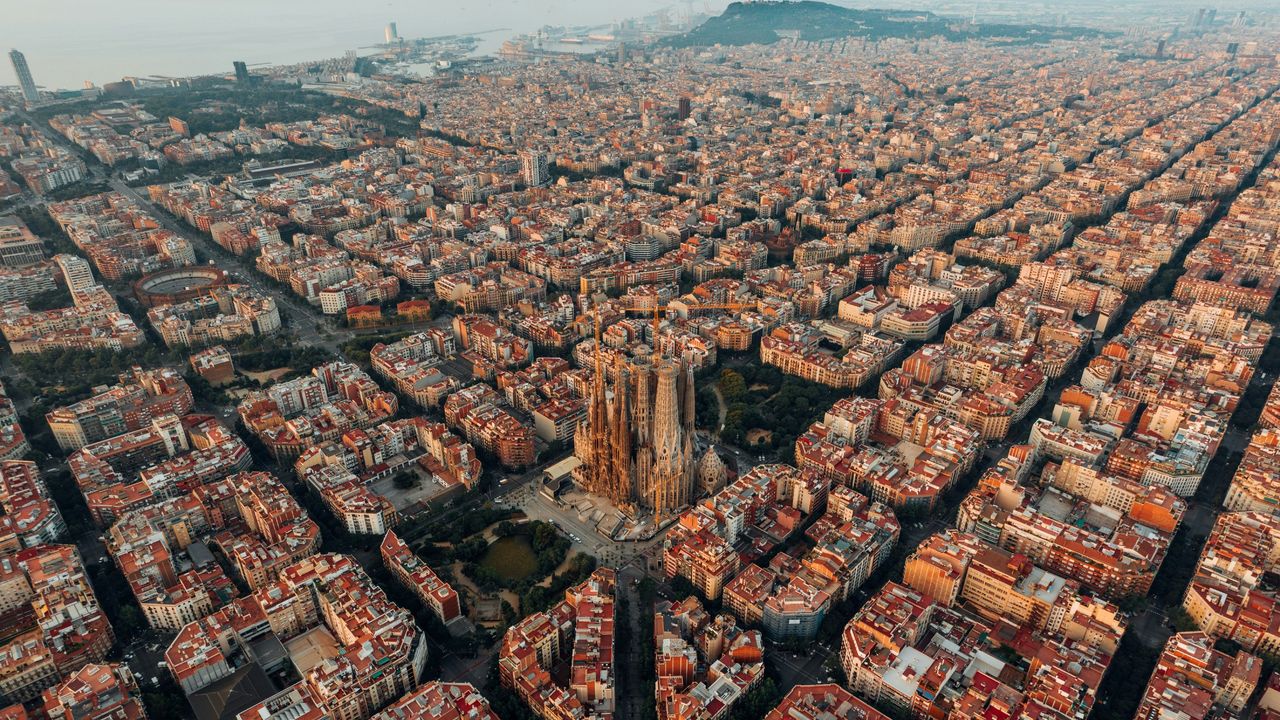
Barcelona has begun a year filled with milestones on its calendar, especially two of them that are particularly important. Because of the beauty and the uniqueness of many of its buildings, and the way it preserves an architectural heritage with centuries of history, UNESCO-UIA has named this year for the city World Capital of Architecture 2026.
For ten months, in ten districts and ten different venues, 1,500 activities will be organized around this designation, the first of which will be the official presentation held at the start of February, where all the exhibitions that can be seen during this year have been announced. The main venue of the event is the former headquarters of the Gustavo Gili publishing house, purchased by the City Council four years ago, and which, today, will occupy the center of the event as the Casa de la Arquitectura de Barcelona. You can view more information at this link.
Instagram content
Gaudí Year: 100 Years Since the Death of Antoni Gaudí i Cornet
Antoni Gaudí i Cornet (1852–1926) was one of the leading exponents of Modernisme and one of the most influential and recognized architects in the history of modern world architecture. He studied architecture at the Barcelona School of Architecture, where he completed his training in 1878. His work was characterized by great originality and a deep connection with the sciences, religion, nature, history, and the Catalan culture.
His work was innovative and contributed to the transformation of Barcelona’s architectural landscape, turning the city into a worldwide reference in modernist architecture forever. Proof of this is that a century after his death, on June 10, 1926, his legacy endures and his work continues to be admired and studied worldwide. UNESCO inscribed a large part of his buildings as World Heritage, and today they are the most visited in Barcelona. For this reason, this year the centenary is being commemorated with numerous activities that recall his figure as we told you in Condé Nast Traveler. On the one hand, the objective is to explain Gaudí’s scientific dimension, because it was always approached from the most artistic and architectural perspective, but now there is also a desire to delve deeper into this area. And, on the other hand, also to connect his works. “In 2026 the aim is to undertake the exercise of interrelating them and explain Gaudí from the entirety of his work,” explain the Consell Gaudí, created in 2014. And, also, to bring Gaudí closer to the youngest readers.
In this sense, one should keep an eye on the programming of the Sagrada Família, the main focal point of the commemorations. For example, on May 14 there will be a presentation of two biographical books about Antoni Gaudí: a spiritual and historical biography by Dr. Armand Puig i Tàrrech and the book Literary Sources. Sagrada Família written by Father Josep Maria Blanquet (JF). The calendar can be viewed at this link.