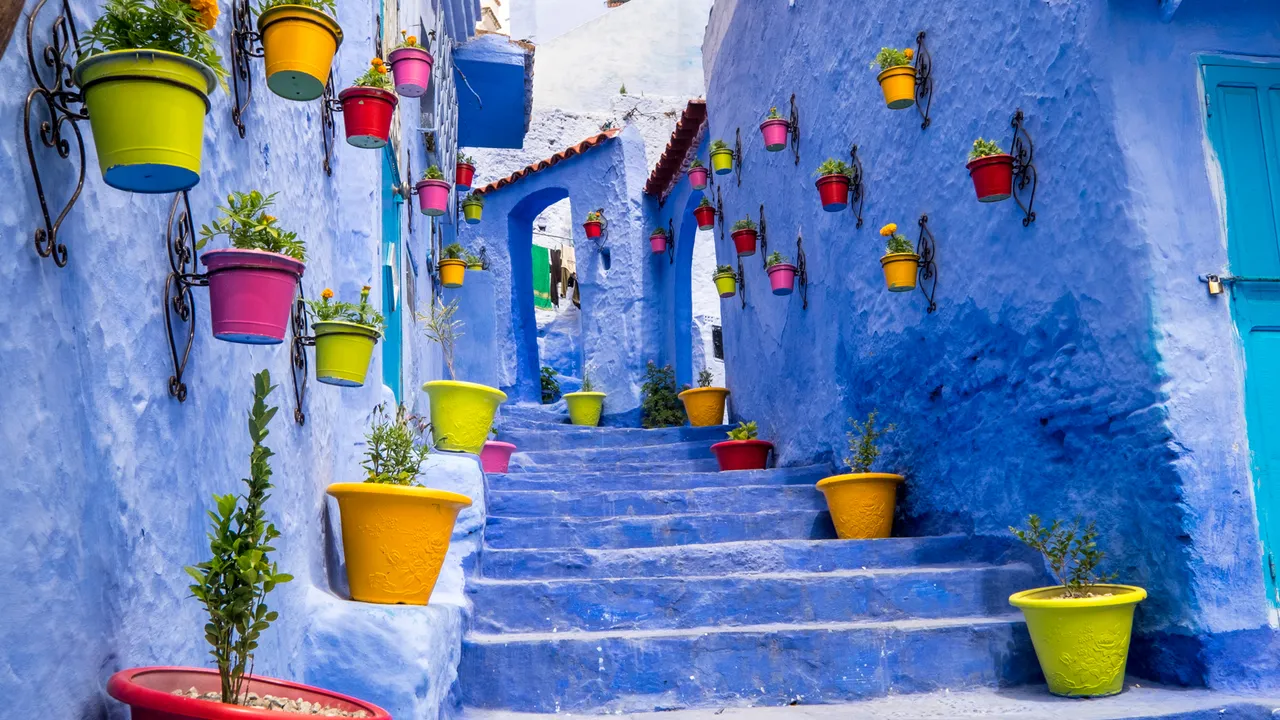
After a couple of years away, I felt it was time to return to Morocco, a country that feels like home. On this occasion, I opted for an escape to Tetouan and Chefchaouen. Nestled between the Rif Mountains, Chefchaouen is one of those destinations that, at first glance, seem defined by a single image: the blue-tinted streets.
That color, which has turned the city into a visual icon of Morocco, draws thousands of travelers each year in search of the perfect photograph. Yet that blue is only the starting point. Behind that chromatic layer lies a city with an identity deeply rooted, shaped by its Andalusian history, its geographic isolation and its connection to a natural environment that drew me in with an irresistible magnetism.
Unlike other more intense destinations in the country, Chefchaouen invites you to slow down, to observe calmly and to let yourself be carried by a serene atmosphere that seems to descend from the surrounding mountains and filter through every street and every house. Returning to travel through Morocco during Ramadan was a wise choice, adding a spiritual touch to an escapade that I hope to repeat soon.
Wandering through the blue medina
It’s true that it isn’t the city’s sole attraction, but it’s clear that the medina—with its omnipresent blue—defines the most recognizable image of this 45,000‑inhabitant town. Roaming the medina of Chefchaouen is an exercise in letting go. I didn’t set a fixed route or read any must-sees to follow to the letter. The truly interesting thing is to let yourself be carried by the network of alleys that rise and fall, that narrow until they nearly touch, and that suddenly open onto small courtyards or unexpected corners.
The blue saturates everything, yet it is not uniform. There are deep, intense tones, others that are lighter, almost chalky, and some worn by the passage of time. Light, too, plays a crucial role: early in the morning, the colors seem softer, while at noon they become more vibrant.
In the heart of the medina sits Uta el-Hammam Square, a space that functions as a meeting point for locals and visitors alike. Each day there would be tourists’ touts gathered there for various tours and people who, like me, would sit at one of the terraces of bars and restaurants to sip a juice and watch life pass by. Not far from the square stands the Grand Mosque of Chefchaouen, whose octagonal minaret breaks with the country’s usual aesthetics and adds a singular nuance to the whole.