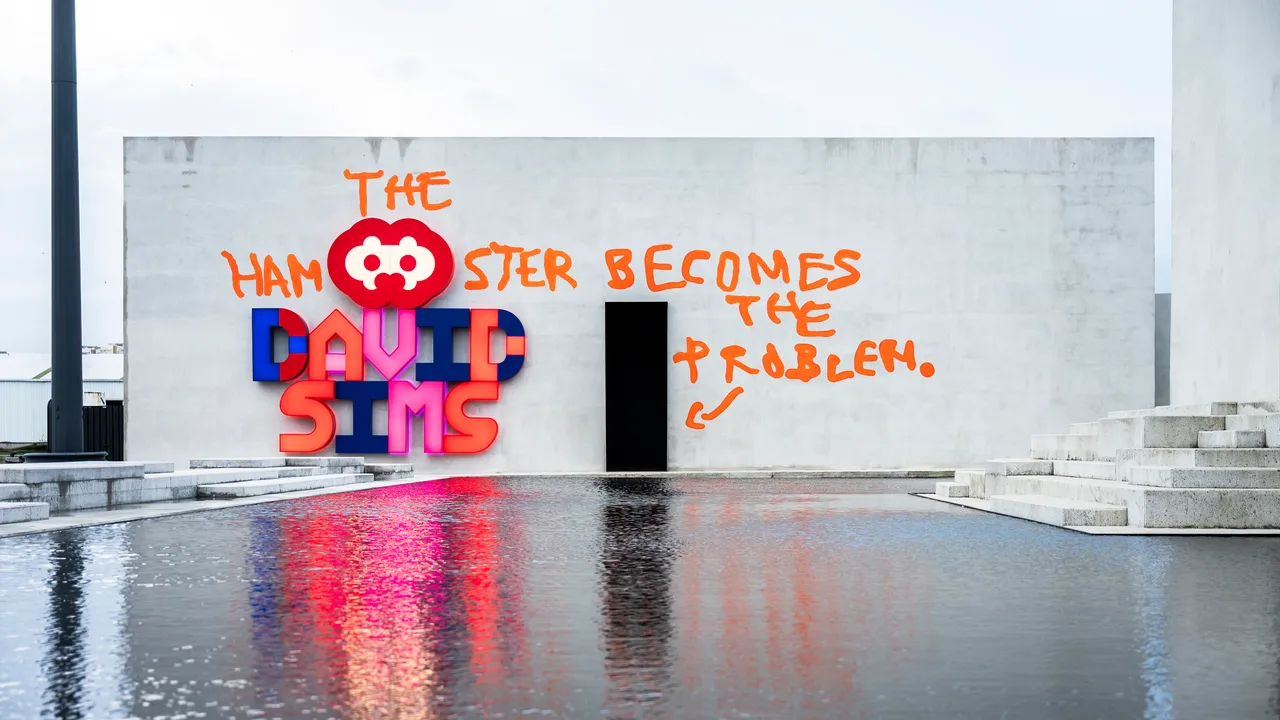
In 1993, David Sims asked Linda Evangelista to whistle. With tousled hair, a furrowed brow, and pursed lips, the model, who had just reached the pinnacle of her career, appeared in a photograph that today forms part of fashion history. “These are things that may not seem very significant now, but at the time they were fairly radical. It was a gesture unknown in the world of commercial fashion photography,” explains Charlotte Cotton, curator of the exhibition The Hamster Becomes The Problem.
Linda Whistling is one of the photographs that can be seen in the new exhibition of the Fundación Marta Ortega Pérez (Fundación MOP), which opened to the public on November 21 at the Muelle de Batería in A Coruña and will be on display until May 1, 2027.
During the press preview, the photographer himself expressed his gratitude for the work that made the show possible. “They showed a lot of patience with my demands and didn’t back down from anything. I am very grateful.” And, before handing the floor to the curator, he added: “I hope you enjoy what you are going to see. I leave you in Charlotte’s hands.”
Beyond Fashion
“It is a very personal story, in which it is very difficult to separate his life from his work,” Charlotte Cotton tells Condé Nast Traveler. When she began preparing the exhibition, about a year ago, she was clear about what she wanted to achieve: that the people who know David Sims best — his family and those who have collaborated with him over the last 35 years — would recognize the photographer in every room. That they would feel that this was his exhibition and that it was made in his own way.
“David does not aspire to belong to any pantheon. I like to say that he is not auditioning to become an artist. He does not intend to move from magazine pages to gallery walls to gain another status. He does it because he loves telling stories visually and has continued doing so long after achieving fame,” he continues.
His work reveals a constant fascination with youth culture, with the construction of identity and with the aesthetic possibilities of that which, at first glance, may not seem to belong in a fashion magazine. Cotton speaks of an attitude that challenges industry conventions, of finding beauty in imperfections and of transforming everyday elements into fashion photographs.