Wine on Formentera may surprise more than a few. In fact, it was already practiced in the Roman era, only that the course of time—and economic interest—led to replacing the vines with other soils more profitable. Today there is little vineyard on the Pitiusan island, but that doesn’t mean there aren’t wineries. Specifically, there are two.
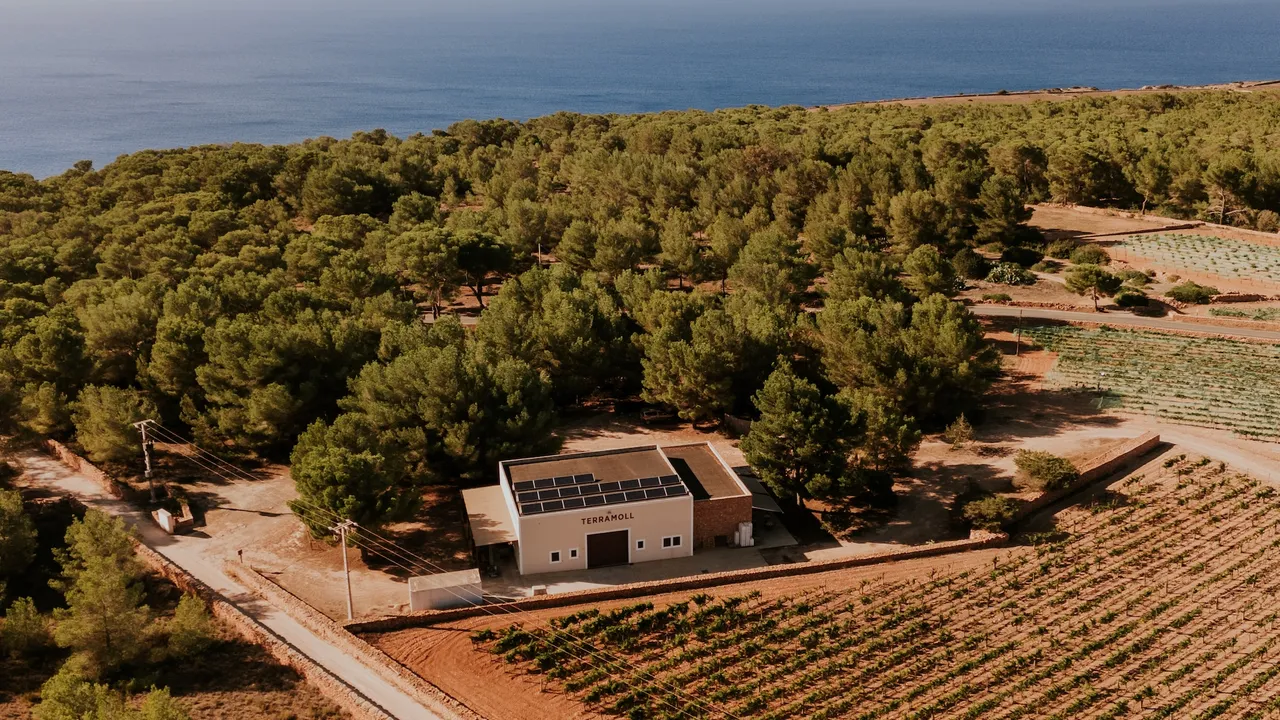
One of them is Terramoll, in La Mola, which is drawing special interest, as it has recently joined the project the La Rioja-based Vintae group (yes, the mastermind behind the planet’s most cool wine festival). Strolling through one of its vineyards, its CEO, Richi Arambarri, explains that the aim is to give the product a new twist — still belonging to the original Moll family. To begin with, the first question they asked themselves was: what is the essence of Formentera?
Formentera has been a salt mine, a pirate refuge and, only for about half a century, a luxury tourist destination. “The reality is that where Rome stood, there was wine,” Richi says, “in other words, the wine here must have existed long before records noted it.” According to the papers, “the first documentation is linked to the Augustinian monks, who arrived here in 1246.” They built a monastery in the La Mola area where they planted vines, but it was abandoned a century later—like the whole island—because the Black Death wreaked havoc.
What did not arrive, curiously and to our benefit, was phylloxera. Yes, it did reach the neighboring island Ibiza. Richi, who has spent half his life vacationing on the island, was surprised when “the town elders told me that the wine from here was sold in Ibiza.” That means that for those nearby, who have their own wine, they preferred ours. He partly attributes this to the terrible plague that destroyed almost two-thirds of all the vineyards in Europe: “One of the island’s great peculiarities is that phylloxera never arrived, unlike the rest of the Balearics. And this means that in the vineyard there are plants aged between 25 and 60 or 70 years… maybe more, who knows? Here most of the vines are ungrafted.”
What else does Formentera taste like? The sea, obviously. “We have altitude but without giving up proximity to the sea,” Richi specifies, which translates into a system where it is possible to develop a continent-like character without sacrificing salinity. Moreover, “they say that the Balearics had two origins of the vineyard: from the Iberian Peninsula, but also from other places in the Mediterranean (thanks to travelers such as the Phoenicians). So we can find the Greek, the Monastrell, which should not be confused with the one from Jumilla, and the Formentera Garnacha, which has nothing to do with the one we work with in La Rioja.”