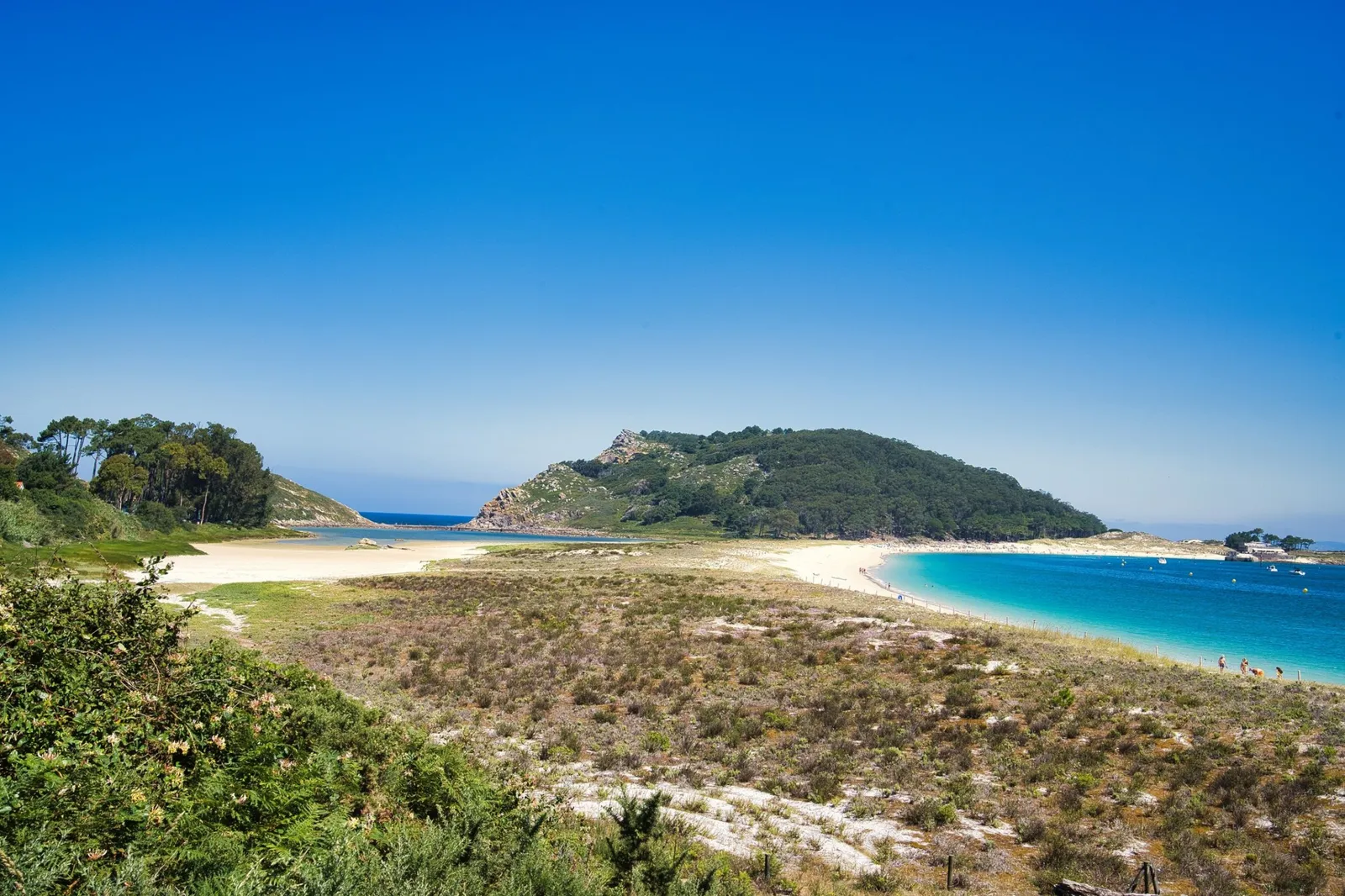
I first visited the Cíes Islands while sailing on a sailboat. It was May, and a spring sun cast dancing sparkles on a sea that made me think we might have taken the wrong route and were in the Caribbean.
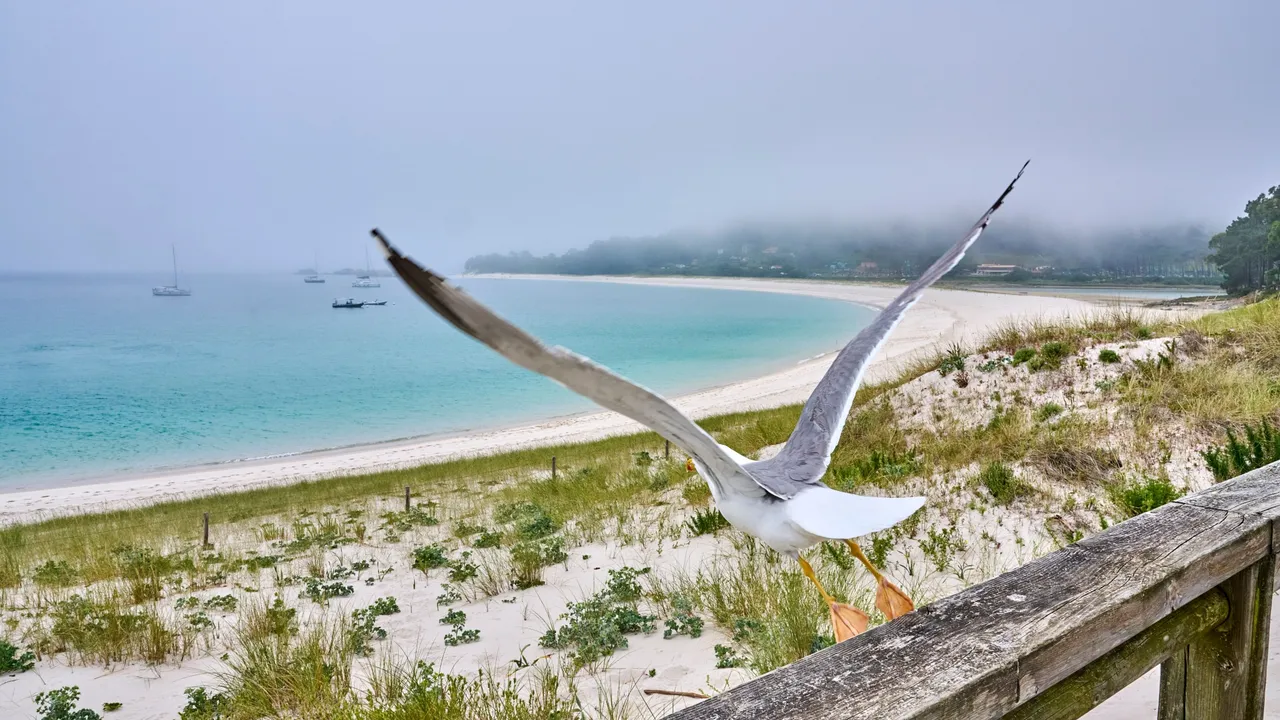
These Galician islands, belonging to the Maritime-Terrestrial National Park of the Atlantic Islands of Galicia, possess a magnetic pull that makes you want to stay there forever. One of those natural edens we sometimes seek in far-off lands, yet one that lies right on our doorstep. A marvel of rich biodiversity where peace pervades the air.
Geological origin of the archipelago
To understand the Cíes, one must look back to a past so distant that it cannot be comprehended in a human lifetime. Its present form is the result of a geological history that began long before the coastline existed as we know it today. Millions of years in which the sea and the land have bargained ceaselessly, in a slow and steady process that has not yet finished.
The granite that dominates the islands bears the mark of ancient internal pressures within the Earth. Although it may seem so, it is not a calm and unchanging rock, but rather the result of deep forces that uplifted, fractured and shaped the relief until it was left exposed to wind and ocean. On that hard and resilient base, the Atlantic has worked as a patient sculptor.
Walking through the islands means strolling through a geological history laid bare for all to see.