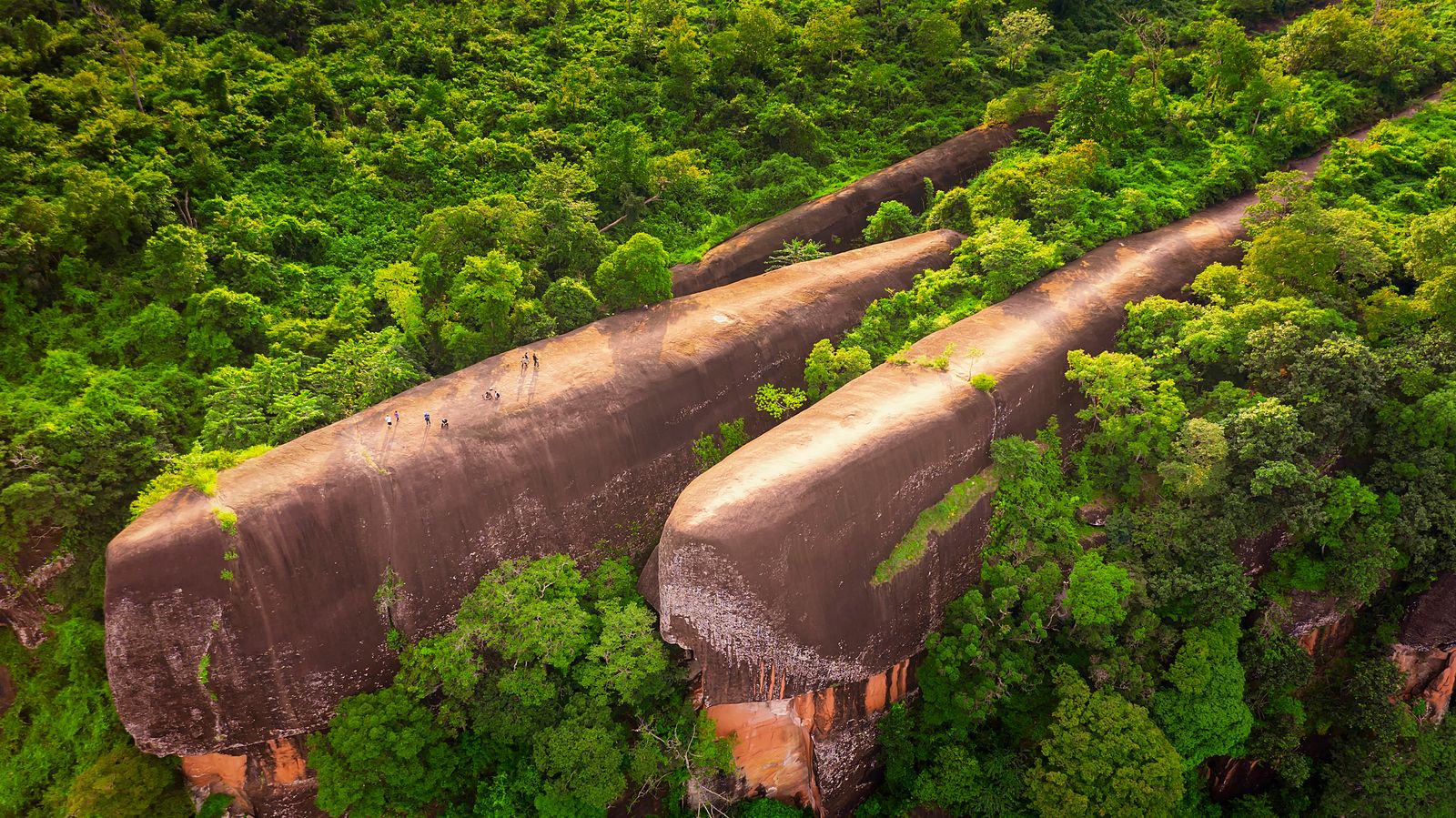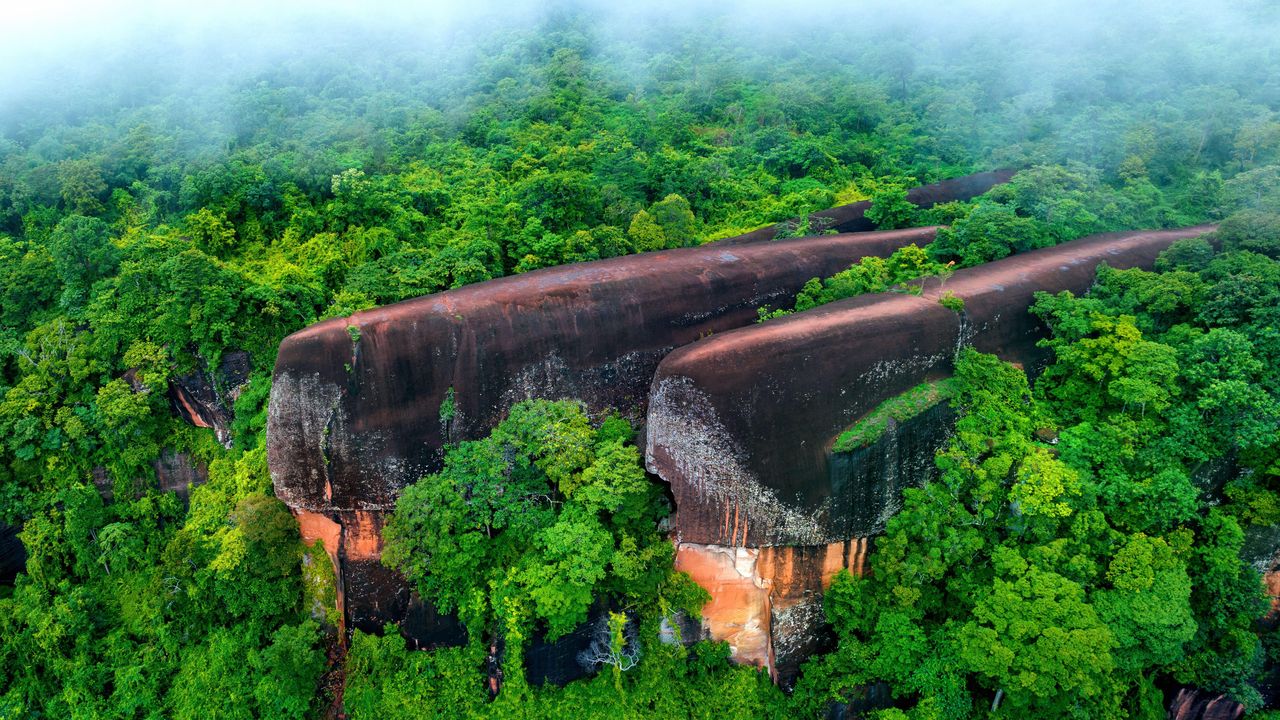
The immensity of nature never ceases to astonish with landscapes that resemble science fiction, where millions of years of geological history are transformed into shapes as extraordinary as they are real. The northwest of Thailand hides a vast example of this: Hin Sam Wan, a curious cluster of rock formations located in the province of Bueng Kan, about 750 kilometers from Bangkok.
Its Thai name means “the rock of the three whales,” a designation that alludes to the image and likeness of these rock reliefs with a family of enormous cetaceans that skim the lush green seas of the Phu Sing forest conservation area. Although these masses of rock are 75 million years old, surprisingly, they have not attracted tourist attention until recent years.
Phu Sing spreads its charms at the border with Laos and rises above the Mekong River valley, a region characterized by its wooded hills, caves, waterfalls, sandstone formations and, above all, landscapes of infinite green. Among its borders coexist tropical dry ecosystems with deciduous and mixed forests, where diverse wildlife coexist: from hornbills to macaques, passing through gibbons.
To soak in the beauty of the surroundings, there is no more privileged viewpoint than Hin Sam Wan, perched at roughly 200 meters of height, though only two of the rock outcrops are accessible on foot: the “mother” and the “father” whale, the pair of formations largest in size – with the “offspring” being the third.