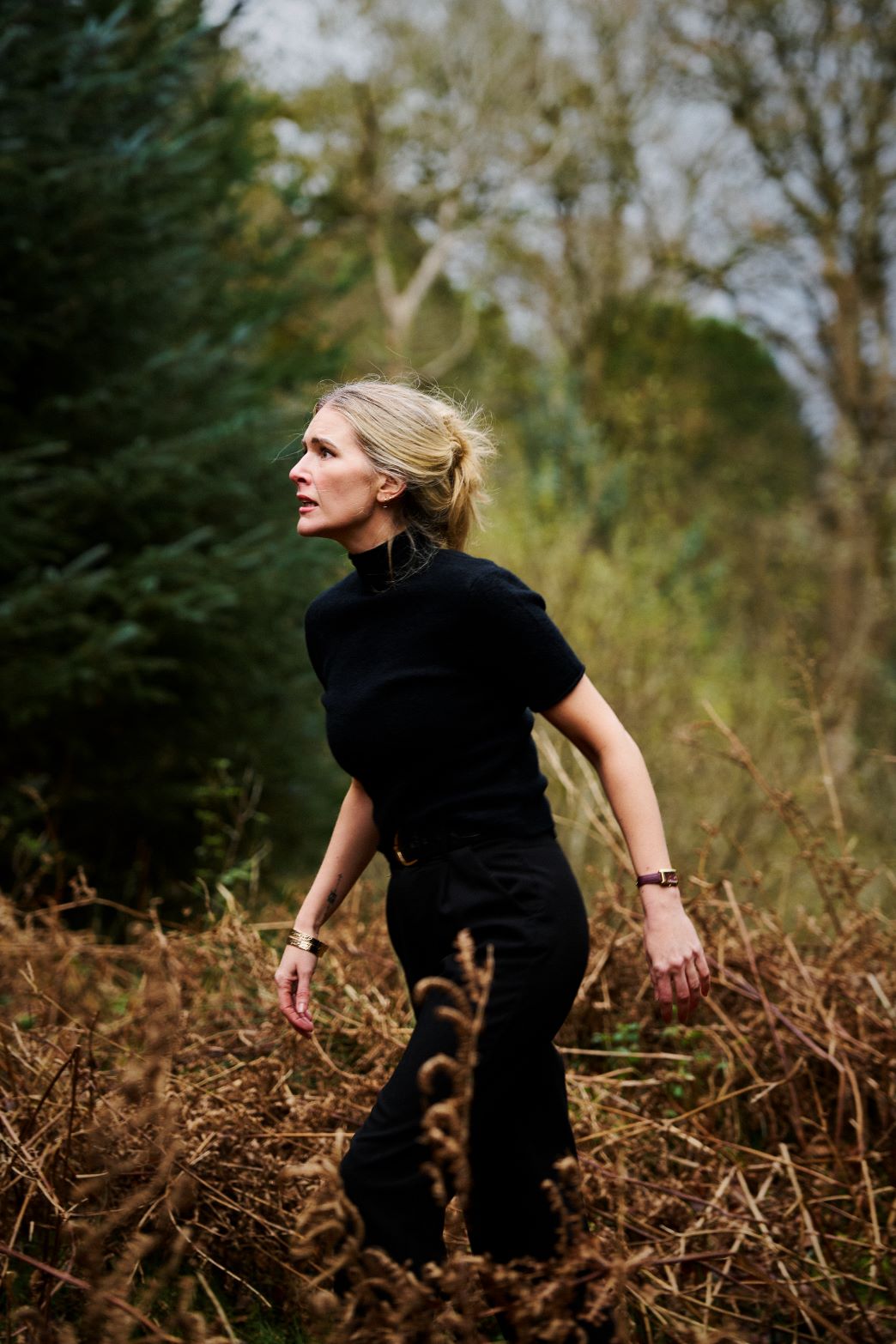
Samhain, penned by Amy, performed by Amy, and brought to life under the direction of her partner Seán Branigan, is a tale that holds special meaning for the couple
Tell us about this short film; what can people expect?
Prepare for the unforeseen. At the outset, the film appears to chart the everyday struggle of a working mother and her neurodivergent son. As the narrative unfolds, the child disappears from his preschool. The story then evolves into an experiential journey where my character must virtually enter the child’s imagination to track his movements in the hope of locating him. It is a meditation on grief and connection, and on how embracing one another as we truly are can bring us together.
It is a piece of work very close to your heart — can you explain why you made this film?
From the start, writing this film served as a means to process a peculiar and intensely personal grief that surfaced after my son was diagnosed with Autism. River remained the same boy he had been moments before the diagnosis, yet something inside me shifted. On one hand there was clarity and a path forward; on the other, a profound sadness because I knew the world isn’t yet built to support a child like mine. So, although it is an intimate narrative, it was also a profoundly healing act. It transformed these feelings into a piece of art that, I hope, might help others.
It must have been a deeply emotional filming experience at times. What with you writing and starring in it, alongside your husband directing, it must have felt incredibly personal and as you describe it, raw.
Indeed, it was a profoundly emotional ride. Yet I am overwhelmed with pride—not only for our family, but for the sense of community that rallied to help bring this project to life. On the first morning of filming, witnessing such a wonderfully talented cast and crew assembling nearly moved me to tears. When I first watched the finished film, I cried again. So, yes—emotional is a fitting word.
What was your hope going into this project? What kind of conversations do you hope it will inspire?
My aim was to present a completely authentic, unguarded portrayal of life as the mother of a neurodivergent child. To show how everyday tasks can become extraordinarily challenging. How you can navigate the line between routine and the deepest emotions you’ve ever felt. It’s about capturing the reality of our lives and the stark contrast between feeling utterly detached and experiencing an extraordinary surge of emotion. As a parent of a neurodivergent child, we often encounter phrases like “He’s doing great,” “Sure, we’re all on the spectrum,” or “How autistic is he?”—and I’d like to broaden that conversation beyond reductive labels, fostering understanding not only for the child but for the caregivers as well.
What does the title Samhain represent in this film’s context?
Samhain carries multiple meanings within the film’s framework. Primarily, it is the neurodivergent boy’s name. I appreciated the notion of giving him a distinctive, Irish-flavored name.
On a practical level, the moment you find yourself in a public setting with a child who is overstimulated and melting down, you want to draw as little attention as possible. If your child has an unusual name—like River, as I mentioned—attention is immediately drawn to you. I enjoyed placing my character in such a challenging scenario.
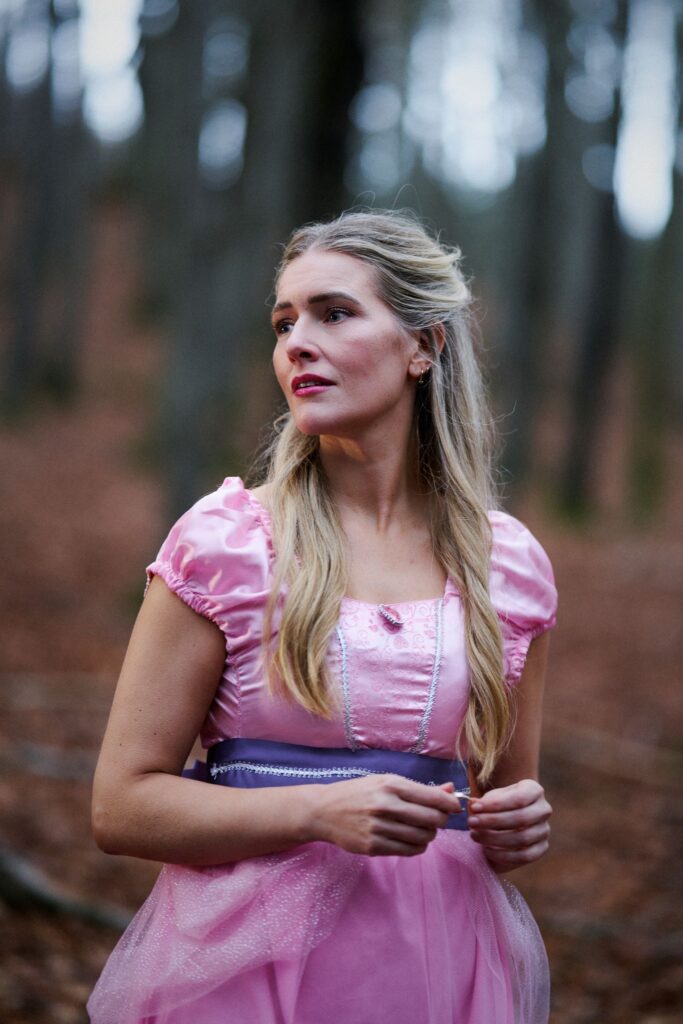
Yet in a deeper sense, Samhain also symbolizes rebirth and the turning of the seasons. It marks the transition from summer to autumn—the changing leaves and a harvest for the darker days ahead. The shift in my character Emma felt that elemental, transformative quality as well, almost as if embracing her son allowed her to shed old versions of herself and become anew.
You say as the mother of a neurodivergent child, this is the kind of film you would like to see. What do you want parents on a similar journey to take away from this?
To feel less alone. To feel seen. To recognize that they are doing a wonderful job. To accept that this path wasn’t in their original plans. To permit themselves to grieve, knowing that such grief can pave the way to acceptance. And to understand that the world they’ve embarked upon may hold genuine magic.
You shared a post with River last year for World Autism Day, saying you are “learning to paint with a new colour” and that it is society’s responsibility to rise up and meet people exactly where they are, not “mash a beautiful soul into something they are not” — beautifully put and something you clearly feel passionately about.
Yes, I truly do. The young actor (Niall Deakin) who portrayed Samhain in the film is neurodivergent, a factor that was crucial during casting. Shauna Griffith was instrumental in helping us discover remarkable neurodivergent child actors. And it wasn’t only Samhain; many Heads of Department on the crew were neurodivergent as well. There was something deeply freeing about everyone looking after each other’s needs and collectively rising to meet one another where they stood. It wasn’t about making concessions for people; it was about cultivating a supportive space where everyone could work at their best and let their talents shine.
View this post on Instagram
Aoife Brennan
I write about culture, gastronomy, and lifestyle with a deep interest in the places, people, and traditions that shape how we live. I am drawn to stories that feel thoughtful, vivid, and rooted in real experience, whether they begin in a gallery, around a table, or in the rhythm of everyday life.