In Lower Brittany, the Atlantic dictates the pace of life, and medieval villages intertwine with the deep green of the forests and the intense blue of the sea. Starting a journey from Vannes to Brest is to immerse oneself in a region with an identity and cuisine as marked as its rugged coastline.
Our starting point is Vannes, a vibrant 15th-century medieval town built in an amphitheater-like layout at the far end of the Gulf of Morbihan. Surrounded by well-tended gardens, the citadel is a pedestrian labyrinth of cobbled lanes with half-timbered houses that (almost) brush one another on the upper floors—the lack of space forced them to be built as inverted pyramids, with a small base widening with each floor.
The Les Lices market delights the senses with Breton cheeses, fresh seafood, and artisanal pastries in which the salted butter is never missing. At seven in the evening calm arrives suddenly, when everyone withdraws to dine, for Bretons take dinner-time punctuality very seriously. It is the moment to enjoy the golden light of sunset that beautifies the Cathedral of Saint Peter and that highlights the façades of the houses on Saint-Salomon Street and those in the oldest neighborhood, Saint-Patern.
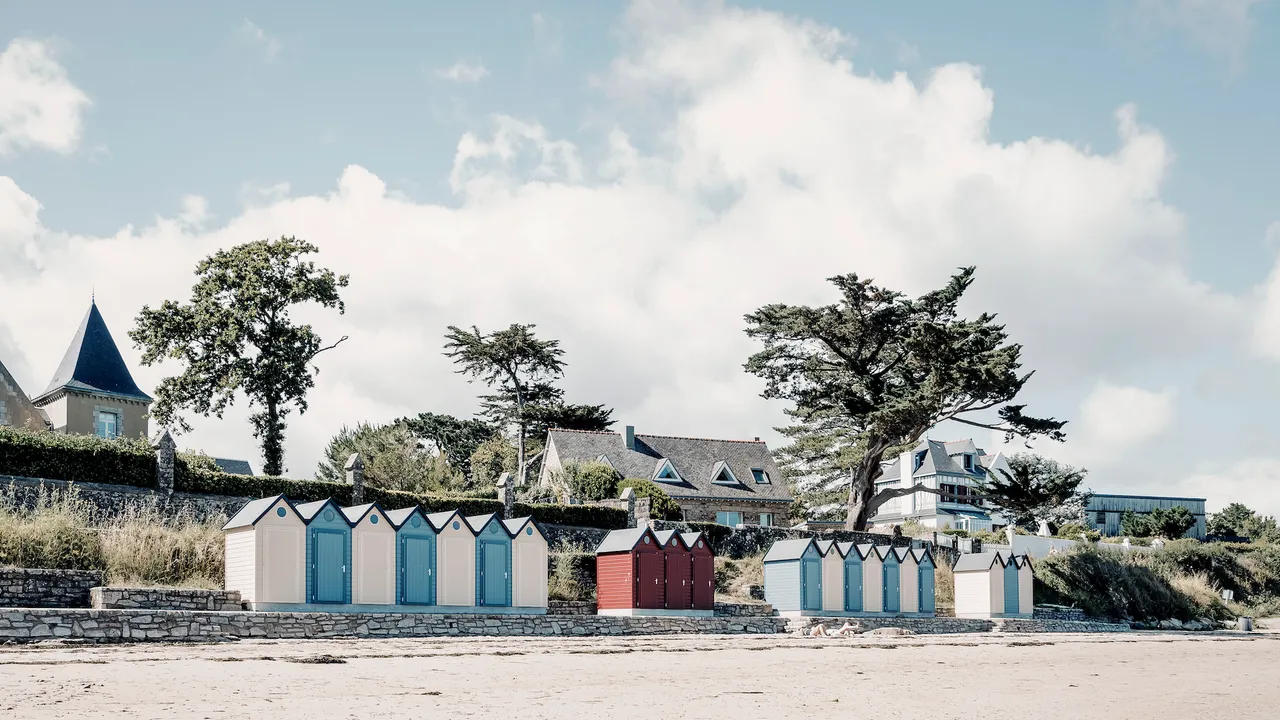
Beyond the walls, the lively Vannes estuary leads us straight to the Gulf of Morbihan, an archipelago of islands and islets within a kind of inner sea five kilometers wide and twenty-one long, which encloses the region’s marine essence. A brief ferry crossing takes us to Île-aux-Moines (the island of monks), a floating jewel shaped like a cross. Inhabited since prehistoric times—the megaliths scattered across its territory bear witness—we pedal through its paths – the entire island is pedestrian, lush with hydrangeas and centuries-old pines, with the sea on one side and the forest on the other, uncovering hidden coves adorned with rainbow-painted shacks and offering bucolic panoramas of the neighboring islands. Here time seems to move at a different cadence, more in line with the rhythm of the tides.