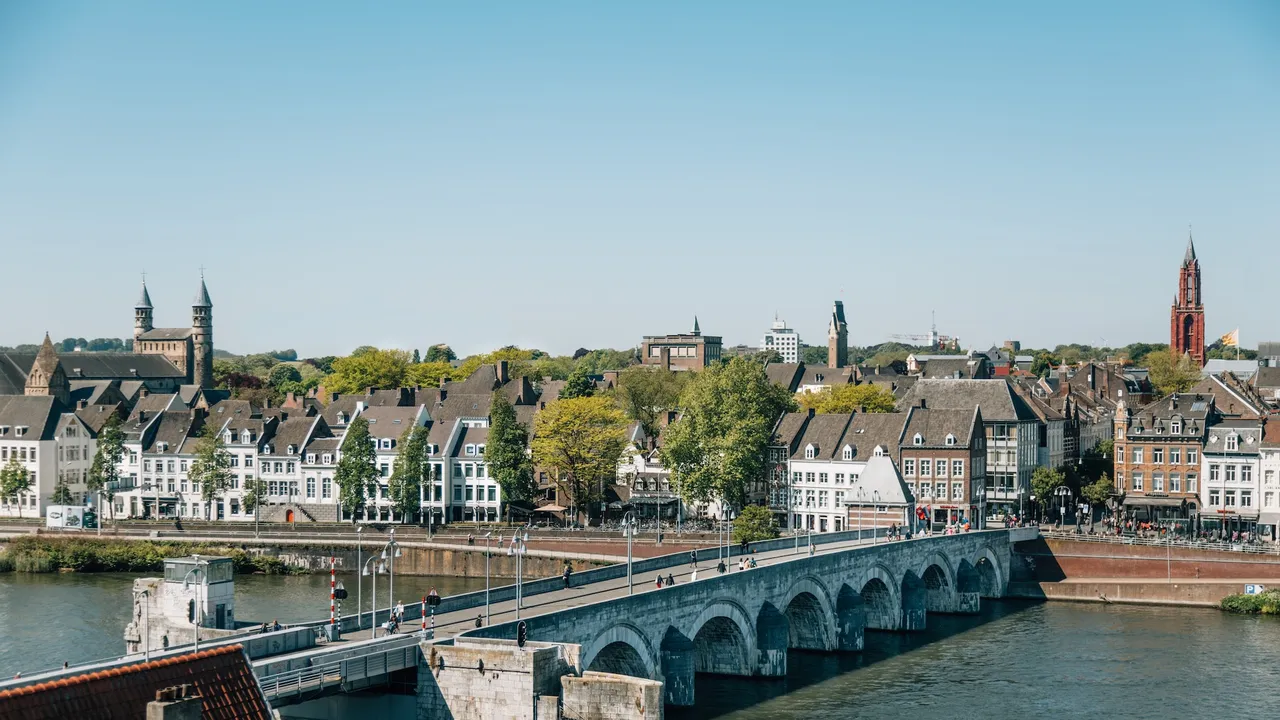
Although it is a Dutch city, the quickest way to reach Maastricht is from Brussels. Nestled between the Belgian and German borders, in the southern part of the country, a journey of about an hour and a quarter is enough to reach this chic and surprising destination that interweaves Burgundian elegance, university spirit, and medieval heritage.
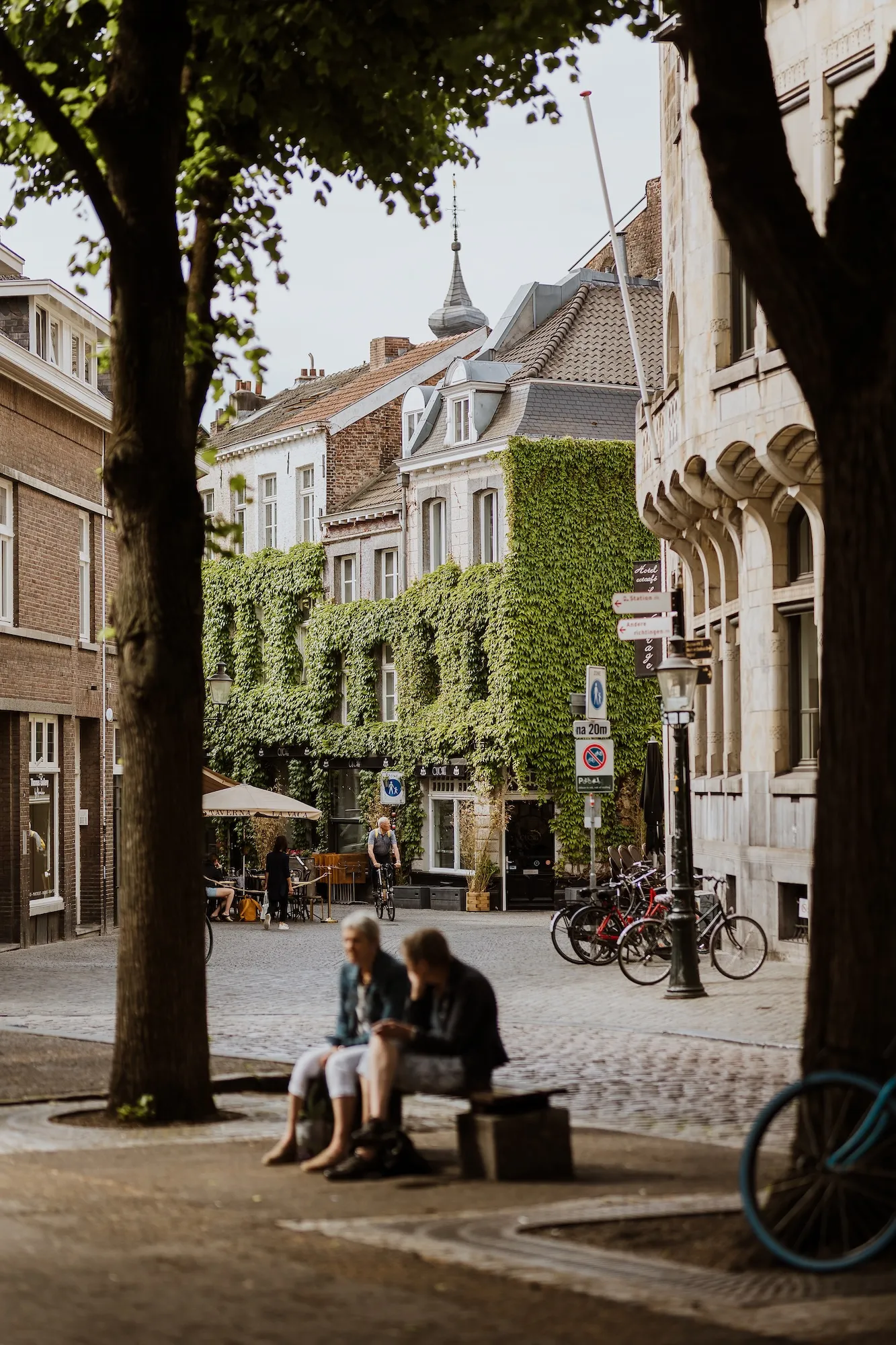
Maastricht has plenty of reasons to be one of those places where one could settle to live. Alongside its lively terraces, crowded in the French style, and a magnificent Mediterranean joie de vivre, add postcard-perfect cobbled streets where the sun peeks through more often than you might expect in Central Europe, an animated Carnival and one of the art fairs most important in Europe.
A city full of layers of history
Maastricht is famous for giving its name to the treaty that transformed the European Economic Community into the modern European Union, but also for being the oldest city in the Netherlands. Founded by the Romans on the banks of the Meuse River, some traces of that early settlement still remain. However, it is the medieval era that marks much of its streets. In fact, you can still cross the historic Helpoort, a stone gate dating from 1229 that countless merchants crossed as they turned this place into a thriving urban center.
Y es que su ubicación estratégica junto al río Mosa, que nace en Francia y recorre 950 km cruzando Bélgica, Luxemburgo, Alemania y los Países Bajos hasta desembocar en el Mar del Norte, ha hecho de Maastricht, históricamente, un lugar muy bien ubicado. No es extraño descubrir que poseerla ha sido objeto de deseo de muchos. El mismo Luis XIV quiso hacerlo, costándole la vida al capitán de los Mosqueteros de la Guardia del Rey Luis XIV, Charles de Batz-Castelmore, conde de Artagnan, durante el asedio a la ciudad en 1673.
Because here died D’Artagnan, the real one. And perhaps soon it will be confirmed that he was also buried in the city. Three hundred years have passed and experts are cautious, but a few months ago, following the fortuitous discovery of some bones in the church of Saint Peter and Saint Paul, renewed speculation arose that D’Artagnan’s tomb might be in Maastricht. It is believed that the musketeer died after being struck by a musket ball in the throat or chest, and the skeleton found beneath the altar would correspond to this description.
While DNA works its magic, you can pay your respects to the musketeer at the statue in Aldenhofpark, an outer park where remnants of that medieval wall still stand. That same wall that endured 21 sieges, but only five times in history have enemies managed to breach Maastricht’s defenses.