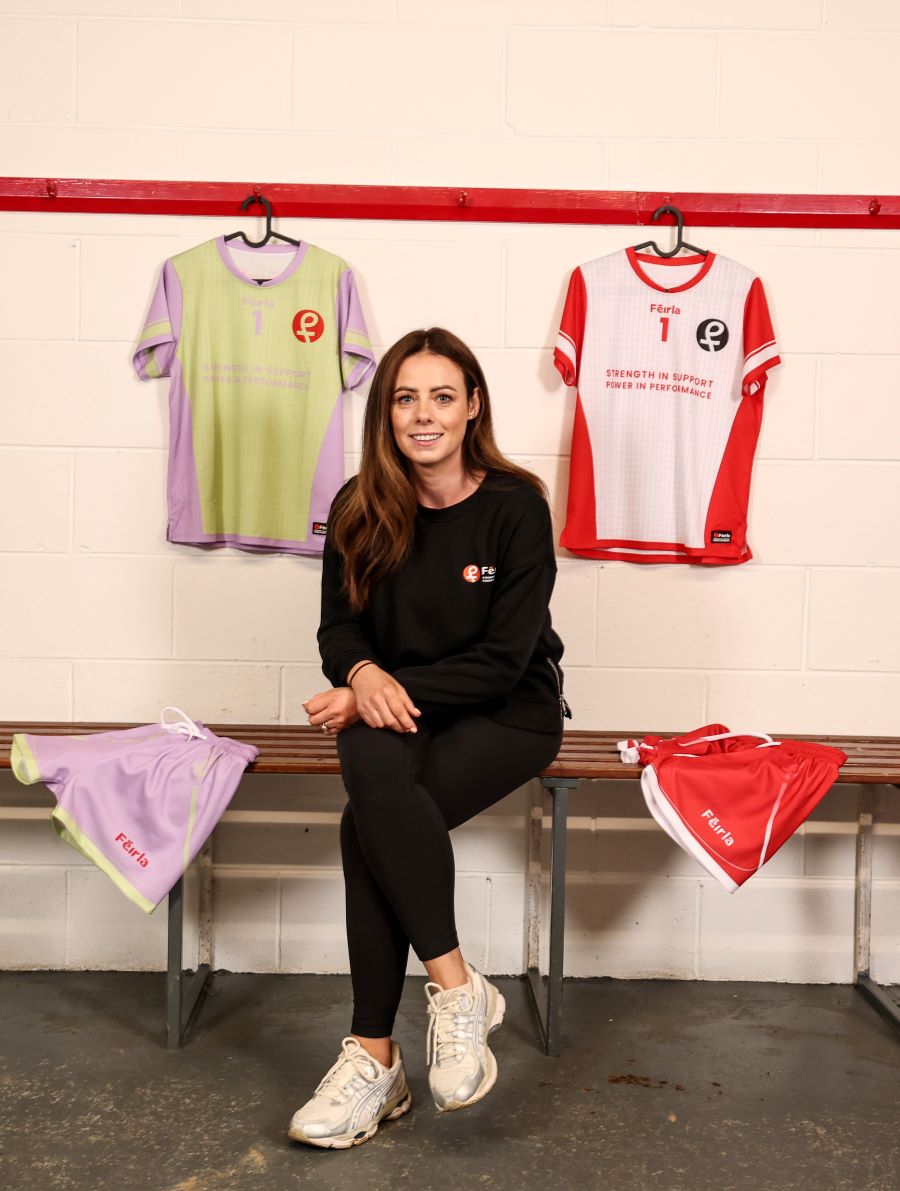
Féirla, Ireland’s first Gaelic games–focused sportswear label crafted for the female body, has introduced its inaugural collection. In a discussion with founder Margaret Walsh, a physiotherapist based in County Louth, to learn more, Niamh Devereux leads the conversation
Hello Margaret. You’ve stated that “for too long, girls and women have stepped onto pitches feeling exposed, self-conscious or uncomfortable.” Why do you think something so essential was overlooked for so long?
I’d say a major part of it stems from women never being the starting point in design. For years, athletic apparel has been drawn up around male bodies and then tweaked for female athletes in a process many call “shrink it and pink it.” In truth, it remains largely male gear, simply reduced in size, without truly accounting for the differences in female anatomy, movement, or needs. That mirrors a broader issue in sport and science. Much of the research we’ve depended on historically focused on male athletes. Studies such as Invisible Sportswomen have underscored just how sizable that gap is, with as little as 6% of research dedicated specifically to female athletes. When the evidence base is limited, it naturally shapes how products, training, and support systems are developed.
We also have to acknowledge that women’s participation in sport at scale is relatively recent. For a long period, there simply wasn’t the same demand or expectation for female-specific gear, so it wasn’t prioritized. But that has shifted. Women’s sport is expanding rapidly, performance levels are astonishing, and expectations are rightly higher. So now the focus isn’t merely on participation; it’s about ensuring female athletes receive proper support. And that includes something as fundamental as the kit they wear. Féirla is dedicated to addressing the shortcomings of traditional Gaelic games kits by crafting shorts that truly cater to women athletes, empowering them to keep playing the sport they love.
You’ve been involved in Gaelic games for more than two decades both as a player and a physiotherapist, so this is a matter you’ve long known about?
Yes, yet what struck me over time was how quietly the issue was experienced. I used to assume everyone recognised it, but in truth it was almost unspoken. Girls would adjust their shorts, feel uncomfortable, feel exposed, yet rarely question it. Instead, they often turned it inward, thinking it was their own body, or comparing themselves to others and how they wore their kit. Very little attention was given to the product itself, to whether it was designed in a way that genuinely worked for them. And I do think, as women, we’re quick to internalise such things, adapting and getting by rather than challenging them. There’s probably a simpler approach elsewhere: “this doesn’t work, so let’s fix it.” Looking back, that is the part that stayed with me—the issue itself and how normalized it had become. Yet when you speak with women and girls, share the experience, there isn’t a single female who hasn’t faced it at some age or level, but often brushed it off or stopped playing.
Naturally, last year’s camogie players and skorts issue brought the topic into sharper public focus. Was there a particular moment that convinced you to act?
Absolutely, though my path was a bit different. I had already begun this journey more than three years earlier, facing several setbacks along the way, reaching a point where I felt this was my final earnest effort. I paused my clinical work, pursued further study with a postgraduate focus on the female athlete at Dublin City University, and immersed myself in understanding how to solve the problem properly.
By the time the skort headlines arose, Féirla was already about nine months into development—collaborating with designers, refining samples, and selecting fabrics. In many respects, the conversations had been quietly ongoing for years. Yet what struck me was the visibility it gained. It brought a long-submerged issue into the public eye. And while the headlines centered on skorts, my instinct was that the problem ran deeper than a single garment; it was a broader question of how female athletes are viewed and supported.
I felt incredibly proud watching those players take a stand. The journey up to that moment often felt solitary, and suddenly there was a collective voice. Observing how strongly the girls felt reinforced my belief. It convinced me I wasn’t alone in recognising the issue, and more importantly, that it mattered. That moment gave me the momentum to persevere and complete Féirla. It genuinely felt like something I was destined to finish.
From what you’ve learned, what challenges were female players facing that weren’t being discussed?
There are several, several of which lie quietly beneath the surface. Puberty is a major one. It’s a period of substantial physical and hormonal changes, often without a full understanding of what’s happening in their bodies. The menstrual cycle, for instance, can impact energy, coordination, mood, and overall performance, yet many girls aren’t supported in learning about it, and each experience is highly individual. Most girls don’t even know how to monitor their cycle or how beneficial that can be. That can create frustration, not just for the athlete, but for the wider team. Coaches may not always have the knowledge or language around it either, so girls can end up staying silent, thinking they’re the only ones struggling, or that they simply need to push through.
There are also more hidden concerns, like urinary leakage during sport. Research from Dublin City University into Gaelic games has shown this is more common among female athletes than many realise, yet it’s rarely discussed openly. Again, it’s something many deal with quietly. And then at the other end of the spectrum, there’s the return to sport after childbirth. For a long time, many assumed that pregnancy marked the end of a sporting career. There has been very little structured guidance on how to return safely and effectively. Even now, progress is evident only in recent years, with organisations like FIFA starting to introduce more formal postpartum return-to-play guidelines in 2026. When viewed across adolescence through to motherhood, a consistent theme emerges: female athletes have often had to navigate their sports lives without the same level of understanding, support, or structure. While improvements are underway, there’s still a long road ahead.
Research indicates Ireland is losing female athletes at a worrying pace, with one in five girls dropping out of sport between primary and secondary education—how much do discomfort and insecurity around kit contribute to this?
It’s one piece of a much larger puzzle, but an essential and often underestimated part, and crucially, something we can alter. We know dropout rates rise sharply during adolescence, and confidence, body image, and the surrounding environment all influence how a girl experiences sport. When she doesn’t feel comfortable in what she’s wearing, or feels exposed or unsupported, it can certainly shape her participation. It simply makes sense, yet it has historically been overlooked. Recent qualitative research with players in the Women’s League of Ireland has begun to reveal just how much gear matters. Players described repeatedly being handed men’s-fit shorts and then adapting them, whether by sizing up, rolling the waistbands, or even wearing youth sizes simply to make them function.
It’s not a one-off inconvenience; it becomes a continual effort, something they must consider every time they train or play. And over time, that adds up. The research also shows that kit isn’t merely functional—it communicates a message. When female athletes are repeatedly given ill-fitting or forced adaptations, it can foster a sense that they’re not fully considered or prioritized. So while kit might seem like a minor detail on the surface, it influences a broader experience. It affects comfort, confidence, and even a sense of belonging within sport. And when assessing why girls disengage, those “small” factors can prove decisive.
Explain how you sought to address these concerns with Féirla and its variety of styles.
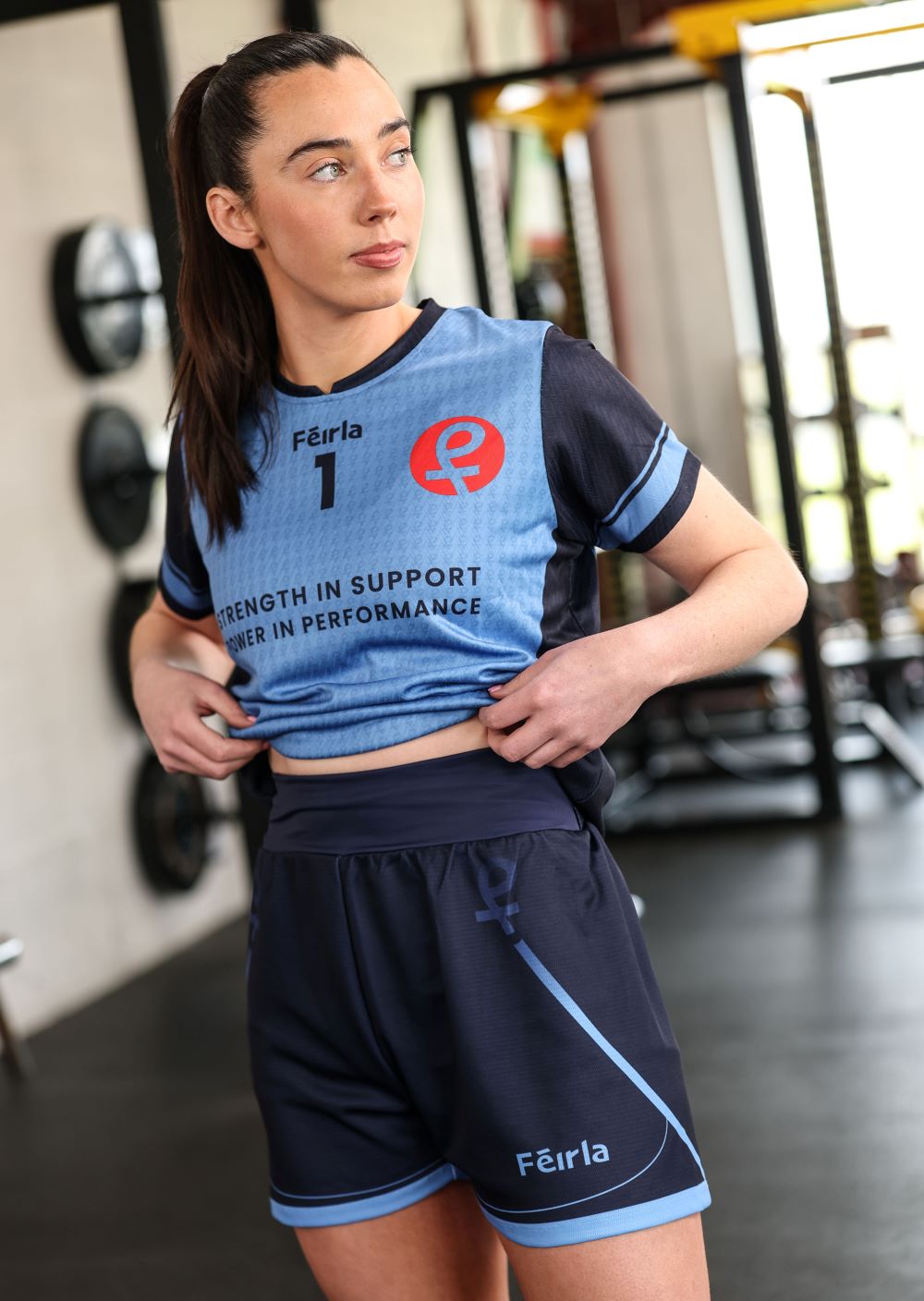
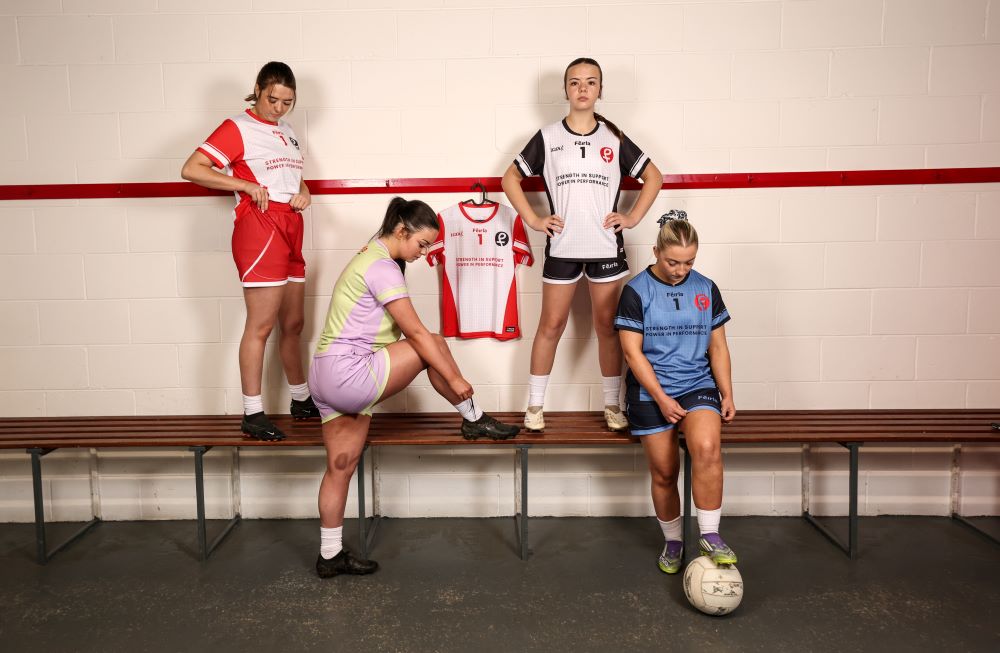
First, it began from a different starting point—designing for female bodies from the outset, rather than adapting templates built for male anatomy. I also wanted to take a wider view of the female athlete across a lifetime, especially from puberty onward, because that’s where I see many of the challenges arise through my work. It was about listening to what girls and women actually experience at those stages and responding to that. Fundamentally, it comes down to offering female athletes a choice. We created multiple styles because not every player wants or needs the same thing. Some prefer a higher waistband for support, others want compression, while some lean toward a more classic silhouette—yet all are tailored to female proportions.
We also introduced period-proof technology, something Gaelic games hadn’t previously offered. Everything circles back to that central idea: with choice, players feel more comfortable. And when comfort rises, confidence grows and performance can improve.
Indeed; the Neala shorts, Ireland’s first period-proof Gaelic games short, carry particular significance because period anxiety remains a largely unspoken challenge for athletes.
Indeed, I view this as profoundly meaningful, personally and for the future of Gaelic games and women’s sport more broadly. Menstruation remains a topic rarely discussed openly, especially at the grassroots level. Simple questions—like whether clean facilities exist when girls travel to training or matches—can provoke real anxiety. Combine that with wearing ill-fitting shorts, managing a sanitary item, and trying to move freely to sprint, jump, or kick—all while your body may not feel the same—it’s a heavy load for a young athlete to bear.
The Neala short aims to ease some of that burden. It provides reassurance, while also letting girls feel identical to their teammates outwardly because the period protection is built in. That in itself marks a meaningful shift. On a personal level, it’s even more significant: the shorts are named after my daughter, Neala, because ultimately this is about her generation and creating a better, more supportive sporting experience for her and for girls like her.
The brand clearly wears its Irish pride on its sleeve, from its name to how each short is identified, all centered on female empowerment.
There was never any doubt in my mind about the feeling I wanted Féirla to convey. From the start, I didn’t want the shorts’ function to define them. Instead, each style would carry a name—a strong Irish feminine name—so that when a girl picks her short, she’s choosing a feeling and what it stands for: strength, confidence, and movement. Not labels like “period protection” or “tummy support.” Instead, opt for Méabh or Fiadh! Those aspects matter, but they shouldn’t define or limit how a female athlete feels. They’re simply part of being female, and females are resilient, strong, and powerful.
The name Féirla itself embodies that meaning. The initial “F” signals where female action should begin. “EIR” comes from Éiru, the feminine goddess after whom Ireland is named, anchoring the brand in Irish identity. And “LA” comes from the end of my daughter’s name, Neala, which suitably means “female Irish champion.” To me, it embodies the past, the present, and the future.
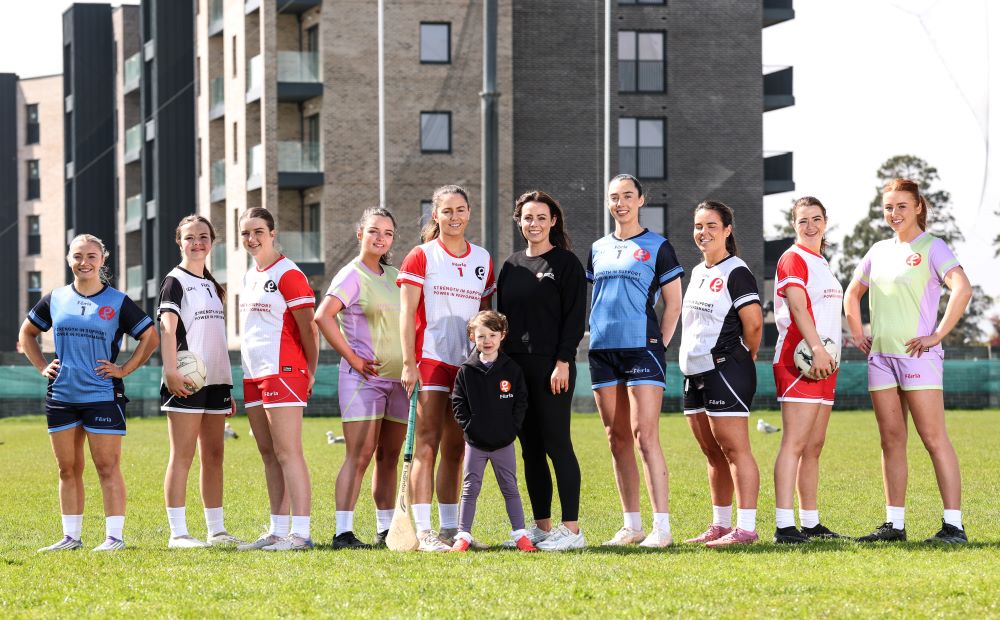
The reception from players, you note, has been overwhelming. Tell us more?
Throughout the journey, I’ve been fortunate to have my husband’s six nieces, all of whom play football, assist with early trials and testing. That initial input proved invaluable. Once the products were ready, we conducted proper club-fit sessions, and the responses were consistently positive. Girls would say, “we didn’t realise the shorts didn’t fit us or that they could feel this different.” You truly don’t know what you don’t know. It quickly became clear that there isn’t a single “perfect” short. Every girl has a different preference—some favour more support, others prefer a more relaxed feel. There’s no clear winner, and that’s the point. Beyond fit, the biggest takeaway is the impact of choice. It makes them feel listened to, finally having something designed specifically for them.
Since the launch, feedback has been remarkably positive. Some women say they wouldn’t have worn shorts before, yet now they’re buying them for running or gym use, even though Gaelic games aren’t the focus for them. At the same time, we’re still learning. It’s a new sizing concept, and it will take time for players to discover their ideal fit, especially when they’re so accustomed to wearing men’s shorts. We welcome feedback and see this as an ongoing process. But the consistent message is that girls feel comfortable, supported, and confident, and nothing feels exposed. To me, that’s everything.
Is the ultimate aim to get Féirla shorts into the hands of players and clubs all over the country?
Naturally, I’d love to see Féirla in clubs and counties across Ireland, giving teams real choice in what they wear. But beyond that, it’s about driving a wider shift in how female athletes are regarded—not only in Gaelic games but across sport in general. A crucial part of that for me is education. Féirla isn’t merely about sportswear; it’s about aiding female athletes with the knowledge and understanding they need about their bodies, performance, and health. That element is just as important as the garments themselves.
When I began this journey, I was told more than once that this wasn’t a real problem or worth pursuing. In a space historically dominated by men, those voices can be loud. But when you examine the research, the dropout rates, and the broader gaps in women’s health and sport, it becomes clear that change is needed. We’ve already developed several designs beyond what people have seen so far, and there are bigger plans to keep expanding both in product lines and in how we support female athletes more comprehensively. For me, it always ties back to the future—to girls like my daughter—and doing what I can now to help shape a sporting environment that feels more supportive, more considerate, and ultimately somewhere they want to stay.
For more: feirla.com