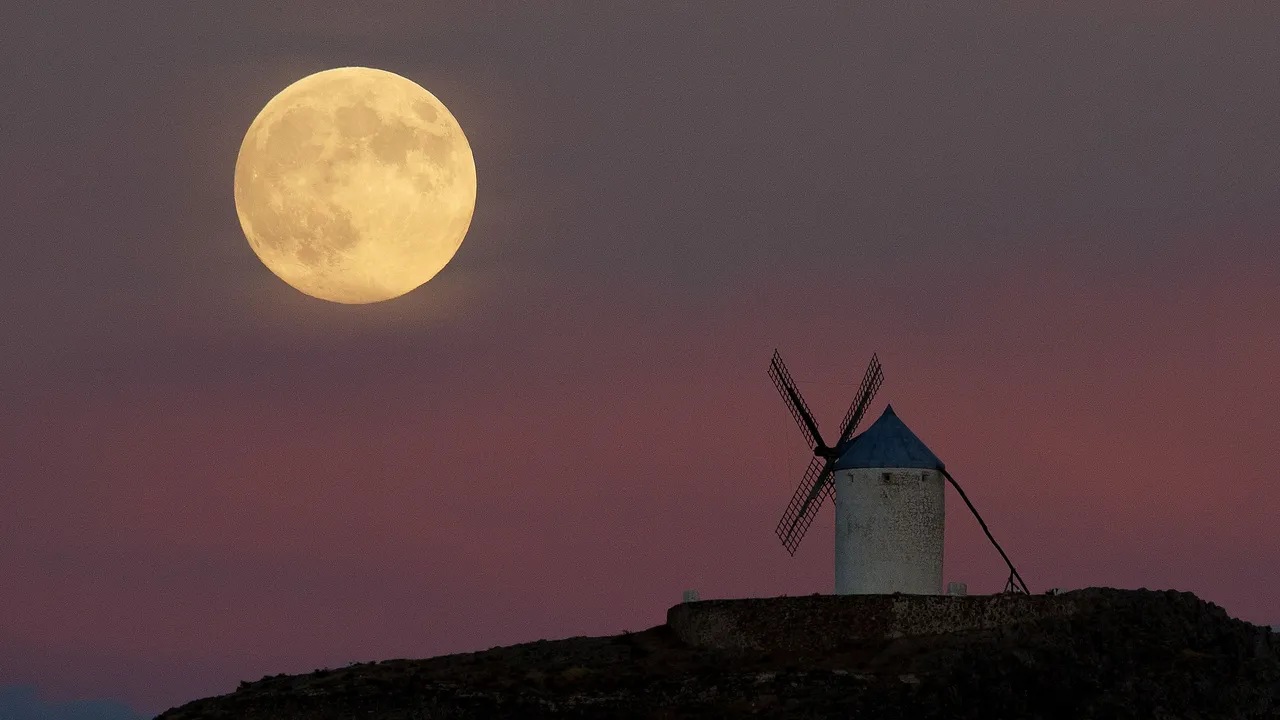
Before sharing more details about the November full moon (its name and its peculiar size), if we had to describe 2026 in lunar terms we would use only one word: success. The eclipse last August achieved something very difficult in the 21st century, that everyone stopped whatever we were doing and looked up at the sky. Something that usually produces the same effect, though without such obvious evidence, are the supermoons. That is, a moon of unusually large size that makes us feel closer to what lies beyond our atmosphere.
Last year, 2025, brought with it three visible supermoons (and three more that were not visible to the naked eye). This 2026, for now, has given us only two supermoons, the first in January. The full moon this November, as we have foreseen, we will enjoy on the 24th at its maximum apogee (though it will also appear full on the 23rd and 25th), and the data are positive about a third supermoon at the end of December.
November will be especially generous because it will bring us a meteor shower, the Leonids. The shower will reach its peak on the night of November 17 at 00:45h, when the Moon is in its first quarter and has already dipped below the horizon, so the conditions are more than favorable for enjoying the Leonids.
What is a supermoon and what will November’s be like?
As NASA explains, the term “supermoon” was coined by the astrologer Richard Nolle in 1979 to refer to a new or full moon that occurs when the Moon is at about 90% of its closest approach to Earth. “Since we don’t actually see new moons, what has captured public attention are the full supermoons, as they are the largest and brightest full moons of the year.” In total, this 2026 we have been able to enjoy two supermoons: the January full moon and the November one, which will occur in a few days. Normally there are about three or four supermoons annually.