That Halloween was invented in Galicia is no joke, we promise. It has its explanation and origin in the traditions of the Celts. Samaín comes from the Gaelic word ‘Samhain,’ which means ‘end of summer.’ And in this sense, the Celts celebrated the end of summer and the harvest with various rites that have endured to this day.
The druid, the authority figure in the ancient Celtic communities, was the one responsible for organizing the rites held in the forests and around the fire. The apple game was common (dipping an apple into a tub of water and being able to grab it with the mouth); people also covered themselves with hides and masks in order to confound the spirits; they used enemy skulls and lit them with candles, as well as hollowing out turnips and illuminating them so that the deceased could find the way to the world of the living. With the arrival of pumpkins, these were swapped for turnips.
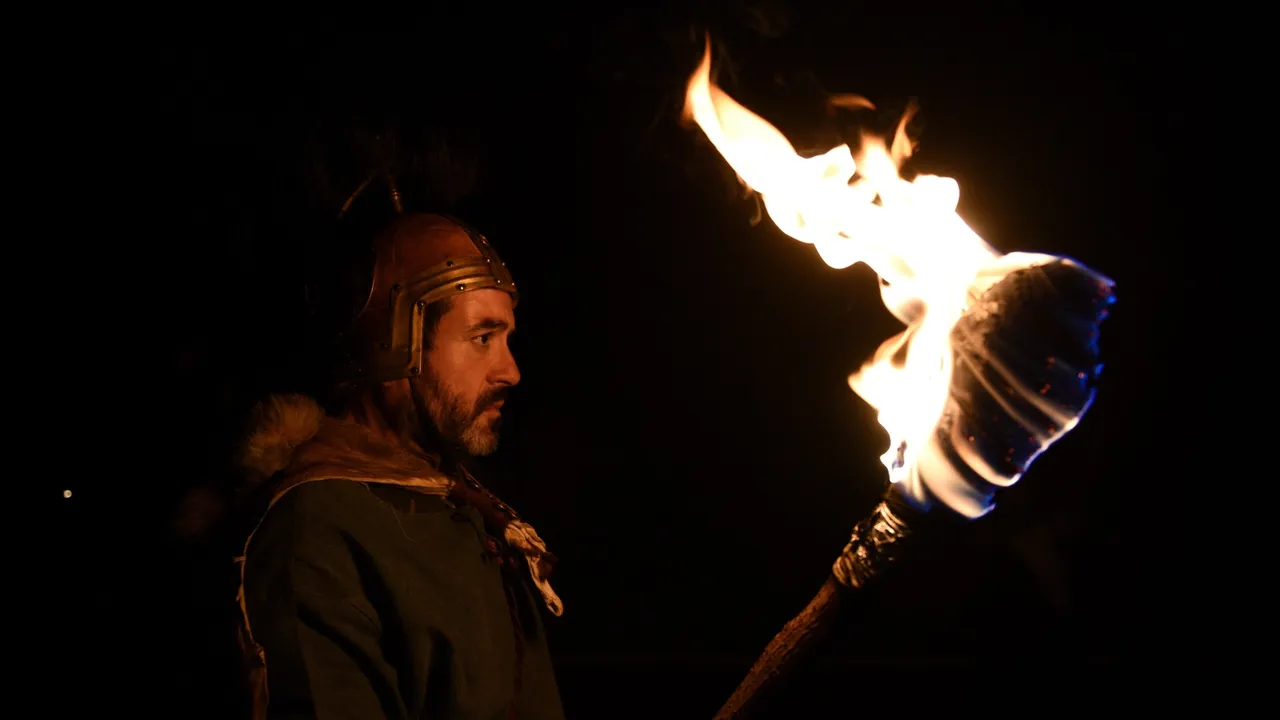
Among the most popular rites in Galicia was the Santa Compaña. One person led a procession of the dead, doing so in silence with long torches that lit the path as they passed. During this procession everyone had to stay in their homes. No one should encounter them. If not, the person would be doomed to a curse, from which they would only be freed by handing the torch to another.
Samaín, the Galician festival that existed before Halloween
“ Samaín configured the Celtic New Year. The Celtic peoples believed that the year was divided into two parts: a dark one, beginning on Samaín night, and a light one, beginning on Walpurgis night, with the Beltane festival, between April 30 and May 1. Nevertheless, it is Samaín that marks the start of all, when summer dies and winter begins,” noted from La Voz de la Galicia.
Thus, this celebration, which falls on October 31 and November 1, has a history of about 2,000 years. It would be an ancient festival of pagan origin that was carried to the United States by Irish emigrants, laying the foundations of what we call Halloween.
“In Galicia, in recent years, Samaín has been the subject of a process of revival and reclamation to counter precisely the growing influence of the North American festivity,” note the Galicia Tourism Office. Rafael López Loureiro, a professor in Cedeira, was the pioneer of this valuing of the local Galician tradition over the past more than 30 years, seeking its vestiges and roots throughout the community and driving, together with the associative movement, the revival in his town.