Far from the crowded itineraries of the Portuguese Atlantic coast and from the magnetic bustle of the great Lusitanian metropolises, where the names Lisbon and Porto have moved from mere destinations to true icons, there is a corner of Portugal where a purer, more healing version of the country unfolds, grounded in wellbeing and absolute disconnection.
Protected by the ridges of the Serra da Arada, São Pedro do Sul and its surroundings appear on the map of central Portugal as an entity unknown to the foreign traveler, a whole swath of the neighboring country that only seems to stand out with the presence of the ever-captivating Viseu.
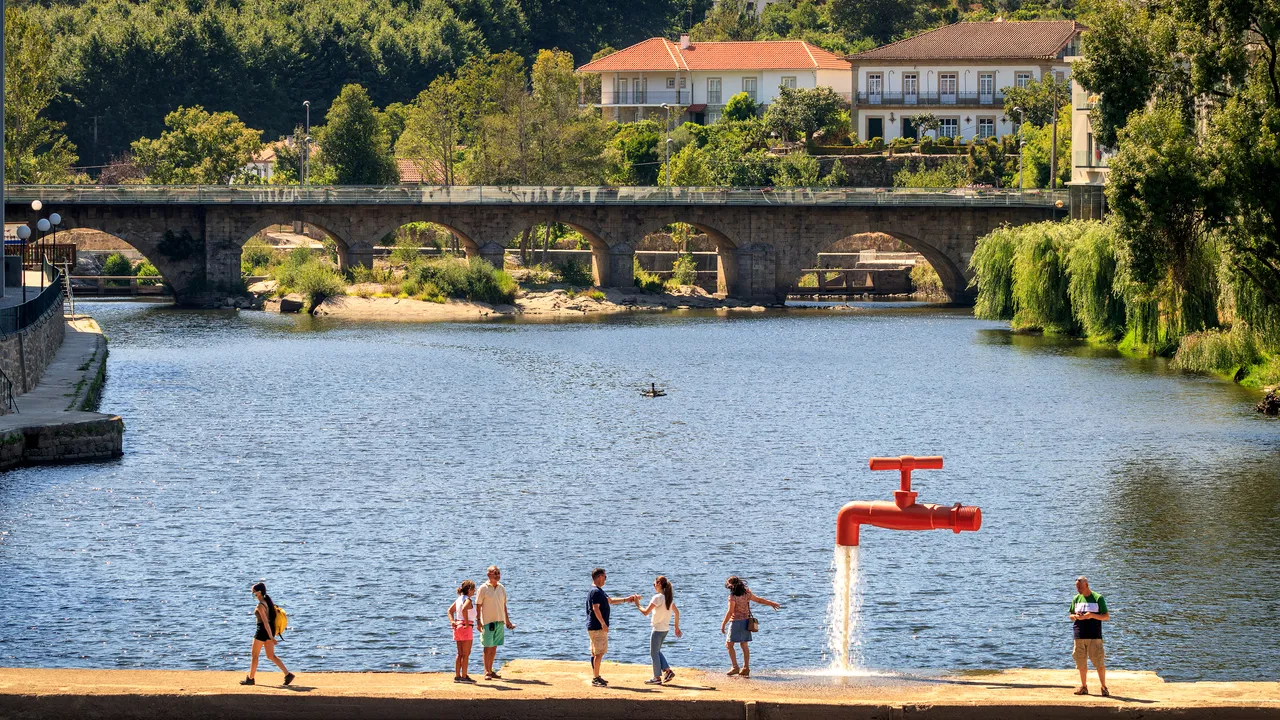
However, in these lands they know well that São Pedro do Sul is far from a modern discovery, but rather the thermal capital of Portugal. A place bathed by the sinuous course of the Vouga River that nature blessed with the presence of numerous underground springs that rise from the ground to the surface at temperatures that warm any wintry sense of thermal unease. More than 68 degrees Celsius at which the water emerges from a deep tectonic fault, loaded with sulfur, essential minerals and an unquestionable purity, have inseparably linked this town to thermal health.
The benefits of this hydro-water enclave run deep into Roman times, with the vestiges of the ancient Balneum, an imposing structure from the 1st century A.D. that testifies to the presence of legionaries and patricians of the Empire, who already sought here rest and healing for their bodies through the benefits of the water. The rehabilitated remains coexist with the modern Museu do Balneário Rainha D. Amélia, a space that allows visitors to decipher the baths of that era. The museum’s name comes from the golden age of aristocratic spa culture in Portugal, when Queen Amélia of Orléans found in these springs the definitive remedy for her ailments, bestowing her own name upon the spa complex.
Today, that legacy has transformed into the most important wellness complex in all of Portugal and one of the flagship expressions of thermal health in Southern Europe, with centers that stand at the forefront of medical hydrology, where therapeutic treatments are combined with a wide range of relaxation and wellbeing circuits.