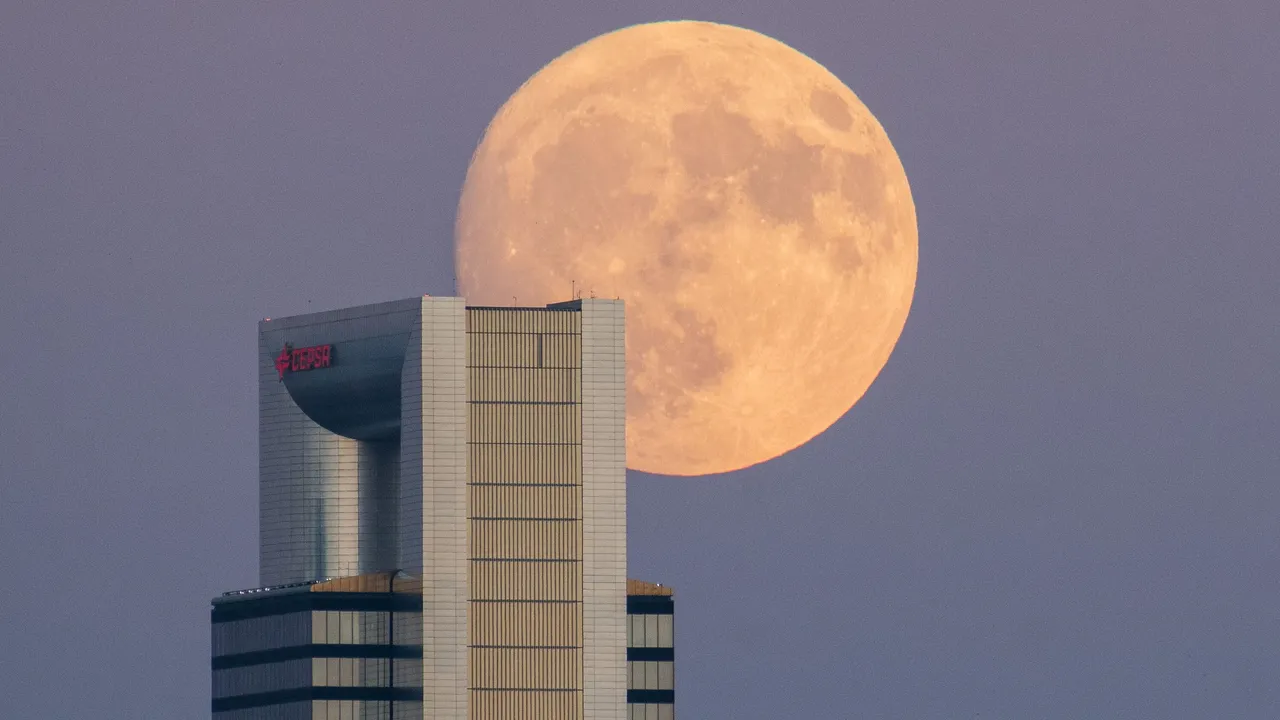
After an August marked by a total solar eclipse that dominated headlines and the Perseids meteor shower, or the Tears of Saint Lawrence, which coincided on the same night of the 12th, we close the month with the Sturgeon Moon on the 28th. It will occur in the early hours, at 06:19, when it reaches its maximum apogee, so throughout the night of that day and the following you can enjoy a bright moon that, moreover, does not come alone.
That same night there will be a partial lunar eclipse, during which the Moon will be covered by 93%, which, according to the National Geographic Institute, will be visible across the entire Peninsula. However, in the center and east of the peninsula, the Balearic Islands and Melilla, the Moon will set before the eclipse can finish, whereas in the rest of the country it will set later, so it will indeed be possible to watch until its conclusion.
The Sturgeon Moon is also known in Europe as the “Barley Moon,” and it coincides (depending on which day this full moon occurs) with the harvest season of that grain, yet the Sturgeon Moon is a nickname imported from North America. The sturgeon is a fish that has been commonly caught along the eastern coast of North America (from Canada to Florida), where this variety is known as the Atlantic Sturgeon. During August, the Moon’s bright light allowed better visibility during nocturnal hunting sessions around the Great Lakes, which led the indigenous peoples of that region to name the August full moon the “Sturgeon Moon.”