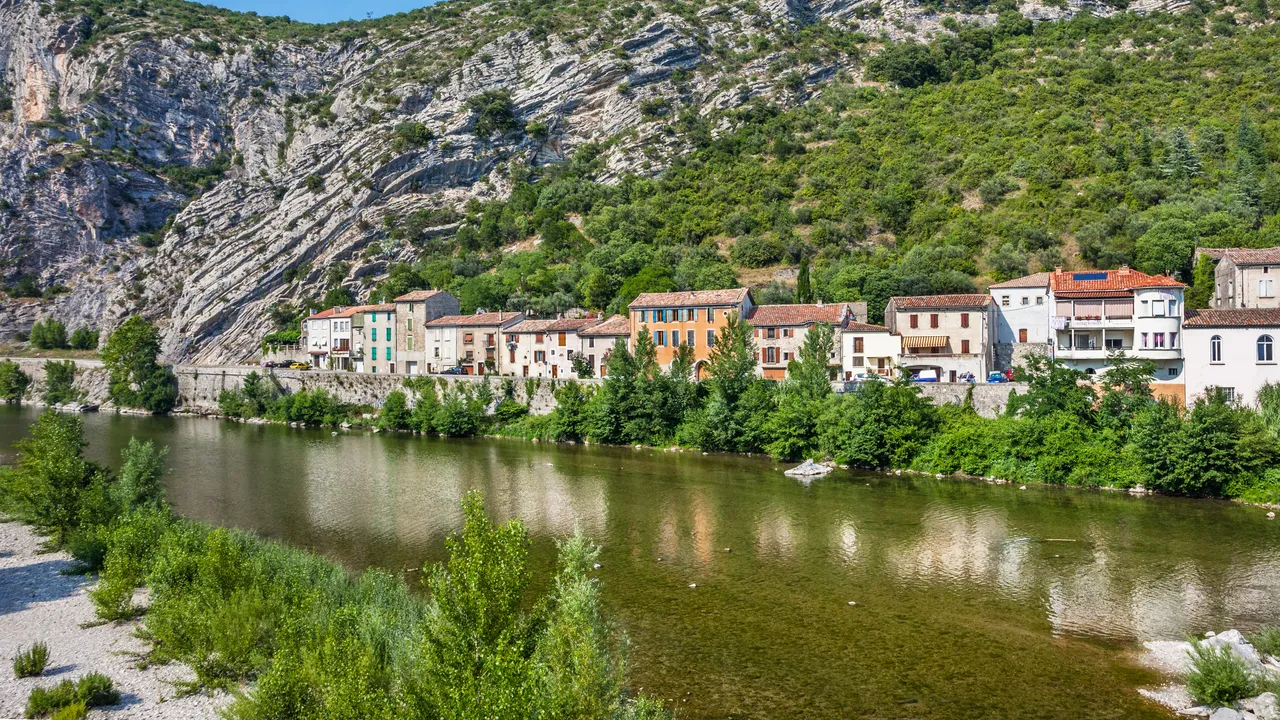
Situated in the Gard department, where the Gardon River carves a landscape of limestone and lush vegetation, Anduze is an Occitan enclave that has managed to preserve a unique balance between its patrimonial heritage and a sustainable and artisanal tourism offering. Internationally renowned for its terracotta vases and its remarkable bamboo forest, it today offers an immersion into the most authentic France.
Arriving in Anduze delivers an immediate visual impact. The traveler approaching from the Languedoc plains is confronted with the majesty of the Gate of Cévennes, a natural gorge formed by the mountains of Saint-Julien and Peyremale that flank the river as it flows through.
In this corner of Occitania, limestone cedes to a microclimate that allows plant species to thrive here that, by geographic logic, should not prosper. Crossing the stone bridge that leads into the old town, one senses the echoes of a population that was a fortress of Protestantism and the nerve center of the silk trade, but which today shines thanks to a resolute commitment to traditional values, nature, and sustainability.
With slow tourism as the guiding axis of its offerings, Anduze is a true bastion of craftsmanship. The history of its pottery is the chronicle of an aesthetic ambition that managed to transcend rural borders to decorate Europe’s most exclusive gardens. It all began in the 16th century, at a moment when the French aristocracy longed for Italian refinement. Tradition says that, during a fair centuries ago, a potter became fascinated by Medici-style jars arriving from Tuscany. Yet, instead of a mere copy, the artisans of Anduze developed their own technique that blended the robustness of local clay with an unparalleled rustic elegance.
The flame-glazed technique that yields those olive-green, honey-yellow and earthy-brown hues became the signature of the region. Meanwhile, the stamping process, where ornamental motifs are applied by hand before the clay dries completely, demands a precision that only comes after decades of experience. This craft has not only supported local employment but also keeps alive an aesthetic identity that defines the town’s urban landscape, where every square and every shaded corner proudly displays these terracotta jewels.