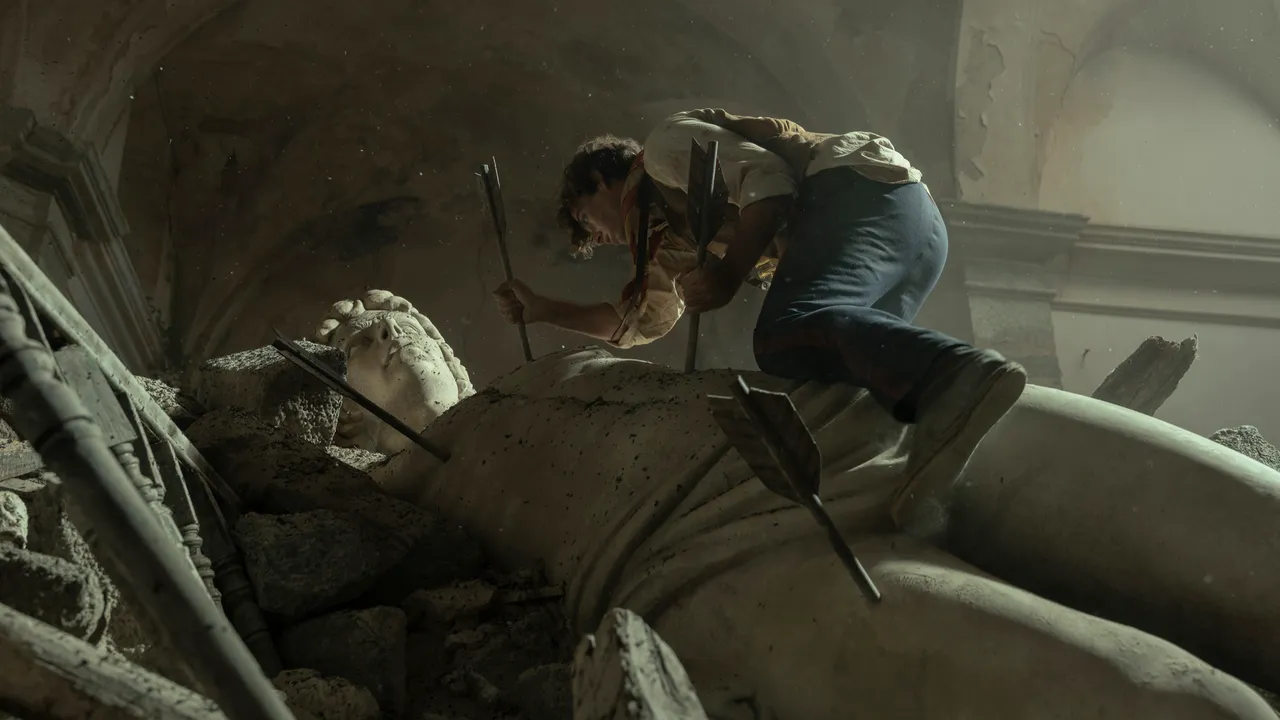
Award for Best Direction at Cannes, the Audience Award in Toronto (an almost direct ticket to the Oscars), La bola negra (cinemas release on September 25) continues an unstoppable run. Freshly unveiled at the San Sebastián Festival, where it earned the second-highest audience score in the history of the festival, the film by Javier Ambrossi and Javier Calvo, Los Javis, stirs up a hurricane wherever it goes and has ahead of it a long and celebrated journey that could end (and will end) in Hollywood at the grand cinema gala on the night of March 14.
The Black Ball is based on the theatrical work by Alberto Conejero (co-written with them), La piedra oscura, and also on four pages of a piece that Federico García Lorca left unfinished and which had been the first work by the Granada-born author starring a homosexual character. From there, they construct a story divided into three timelines, 1932, 1937 and 2017, in which they wonder what would have happened if the manuscript were complete and saw the light now, why it would have been hidden, who kept it.
Each story has its protagonists and settings: the 1932 chapter is that of La bola negra, a young (Milo Quifes) in Granada trying to enter the city’s Casino; the committee must vote on his admission: black balls mean no, white balls mean yes; the 1937 chapter follows a wounded Republican soldier (Miguel Bernardeau) who is captured by the insurgents, and one of them (Guitarricadelafuente) takes care of him, the first being Rafael Rodríguez Rapún, the only real character, a member of La Barraca, Lorca’s partner and the focal point around which Conejero’s play revolves, supposedly taking place in the north of Spain; in the 2017 chapter, we accompany the character Carlos González through Madrid discovering who his grandfather was, whom he never met, and the priceless inheritance he has been left with.