Malta is one of those destinations capable of condensing centuries of history into a mere 316 square kilometers. Phoenicians, Romans, Arabs, Normans, the French and the British left an indelible mark here that today coexists with a thriving culinary scene, designer hotels and some of the clearest waters in the Mediterranean. More than a beach destination, Malta is a journey where culture, architecture, and the sea form a perfect ecosystem.
What to See in Malta
Valletta: the Baroque capital that looks out onto the Mediterranean
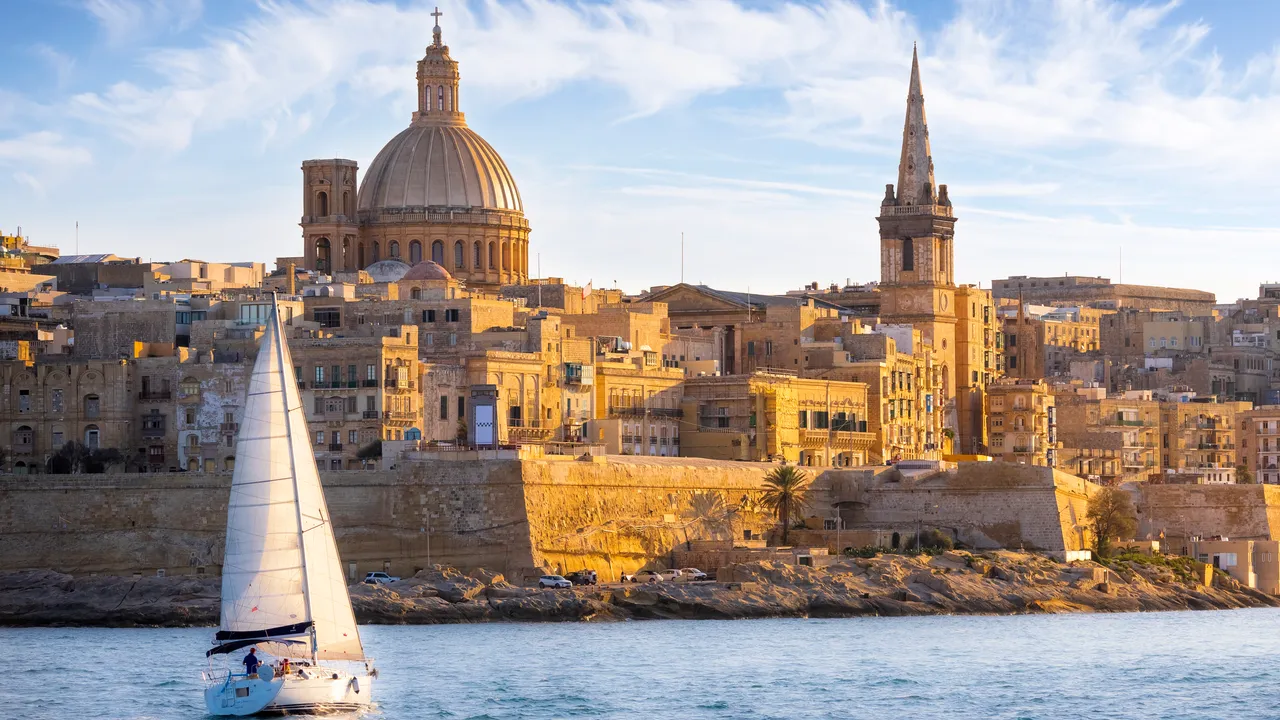
The first morning in Malta should begin, without exception, in Valletta, the tiny capital with a colossal soul that stands as a living testament to its glorious past. Founded in 1566 by the Knights of St. John, the fortified city unfolds as a labyrinth of cobbled streets, where Baroque style is etched at every corner and a strongly Mediterranean atmosphere permeates the air. Its narrow, winding streets, the ancient-salted stones, the walls, and the imprint of the Order of St. John give it a distinctive ambiance, as if we were inside a historical thriller novel, where the Holy Grail could at any moment appear inside a catacomb.
We begin the day early, alongside the walls that overlook the Grand Harbour, illuminated by the late-afternoon sun. The morning quiet is broken as we pass through the Upper Barrakka Gardens, a postcard-perfect belvedere that offers panoramic sea views where the hustle and bustle of ships seems like a painting in motion. Every day at noon, the traditional cannon fire punctuates the moment, a reminder of the island’s military past. To cross to the other side of the harbor, it is worth taking a traditional dgħajsa, the Maltese wooden boat that connects with the Three Cities.